




















Bookmarks    
nPr and nCr    
Random Number    
SD Calculator    
Sample Size    
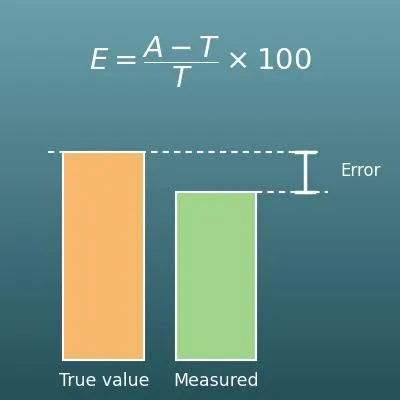
Percent Error    
Density    
Molarity    
Molar Mass    
Ohm's Law    
Watts to Amps    
Voltage Drop    
Long Division    
Mixed Numbers    
Rounding    
Nth Root    
Exponents    
Half-Life    
Polar Form    
De Moivre    
3D Distance    
Point to Line    
Cross Product    
Determinant    
Sin Cos Tan    
Triangle Area    
Scale Factor    
Sector Area    
Ellipse Area    
Cube Volume    
Box Volume    
Sphere Volume    
Cone Volume    
Pipe Volume    
Time Duration    
Time Card    
Present Value    
Future Value    
Churn Rate    
A/B Test Calc    
SEO Traffic    
Ideal Weight    
Fat Intake    
Child Height    
Golf Handicap    
Heat Index    
Wind Chill    
Dew Point    
Download Time    
kWh to Cost    
AC Size (BTU)    
Heating Costs    
LED Savings    
Trip Gas Cost    
Tire Size    
Solar Output    
Solar Payback    
Battery Size    
Wall Area    
Gravel Needed    
Mortar Mix    
Slope Grade    
Curtain Size    
Soil Needed    
Sod Needed    
Ramp Length    
Blind Size    
Drain Slope    
Board Feet    
Heat Loss    
Furniture Fit    
Moving Boxes    
Plywood Cuts    
Shelf Sag    
   Add
Probability and random number calculators
Independent Events
Independent Events
Two Events Solver
Two Events Solver
Repeated Trials
Repeated Trials
Bayes' Theorem
Bayes' Theorem
Expected Value
Expected Value
Binomial Distribution
nPr and nCr
nPr and nCr
Circular Permutation
With Repetition
With Repetition
Random Number
Random Number
Averages and statistics calculators
Average Calculator
Average Calculator
Mean Median Mode
Mean Median Mode
SD Calculator
SD Calculator
Quartiles & IQR
Quartiles & IQR
Frequency Table
Frequency Table
Correlation (r)
Correlation (r)
Normal Probability
Normal Probability
Z-Score Calculator
Z-Score Calculator
Confidence Interval
Confidence Interval
Sample Size
Sample Size
Mark & Recapture
Mark & Recapture
P-Value Calculator
P-Value Calculator
Percentage and ratio calculators
Percentage Calc
Percentage Calc
Percent Change
Percent Change
Percent Difference
Percent Difference
Percent Error
Percent Error
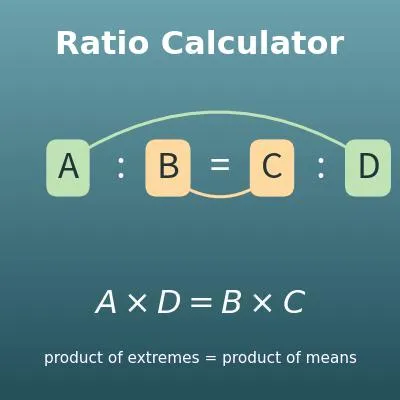
Ratio Calculator
Ratio Calculator
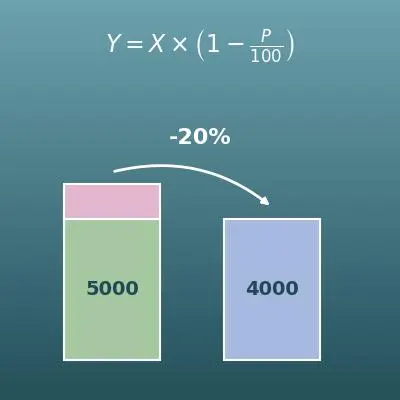
Discount Calculator
Discount Calculator
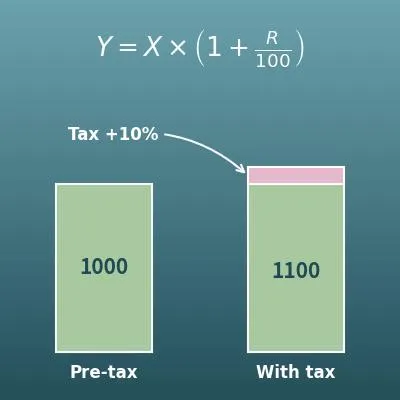
Sales Tax Calculator
Margin Calculator
Margin Calculator
Speed calculators
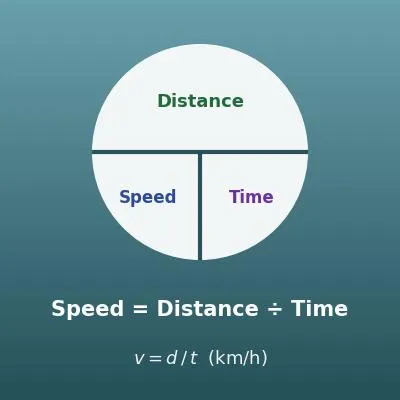
Speed Calculator
Speed Calculator
Density and concentration calculators
Density
Density
Molarity
Molarity
Molar Mass
Molar Mass
Physics and electricity calculators
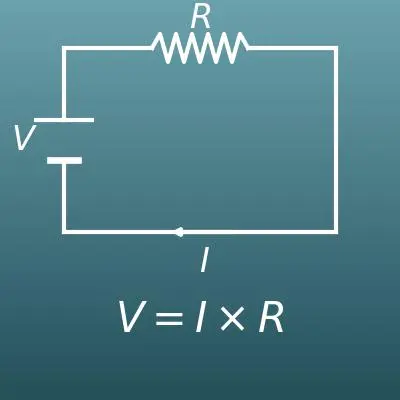
Ohm's Law
Ohm's Law
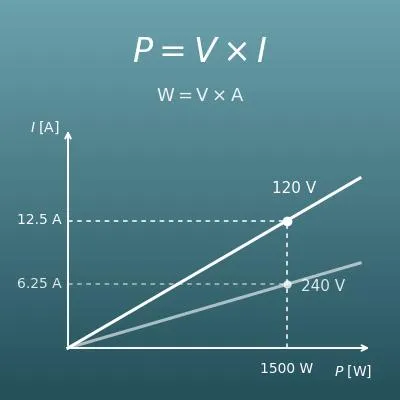
Watts to Amps
Watts to Amps
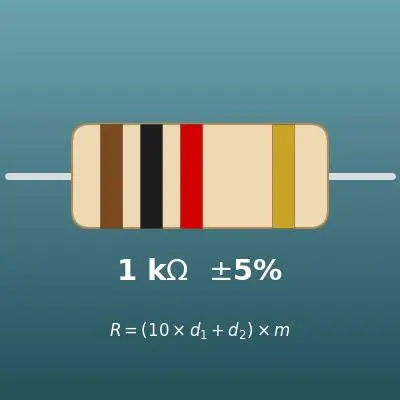
Resistor Colors
Resistor Colors
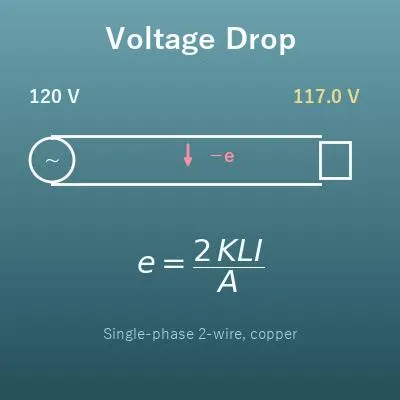
Voltage Drop
Voltage Drop
Unit conversion calculators
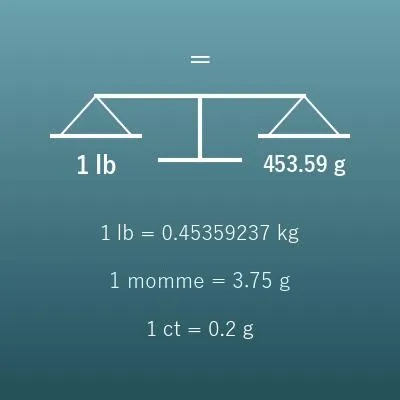
Weight Converter
Weight Converter
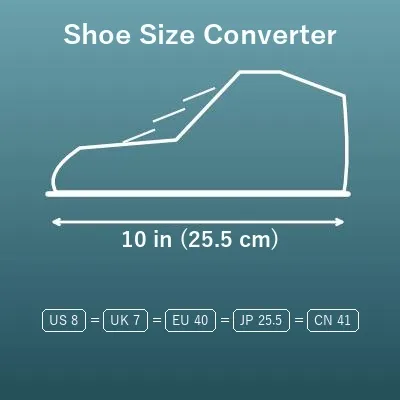
Shoe Size Converter
Shoe Size Converter
Integer and signed number calculators
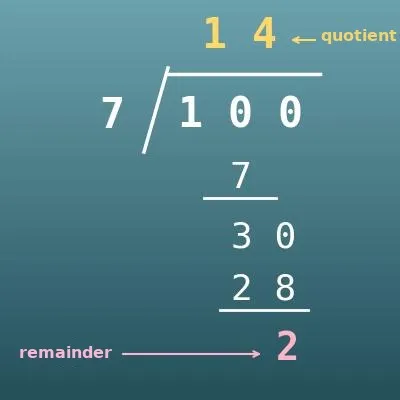
Long Division
Long Division
LCM Calculator
LCM Calculator
GCF Calculator
GCF Calculator
Integer Calculator
Integer Calculator
Prime Factorization
Prime Factorization
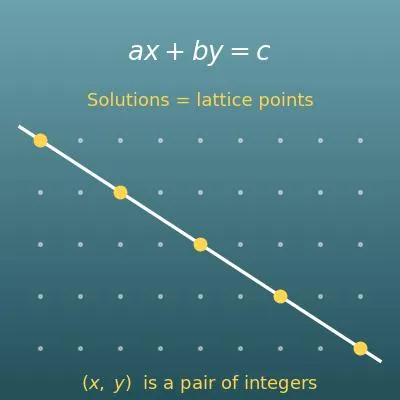
Diophantine Solver
Diophantine Solver
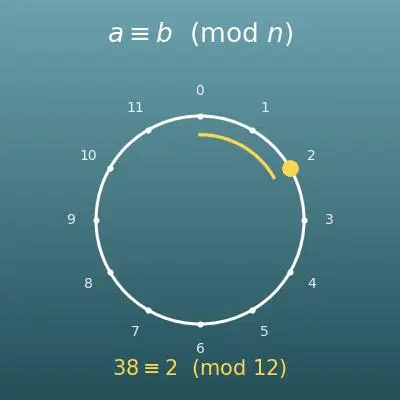
Modulo Calculator
Modulo Calculator
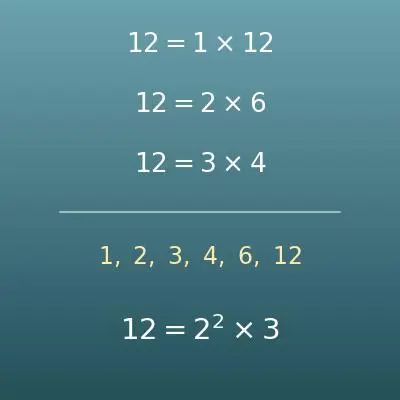
Factor Calculator
Factor Calculator
Roman Numerals
Roman Numerals
Fraction, decimal and rounding calculators
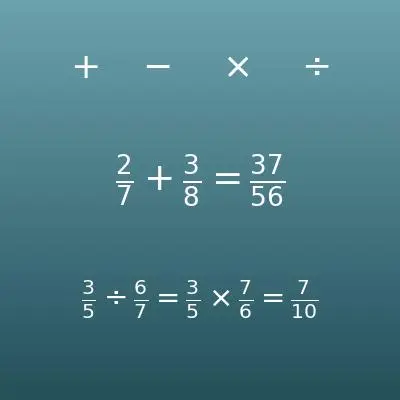
Fraction Calculator
Fraction Calculator
Mixed Numbers
Mixed Numbers
Simplify Fractions
Simplify Fractions
Fraction to Decimal
Fraction to Decimal
Decimal to Fraction
Decimal to Fraction
Rounding
Rounding
Equation and inequality calculators
Linear Equation
Linear Equation
Linear Systems
Linear Systems
Quadratic Formula
Quadratic Formula
Absolute Value
Absolute Value
Quadratic Inequality
Polynomial calculators
Binomial Theorem
Binomial Theorem
Square root and nth root calculators
Simplify Radicals
Simplify Radicals
Nth Root
Nth Root
Exponent and logarithm calculators
Exponents
Exponents
Log Calculator
Log Calculator
Number of Digits
Number of Digits
Scientific Notation
Scientific Notation
Sci. Notation Math
Sci. Notation Math
Half-Life
Half-Life
Complex number calculators
Complex Numbers
Complex Numbers
Polar Form
Polar Form
De Moivre
De Moivre
Function and graph calculators
Slope Calculator
Slope Calculator
Linear Function
Linear Function
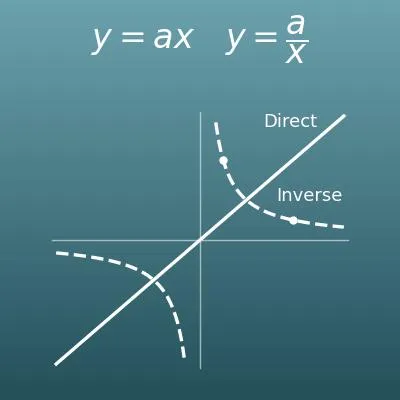
Direct & Inverse Variation
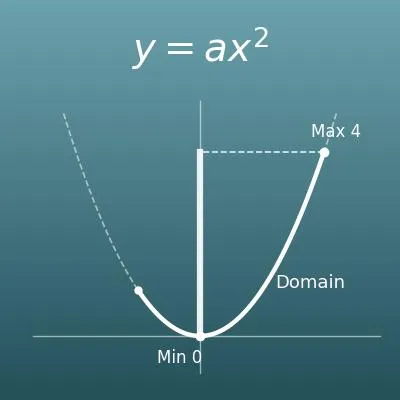
y = ax² Calculator
y = ax² Calculator
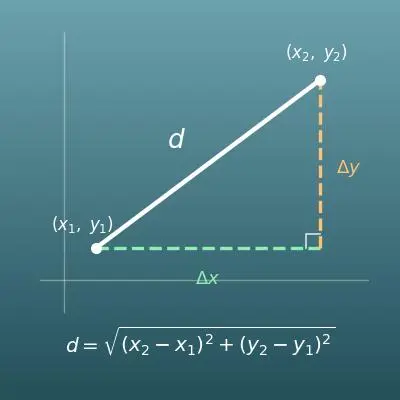
Distance Formula
Distance Formula
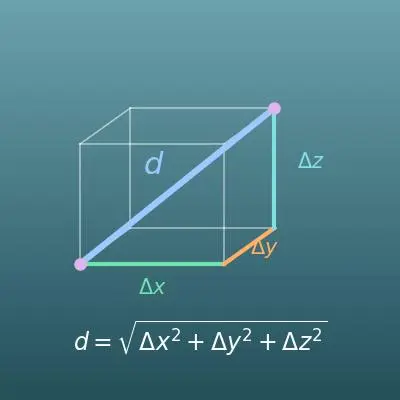
3D Distance
3D Distance
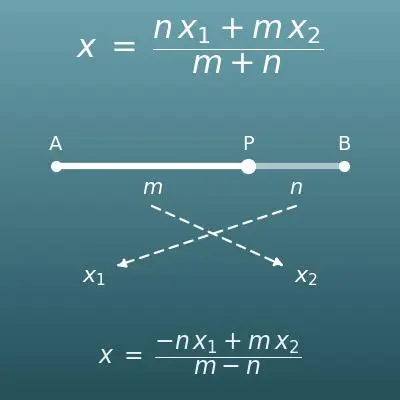
Section Formula
Section Formula
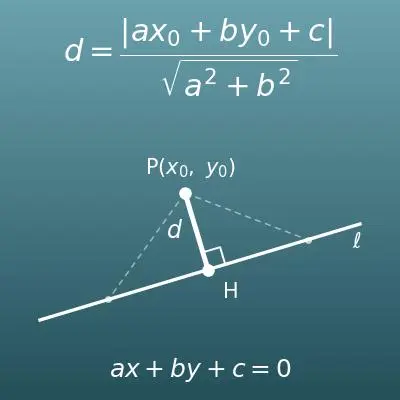
Point to Line
Point to Line
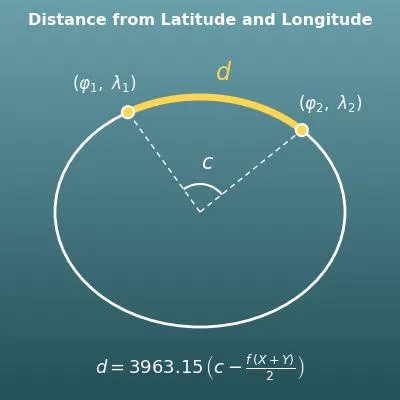
Lat/Long Distance
Lat/Long Distance
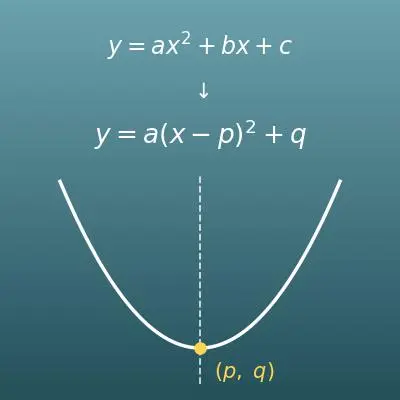
Complete the Square
Complete the Square
Circle Equation
Circle Equation
Conic Sections
Conic Sections
Polar Coordinates
Polar Coordinates
Sequence calculators
Arithmetic Sequence
Arithmetic Sequence
Geometric Sequence
Geometric Sequence
Fibonacci Sequence
Fibonacci Sequence
Recurrence Relation
Recurrence Relation
Vector calculators
Vector Calculator
Vector Calculator
Cross Product
Cross Product
Matrix calculators
Matrix Calculator
Matrix Calculator
Determinant
Determinant
Inverse Matrix
Inverse Matrix
Plane geometry calculators
Sin Cos Tan
Sin Cos Tan
Degrees ⇔ Radians
Degrees ⇔ Radians
a sin θ + b cos θ
a sin θ + b cos θ
Triangle Solver
Triangle Solver
Triangle Area
Triangle Area
Right Triangle
Right Triangle
Pythagorean Theorem
Pythagorean Theorem
Polygon Angles
Polygon Angles
Scale Factor
Scale Factor
Parallel Lines
Parallel Lines
Rectangle Area
Rectangle Area
Parallelogram Area
Parallelogram Area
Trapezoid Area
Trapezoid Area
Circle Calculator
Circle Calculator
Sector Area
Sector Area
Inscribed Angle
Inscribed Angle
Ellipse Area
Ellipse Area
Solid geometry calculators
Cube Volume
Cube Volume
Cube Surface Area
Cube Surface Area
Box Volume
Box Volume
Box Surface Area
Box Surface Area
Cylinder Volume
Cylinder Volume
Cylinder Surface
Cylinder Surface
Sphere Volume
Sphere Volume
Sphere Surface
Sphere Surface
Spherical Cap Volume
Cap Surface Area
Cap Surface Area
Ellipsoid Volume
Ellipsoid Volume
Ellipsoid Surface
Ellipsoid Surface
Pyramid Volume
Pyramid Volume
Pyramid Surface
Pyramid Surface
Cone Volume
Cone Volume
Cone Surface Area
Cone Surface Area
Frustum Volume
Frustum Volume
Frustum Surface Area
Pipe Volume
Pipe Volume
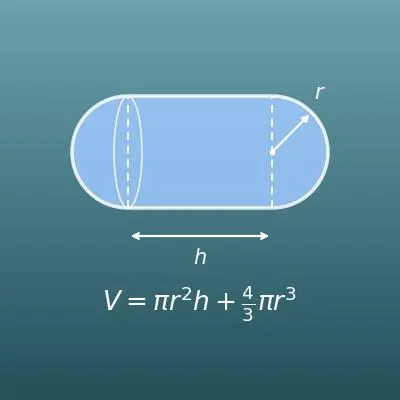
Capsule Volume
Capsule Volume
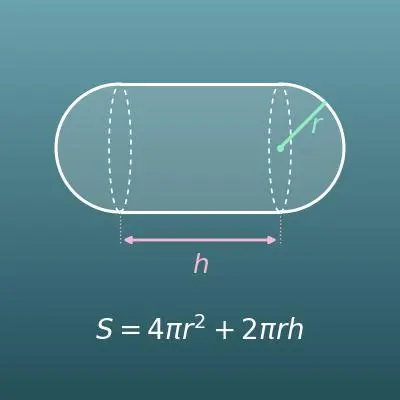
Capsule Surface Area
Date and time calculators
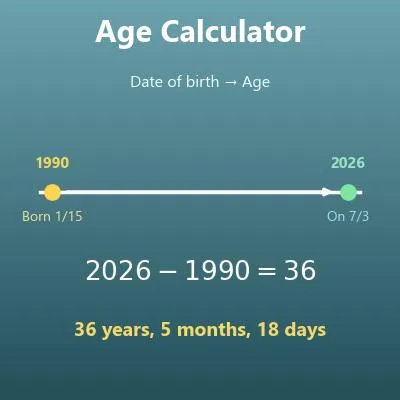
Age Calculator
Age Calculator
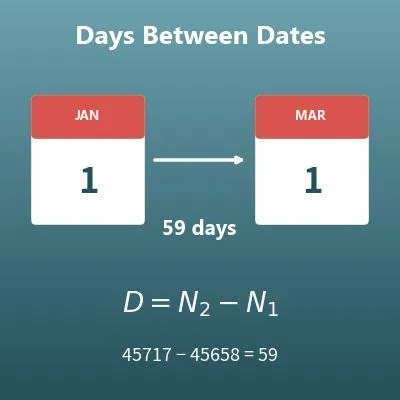
Days Between Dates
Days Between Dates
Date Calculator
Date Calculator
Hours From Now
Hours From Now
Day of the Week
Day of the Week
Time Calculator
Time Calculator
Time Zone Converter
Time Zone Converter
Hours Calculator
Hours Calculator
Time Duration
Time Duration
Time Card
Time Card
Finance and economics calculators
Compound Interest
Compound Interest
Simple Interest
Simple Interest
Interest Calculator
Interest Calculator
TVM Calculator
TVM Calculator
Present Value
Present Value
Future Value
Future Value
ROI Calculator
ROI Calculator
IRR Calculator
IRR Calculator
Payback Period
Payback Period
Average Return
Average Return
GDP Calculator
GDP Calculator
Web marketing and ad metric calculators
CTR Calculator
CTR Calculator
Conversion Rate
Conversion Rate
CPC, CPM & CPA
CPC, CPM & CPA
ROAS Calculator
ROAS Calculator
Break-Even CPA
Break-Even CPA
LTV Calculator
LTV Calculator
CAC Calculator
CAC Calculator
Churn Rate
Churn Rate
A/B Test Calc
A/B Test Calc
A/B Sample Size
A/B Sample Size
SEO Traffic
SEO Traffic
Break-Even Point
Break-Even Point
Markup vs. Margin
Markup vs. Margin
CAGR Calculator
CAGR Calculator
Health and fitness calculators
BMI Calculator
BMI Calculator
Sleep Calculator
Sleep Calculator
Calorie Calculator
Calorie Calculator
BMR Calculator
BMR Calculator
TDEE Calculator
TDEE Calculator
Ideal Weight
Ideal Weight
Body Fat Calculator
Body Fat Calculator
Lean Body Mass
Lean Body Mass
Calories Burned
Calories Burned
Protein Intake
Protein Intake
Macro Calculator
Macro Calculator
Carb Calculator
Carb Calculator
Fat Intake
Fat Intake
Child Height
Child Height
Sports calculators
Golf Handicap
Golf Handicap
Pace Calculator
Pace Calculator
1RM Calculator
1RM Calculator
Target Heart Rate
Target Heart Rate
Weather calculators
Heat Index
Heat Index
Wind Chill
Wind Chill
Dew Point
Dew Point
Computer calculators
Base Converter
Base Converter
Subnet Calculator
Subnet Calculator
Download Time
Download Time
Household energy and budget calculators
Electricity Cost
Electricity Cost
kWh to Cost
kWh to Cost
Yearly kWh to Cost
Yearly kWh to Cost
AC Size (BTU)
AC Size (BTU)
AC Running Cost
AC Running Cost
Heating Costs
Heating Costs
Gas vs Electric
Gas vs Electric
LED Savings
LED Savings
Salary Calculator
Salary Calculator
Budget Calculator
Budget Calculator
Car calculators
Trip Gas Cost
Trip Gas Cost
EV Charging Cost
EV Charging Cost
EV vs Gas Cost
EV vs Gas Cost
MPG Calculator
MPG Calculator
Tire Size
Tire Size
Solar power and battery calculators
Solar Output
Solar Output
Solar Panel Count
Solar Panel Count
Solar Payback
Solar Payback
Battery Size
Battery Size
Home and DIY calculators
Tile Calculator
Tile Calculator
Stair Calculator
Stair Calculator
Concrete Volume
Concrete Volume
Wall Area
Wall Area
Wallpaper Rolls
Wallpaper Rolls
Paint Calculator
Paint Calculator
Flooring Needed
Flooring Needed
Exterior Walls
Exterior Walls
Gravel Needed
Gravel Needed
Mortar Mix
Mortar Mix
Slope Grade
Slope Grade
Lumber Cut List
Lumber Cut List
Lot Coverage/FAR
Lot Coverage/FAR
Sheet Vinyl Roll
Sheet Vinyl Roll
Insulation Needed
Insulation Needed
Curtain Size
Curtain Size
TV Size & Distance
TV Size & Distance
Soil Needed
Soil Needed
Sod Needed
Sod Needed
Block Calculator
Block Calculator
Brick Calculator
Brick Calculator
Deck Materials
Deck Materials
Ramp Length
Ramp Length
Pilot Hole Size
Pilot Hole Size
Room Ventilation
Room Ventilation
Paint Thinning
Paint Thinning
Baseboard & Trim
Baseboard & Trim
Blind Size
Blind Size
Picture Hanging
Picture Hanging
Drain Slope
Drain Slope
Screw Calculator
Screw Calculator
Board Feet
Board Feet
Fence Calculator
Fence Calculator
Wood Shrinkage
Wood Shrinkage
Caulk Calculator
Caulk Calculator
Heat Loss
Heat Loss
Furniture Fit
Furniture Fit
Moving Boxes
Moving Boxes
Storage Capacity
Storage Capacity
Plywood Cuts
Plywood Cuts
Shelf Sag
Shelf Sag

Shelf Sag and Load Calculator (Deflection from Material, Thickness, Span and Load; Maximum Span, Load and Thickness)

Choose what to find, then enter the thickness, depth and span (distance between supports) of the shelf, the material and the load. Picking a material fills in a typical modulus of elasticity and allowable bending stress, which you can change. When working back, set the allowable deflection (in mm or as L/n).

mm
mm
mm
kg
times
Material values (filled in from the material; you can change them)
GPa
N/mm²
The result is an estimate from the basic formulas for a uniform board supported at both ends. Stiffness and strength vary with the product, grade, knots and moisture content, and the strength of joints and brackets is not included. For shelves that hold heavy items, shelves someone might stand on, and structural uses, check the maker's specifications or ask a qualified designer.
Result and figure
Enter the thickness, depth and span (distance between supports) of the shelf, the material and the load on the left and press "Calculate". The maximum deflection (sag), the deflection ratio (L/δ), a comparison with practical guides, the bending stress (for reference) and an exaggerated figure of the sagging shelf appear here.

What you can do on this page

  • From the thickness, depth, span (distance between supports), material and load of a shelf, find the maximum deflection (sag) in inches and the deflection ratio (\(L/\delta\): how many times the deflection the span is)
  • Pick a material (cedar, cypress, pine or edge-glued pine, oak, plywood, MDF, particleboard, glass, aluminum or steel) and a typical modulus of elasticity is filled in (you can change it)
  • Enter the load as "total lb spread evenly", "lb per foot" or "lb at the center", and switch the supports between "resting on brackets or pins (simply supported)" and "screwed to the sides or set in a dado (fixed ends)"
  • Work back from an allowable deflection, such as "no more than 1/8 in" or "no more than 1/300 of the span", to the maximum span, the maximum load or the thickness needed
  • Allow for creep (wood sagging more over time under a long-term load) with a factor, and see the bending stress compared with a typical allowable bending stress for the material, for reference
This calculator treats the shelf as a uniform board (a beam) supported at both ends and uses the basic formulas of mechanics of materials to find the deflection only. The modulus of elasticity and allowable bending stress are commonly quoted typical values, and they vary a lot with the product, grade, knots and moisture content even for the same material. The load capacity (whether it breaks) is shown only for reference and is not a guarantee of safety. For shelves that hold heavy items, shelves someone might stand on, and parts of a building's structure, check the maker's specifications or ask a qualified designer.

What is this calculation used for?

Choosing the shelf thickness and side spacing for a DIY bookcase (woodworking and DIY)

"Is a 3/4 in pine board enough for a 36 in wide bookcase?" is a classic question when building a bookcase. For a bookcase that will also hold magazines and heavy reference books, assume 25 lb of books per foot (a safe-side guess). A pine 1×12 with a 34.5 in span then sags about 0.075 in right after loading, and about 0.15 in (\(L/231\)) with a creep factor of 2. That goes past the \(L/300\) guide and the 1/8 in guide, so the sag may show, and you can decide this with numbers.
A 1 in thick board cuts the deflection to \((0.75/1)^3 \approx 0.42\) times, and adding a divider in the middle to halve the span cuts it to 1/16. Before you build, you can compare which works best: a thicker board, a divider, or a shallower shelf that holds less.

Checking whether a store-bought shelf can carry what you want to put on it (storage and furniture)

Flat-pack furniture shelves are often particleboard or MDF, with only about a third of the stiffness of wood at the same thickness. Put 50 lb of files and magazines on a particleboard shelf 5/8 in thick, 11.75 in deep, with a 30 in span, and the calculation gives about 0.20 in of sag right after loading and around 0.4 in over time. That supports the rule "put heavy books and dishes on narrow shelves".
If the maker gives a load rating ("holds up to so many pounds"), that rating comes first. Use this calculation as a guide for shelves with no load rating, or when you add shelves yourself.

Spacing the brackets for a wall shelf or kitchen shelf (home improvement)

When you mount a board on the wall with L-shaped shelf brackets, the bracket spacing is the span. Support a 48 in shelf with two brackets 40 in apart, and a pine 1×10 (0.75 × 9.25 in) with 40 lb of dishes on it sags about 0.079 in right after loading, and about 0.16 in (\(L/254\)) with a creep factor of 2. With three brackets, the span is halved, and the same load sags only 1/16 as much.
The load rating of the brackets themselves and the strength of the wall (drywall alone or into studs) are not part of this calculation, so check those separately with the bracket specs and what is behind the wall.

Estimating the sag of a TV stand or aquarium stand with a heavy item in the middle (electronics and aquariums)

A filled aquarium weighs roughly 10 lb per gallon with water, gravel and decor, so a 20-gallon tank is about 200 lb, and it sits near the middle of the top. For the same weight, a load at the center sags 1.6 times as much as one spread evenly, so calculating it as "at the center" is on the safe side. The result changes a lot depending on whether the top is thick solid wood or a thin laminated board.
Items such as aquariums and TVs should not tip as the shelf sags, so people often want to keep the deflection within about 1/32 to 1/16 in, and the mode that works back to the thickness needed is useful. Still, an aquarium really belongs on a stand made for it (tipping and earthquakes matter too), so use this calculation only as a guide for designing your own stand.

Choosing the joist spacing for deck boards (outdoor projects and DIY)

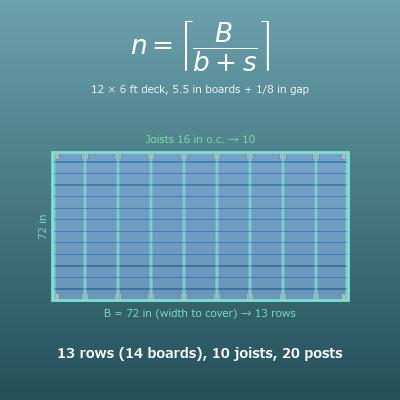
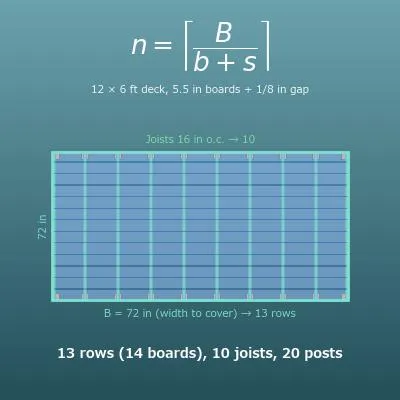
A deck board is a beam resting on the joists, and its span is the joist spacing. Take a 5/4 × 6 pine deck board (actual 1 × 5.5 in) on joists 16 in apart, with a person standing on the deck. If 90 lb of their weight lands on the middle of one board, it sags about 0.013 in. With the joists 24 in apart, the sag grows \((24/16)^3 \approx 3.4\) times, to about 0.044 in.
The numbers show that closer joists are the most effective way to keep a deck from feeling bouncy. For a floor people walk on, strength and fastening (the number of screws) matter as well as deflection, so follow the installation guide and your local building code, or ask a qualified designer.

Getting a feel for "deflection grows with the fourth power of the span" (high school physics and engineering)

The beam deflection formula is one of the first formulas taught in college mechanics of materials. It extends Hooke's law (force proportional to stretch) to bending. The way the span counts to the fourth power and the thickness counts cubed is a sense shared by the design of bridges, buildings and machine parts.
Check with numbers on an everyday bookshelf that "making the side spacing 10% wider increases the deflection by about 50% (\(1.1^4 \approx 1.46\))" and "making the board 10% thicker reduces the deflection by about 25% (\(1 \div 1.1^3 \approx 0.75\))". Then you begin to see why bridge girders are tall in cross section, and why long shelves have supports in the middle.

Formulas and figures

Moment of inertia and section modulus (how the shelf's cross section resists bending)
Figure
Standard notation (the usual math form)
\(I\) \(=\) \(b\) \(\times\) \(h^{3}\) \(\div\ 12\)
\(Z\) \(=\) \(b\) \(\times\) \(h^{2}\) \(\div\ 6\)
In words (symbols replaced with words)
③ \(I\): moment of inertia (in⁴) \(=\) ① \(b\): shelf depth (in) \(\times\) ② \(h^3\): thickness \(h\) cubed \(\div\ 12\)
⑤ \(Z\): section modulus (in³) \(=\) \(b\): shelf depth (in) \(\times\) ④ \(h^2\): thickness \(h\) squared \(\div\ 6\)
The formula in words
① Multiply the \(b\): shelf depth by the
② \(h^3\): thickness cubed and divide by 12 to get the
③ \(I\): moment of inertia (used for the deflection)
④ Multiply the same depth by the \(h^2\): thickness squared and divide by 6 to get the
⑤ \(Z\): section modulus (used for the bending stress)
Quick example
For a pine 1×12 shelf (actual size 11.25 in deep and 0.75 in thick), the moment of inertia and section modulus are
\(I\): moment of inertia \(=\) depth (11.25 in) \(\times\) thickness (0.75 in) cubed \(\div\ 12\)
\(Z\): section modulus \(=\) depth (11.25 in) \(\times\) thickness (0.75 in) squared \(\div\ 6\)
\(I = \dfrac{11.25 \times 0.75^{3}}{12} = \dfrac{11.25 \times 0.421875}{12} \approx 0.3955\ (\mathrm{in^4})\)
\(Z = \dfrac{11.25 \times 0.75^{2}}{6} = \dfrac{11.25 \times 0.5625}{6} \approx 1.055\ (\mathrm{in^3})\)
Key idea
When a board bends, its top is squeezed, its bottom is stretched, and the middle layer (the neutral axis) does neither. The farther a part of the board is from the neutral axis, the more it stretches or squeezes and the more it resists bending. So what decides the resistance to bending is how much of the cross section lies how far from the neutral axis. The moment of inertia \(I\) sums this up in one number. For a rectangular cross section, \(I = \dfrac{b h^3}{12}\). The key point is that the thickness \(h\) counts cubed. Going from a 3/4 in board to a 1 in board makes \(I\) \(\left(\dfrac{1}{0.75}\right)^3 \approx 2.4\) times larger, so the deflection becomes about 1/2.4 as much. The depth \(b\) counts only once, so doubling the depth only halves the deflection (and a deeper shelf tends to carry twice the load, so often nothing really changes). The section modulus \(Z = \dfrac{b h^2}{6}\) is used to find the bending stress (the force at the surface of the material). It is \(I\) divided by the distance from the neutral axis to the surface, \(\dfrac{h}{2}\) (\(\dfrac{b h^3}{12} \div \dfrac{h}{2} = \dfrac{b h^2}{6}\)).
Maximum deflection (load spread evenly = uniform load)
Figure
Standard notation (the usual math form)
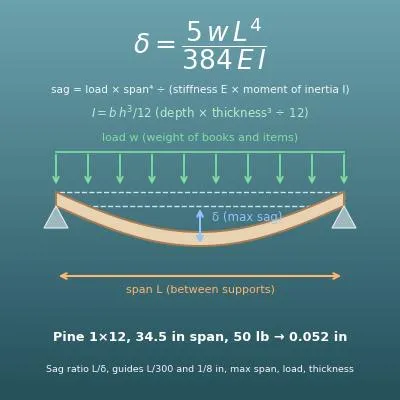
\(\delta\) \(=\) \(\dfrac{5}{384}\) \(\times\) \(w\) \(\times\) \(L^{4}\) \(\div\) \(E\) \(\div\) \(I\)
\(\delta\) \(=\) \(\dfrac{1}{384}\) \(\times\) \(w\) \(\times\) \(L^{4}\) \(\div\) \(E\) \(\div\) \(I\)
In words (symbols replaced with words)
⑤ \(\delta\): maximum deflection (in), simply supported \(=\) \(\dfrac{5}{384}\) \(\times\) ① \(w\): load per inch (lb/in) \(\times\) ② \(L^4\): span \(L\) to the fourth power \(\div\) ③ \(E\): modulus of elasticity (psi) \(\div\) ④ \(I\): moment of inertia (in⁴)
\(\delta\): maximum deflection (in), fixed ends \(=\) \(\dfrac{1}{384}\) \(\times\) \(w\): load per inch (lb/in) \(\times\) \(L^4\): span \(L\) to the fourth power \(\div\) \(E\): modulus of elasticity (psi) \(\div\) \(I\): moment of inertia (in⁴)
The formula in words
① Take the \(w\): load per inch (the total load \(W\) divided by the span \(L\)),
② multiply it by the \(L^4\): span to the fourth power and by \(\dfrac{5}{384}\) when simply supported (\(\dfrac{1}{384}\) for fixed ends),
③ divide by the \(E\): modulus of elasticity
④ and by the \(I\): moment of inertia to get the
⑤ \(\delta\): maximum deflection (how far the middle of the shelf drops)
Quick example
A pine 1×12 shelf (\(I \approx 0.3955\) in⁴, modulus of elasticity 1,300,000 psi) rests on supports 34.5 in apart, with 50 lb of books spread evenly on it (\(50 \div 34.5 \approx 1.4493\) lb per inch). The maximum deflection is
\(\delta\): maximum deflection (simply supported) \(=\) \(\dfrac{5}{384}\) \(\times\) load per inch (1.4493 lb/in) \(\times\) span (34.5 in) to the fourth power \(\div\) modulus of elasticity (1,300,000 psi) \(\div\) moment of inertia (0.3955 in⁴)
\(\delta = \dfrac{5 \times 1.4493 \times 34.5^{4}}{384 \times 1{,}300{,}000 \times 0.3955} = \dfrac{5 \times 1.4493 \times 1.4167 \times 10^{6}}{1.9744 \times 10^{8}} \approx 0.052\ (\mathrm{in})\)
\(\text{With fixed ends} \ \delta \approx 0.052 \times \dfrac{1}{5} \approx 0.010\ (\mathrm{in})\)
Key idea
This is the well-known formula for the maximum deflection of a simply supported beam under a uniform load in mechanics of materials. It works as is for shelves, floor boards, bridge girders and any member held at both ends with a load from the side. The top of the fraction is "size of the load × span to the fourth power", and the bottom is "stiffness of the material (modulus of elasticity) × resistance of the cross section to bending (moment of inertia)". It puts the obvious into a formula: the heavier and longer, the more it sags; the stiffer and thicker, the less. The key point is that the parts count differently. The span \(L\) is to the fourth power, so making the span 10% longer multiplies the deflection by \(1.1^4 \approx 1.46\), and 20% longer by \(1.2^4 \approx 2.07\). The thickness \(h\) counts cubed inside \(I\), so a board 10% thicker sags \(1.1^3 \approx 1.33\) times less. "To fix a sagging shelf, add a support in the middle to shorten the span, or use a thicker board" follows from the fourth power and the cube in this formula. With fixed ends (screwed to the sides or set in a dado), the ends cannot rotate, so the deflection drops to \(\dfrac{1}{5}\) of the simply supported value. Real shelves are never fully fixed, though, and end up between the two cases. To stay on the safe side, it is sensible to calculate as simply supported. The load \(w\) is entered as "lb per inch". If the total load on the shelf is \(W\) (lb), then \(w = W \div L\), and the formula can be rewritten as \(\delta = \dfrac{5 W L^3}{384 E I}\) (the fourth power becomes a cube). This page uses pounds directly as a force (1 lb of weight pushes down with 1 lbf), and the modulus of elasticity in psi (pounds per square inch), so no other conversion is needed.
Maximum deflection (load at the center = point load)
Figure
Standard notation (the usual math form)
\(\delta\) \(=\) \(P\) \(\times\) \(L^{3}\) \(\div\) \(E\) \(\div\) \(I\) \(\div\ 48\)
\(\delta\) \(=\) \(P\) \(\times\) \(L^{3}\) \(\div\) \(E\) \(\div\) \(I\) \(\div\ 192\)
In words (symbols replaced with words)
⑤ \(\delta\): maximum deflection (in), simply supported \(=\) ① \(P\): point load at the center (lb) \(\times\) ② \(L^3\): span \(L\) cubed \(\div\) ③ \(E\): modulus of elasticity (psi) \(\div\) ④ \(I\): moment of inertia (in⁴) \(\div\ 48\)
\(\delta\): maximum deflection (in), fixed ends \(=\) \(P\): point load at the center (lb) \(\times\) \(L^3\): span \(L\) cubed \(\div\) \(E\): modulus of elasticity (psi) \(\div\) \(I\): moment of inertia (in⁴) \(\div\ 192\)
The formula in words
① Multiply the \(P\): point load at the center by the
② \(L^3\): span cubed ,
③ divide by the \(E\): modulus of elasticity
④ and by the \(I\): moment of inertia , then divide by 48 when simply supported (192 for fixed ends) to get the
⑤ \(\delta\): maximum deflection (how far the middle, right under the load, drops)
Quick example
An oak shelf 11.25 in deep and 1 in thick (\(I = 0.9375\) in⁴, modulus of elasticity 1,600,000 psi) spans 30 in, with a 40 lb item in the middle. The maximum deflection is
\(\delta\): maximum deflection (simply supported) \(=\) point load (40 lb) \(\times\) span (30 in) cubed \(\div\) modulus of elasticity (1,600,000 psi) \(\div\) moment of inertia (0.9375 in⁴) \(\div\ 48\)
\(\delta = \dfrac{40 \times 30^{3}}{48 \times 1{,}600{,}000 \times 0.9375} = \dfrac{1{,}080{,}000}{72{,}000{,}000} = 0.015\ (\mathrm{in})\)
\(\text{With fixed ends} \ \delta = 0.015 \times \dfrac{1}{4} \approx 0.004\ (\mathrm{in})\)
Key idea
This is the formula for the maximum deflection of a simply supported beam with a point load at the center. Compared with the uniform-load formula, the span is cubed instead of raised to the fourth power, because the load is given as a total force rather than "per inch" (a uniform load written with its total \(W\) is also cubed: \(\dfrac{5 W L^3}{384 E I}\)). For the same total weight, a load at the center makes the shelf sag \(\dfrac{1/48}{5/384} = \dfrac{384}{240} = 1.6\) times as much as the same weight spread evenly. A handy rule: one heavy item such as a TV or an aquarium in the middle of a shelf sags it 60% more than books of the same weight. On the other hand, moving a heavy item toward an end (near a support) makes the deflection much smaller. With fixed ends, the 48 becomes 192, so the deflection is \(\dfrac{1}{4}\) of the simply supported value. Note that this is a little different from \(\dfrac{1}{5}\) for a uniform load.
Long-term deflection (creep) and the deflection ratio L/δ
Standard notation (the usual math form)
\(\delta_{\text{long}}\) \(=\) \(k_c\) \(\times\) \(\delta_0\)
\(n\) \(=\) \(L\) \(\div\) \(\delta_{\text{long}}\)
In words (symbols replaced with words)
③ \(\delta_{\text{long}}\): long-term deflection (in) \(=\) ② \(k_c\): creep factor \(\times\) ① \(\delta_0\): deflection right after loading (in)
⑤ \(n\): denominator of the deflection ratio (the \(n\) in \(L/n\)) \(=\) ④ \(L\): span (in) \(\div\) \(\delta_{\text{long}}\): long-term deflection (in)
The formula in words
① Multiply the \(\delta_0\): deflection right after loading by the
② \(k_c\): creep factor (people often allow about 1.5 to 2 for wood) to get the
③ \(\delta_{\text{long}}\): long-term deflection
④ Divide the \(L\): span by the long-term deflection to get the
⑤ \(n\): denominator of the deflection ratio . Read it as "the deflection is 1/\(n\) of the span" (the larger \(n\), the smaller the deflection)
Quick example
A pine 1×12 shelf with a 42 in span carries 20 lb of books per foot, and its deflection right after loading is 0.1313 in. With a creep factor of 2:
long-term deflection \(=\) creep factor (2) \(\times\) deflection right after loading (0.1313 in)
\(n\): denominator of the deflection ratio \(=\) span (42 in) \(\div\) long-term deflection (0.2627 in)
\(\delta_{\text{long}} = 2 \times 0.1313 \approx 0.263\ (\mathrm{in})\)
\(n = 42 \div 0.2627 \approx 160 \quad \Rightarrow \quad \text{the deflection is } 1/160 \text{ of the span}\)
Key idea
Wood and wood-based boards (plywood, MDF, particleboard) keep sagging slowly over time when a load stays on them (creep). For a shelf that stays loaded for years, like a bookshelf, the deflection is often said to reach 1.5 to 2 times its initial value, and more in humid places or with particleboard. This calculator estimates the long-term deflection by multiplying by the creep factor \(k_c\) (the default is 1, the value right after loading; creep is negligible for steel and glass). If you look only at "how many inches", longer shelves always look worse. So the deflection ratio \(L/\delta\), "how big compared with the span", is widely used. Common rules of thumb in practice are \(L/300\) (1/300 of the span) or less for sag that is hard to notice, and up to about \(L/200\) for some uses. An absolute limit such as "1/8 in or less" is often used alongside. These are rules of thumb based on appearance and ease of use, not safety standards. In this calculator, "Compared with practical guides" checks the long-term deflection against \(L/300\), \(L/200\) and 1/8 in.
Working back (maximum span and maximum load from an allowable deflection)
Standard notation (the usual math form)
\(L_{\max}^{4}\) \(=\) \(\dfrac{384}{5}\) \(\times\) \(E\) \(\times\) \(I\) \(\times\) \(\delta_a\) \(\div\) \(w\) \(\div\) \(k_c\)
\(w_{\max}\) \(=\) \(\dfrac{384}{5}\) \(\times\) \(E\) \(\times\) \(I\) \(\times\) \(\delta_a\) \(\div\) \(k_c\) \(\div\) \(L^{4}\)
In words (symbols replaced with words)
④ \(L_{\max}^{4}\): maximum span to the fourth power \(=\) \(\dfrac{384}{5}\) \(\times\) \(E\): modulus of elasticity (psi) \(\times\) \(I\): moment of inertia (in⁴) \(\times\) ① \(\delta_a\): allowable deflection (in) \(\div\) ② \(w\): load per inch (lb/in) \(\div\) ③ \(k_c\): creep factor
⑥ \(w_{\max}\): maximum load (lb/in) \(=\) \(\dfrac{384}{5}\) \(\times\) \(E\): modulus of elasticity (psi) \(\times\) \(I\): moment of inertia (in⁴) \(\times\) \(\delta_a\): allowable deflection (in) \(\div\) \(k_c\): creep factor \(\div\) ⑤ \(L^4\): span \(L\) to the fourth power
The formula in words
① Multiply the \(\delta_a\): allowable deflection by the modulus of elasticity \(E\), the moment of inertia \(I\) and \(\dfrac{384}{5}\). Divide this by the
② \(w\): load per inch and by the
③ \(k_c\): creep factor to get the
④ \(L_{\max}^{4}\): maximum span to the fourth power (for a uniform load, simply supported; take the fourth root to get the maximum span \(L_{\max}\))
⑤ Divide the same top part by the creep factor and by the \(L^4\): span to the fourth power to get the
⑥ \(w_{\max}\): maximum load (in lb per inch; multiply by 12 for lb per foot)
Quick example
Books weighing 20 lb per foot (\(20 \div 12 \approx 1.6667\) lb per inch) go on a pine 1×12 shelf (\(I \approx 0.3955\) in⁴, 1,300,000 psi), and you want the deflection within 1/8 in (0.125 in). The maximum span (creep factor 1) and the maximum load for a 34.5 in span are
\(L_{\max}^{4}\): maximum span to the fourth power \(=\) \(\dfrac{384}{5}\) \(\times\) modulus of elasticity (1,300,000) \(\times\) moment of inertia (0.3955) \(\times\) allowable deflection (0.125 in) \(\div\) load (1.6667 lb/in) \(\div\) creep factor (1)
\(L_{\max} = \sqrt[4]{\dfrac{384 \times 1{,}300{,}000 \times 0.3955 \times 0.125}{5 \times 1.6667 \times 1}} = \sqrt[4]{\dfrac{2.4680 \times 10^{7}}{8.3333}} \approx \sqrt[4]{2.9616 \times 10^{6}} \approx 41.48\ (\mathrm{in})\)
\(w_{\max} = \dfrac{384 \times 1{,}300{,}000 \times 0.3955 \times 0.125}{5 \times 1 \times 34.5^{4}} = \dfrac{2.4680 \times 10^{7}}{7.0835 \times 10^{6}} \approx 3.484\ (\mathrm{lb/in}) \quad \Rightarrow \quad 3.484 \times 12 \approx 41.81\ (\mathrm{lb/ft})\)
Key idea
This just solves the deflection formula \(\delta = \dfrac{5 w L^4}{384 E I} \times k_c\) for the value you want. Write the condition "keep the deflection within \(\delta_a\)" as \(\delta_a = \) (right side), then solve for \(L\) to get the maximum span, or for \(w\) to get the maximum load. For the thickness, first find the moment of inertia needed, \(I_{\text{needed}} = \dfrac{5 w L^4 k_c}{384 E \delta_a}\), then solve \(I = \dfrac{b h^3}{12}\) for \(h\): \(h_{\min} = \sqrt[3]{\dfrac{12 I_{\text{needed}}}{b}}\) is the thickness needed. For a point load or fixed ends, the steps are the same; only the coefficient (\(\dfrac{5}{384}\) becomes \(\dfrac{1}{384}\), \(\dfrac{1}{48}\) or \(\dfrac{1}{192}\)) and the power of \(L\) (a cube for a total or point load) change. This calculator switches automatically to match your choices. When the allowable deflection is given as \(L/n\) (for example \(L/300\)), \(\delta_a\) itself grows with the span, so the formula for the maximum span drops from \(L^{4}\) to \(L^{3}\) (\(L_{\max} = \sqrt[3]{\dfrac{384 E I}{5 w k_c n}}\)). To stay on the safe side, the results are rounded down (maximum span to 0.1 in, maximum load to 0.1) or up (thickness needed to 0.01 in), and the deflection and stress are recalculated with those values (in the example, a maximum span of 41.48 in → 41.4 in, and a maximum load of 41.81 lb/ft → 41.8 lb/ft). Boards come only in certain thicknesses, such as 1/2, 5/8, 3/4 and 1 in, so if the thickness needed comes out as 0.81 in, you would choose the next size up, 1 in.
Bending stress (for reference - a guide to whether the material breaks)
Standard notation (the usual math form)
\(M\) \(=\) \(w\) \(\times\) \(L^{2}\) \(\div\ 8\)
\(\sigma\) \(=\) \(M\) \(\div\) \(Z\)
In words (symbols replaced with words)
③ \(M\): maximum bending moment (lb·in) \(=\) ① \(w\): load per inch (lb/in) \(\times\) ② \(L^2\): span \(L\) squared \(\div\ 8\)
⑤ \(\sigma\): bending stress (psi) \(=\) \(M\): maximum bending moment (lb·in) \(\div\) ④ \(Z = \dfrac{b h^2}{6}\): section modulus (in³)
The formula in words
① Multiply the \(w\): load per inch by the
② \(L^2\): span squared and divide by 8 (for a uniform load, simply supported) to get the
③ \(M\): maximum bending moment (largest at the middle of the shelf)
④ Divide it by the \(Z\): section modulus to get the
⑤ \(\sigma\): bending stress (the force per unit area at the top and bottom surfaces of the shelf)
Quick example
For a pine 1×12 shelf (\(Z \approx 1.0547\) in³) with a 34.5 in span and 50 lb of books spread evenly (1.4493 lb per inch), simply supported, the bending stress is
\(M\): maximum bending moment \(=\) load (1.4493 lb/in) \(\times\) span (34.5 in) squared \(\div\ 8\)
\(\sigma\): bending stress \(=\) bending moment (215.6 lb·in) \(\div\) section modulus (1.0547 in³)
\(M = \dfrac{1.4493 \times 34.5^{2}}{8} = \dfrac{1.4493 \times 1{,}190.25}{8} \approx 215.6\ (\mathrm{lb \cdot in})\)
\(\sigma = \dfrac{215.6}{1.0547} \approx 204.4\ (\mathrm{psi}) \quad \Rightarrow \quad \text{about } 16\% \text{ of the allowable bending stress of } 1{,}300\ \mathrm{psi}\)
Key idea
Sagging and breaking are separate questions. Sag is about appearance and ease of use, while breaking depends on whether the force inside the material (the stress) goes beyond the material's strength. For a beam, the bending stress \(\sigma\), the bending moment \(M\) caused by the load divided by the section modulus \(Z\), should be no more than the material's allowable bending stress \(f_b\). That is the guide for "it will not break". The maximum bending moment is \(\dfrac{w L^2}{8}\) (at the middle) for a uniform load, simply supported; \(\dfrac{w L^2}{12}\) (at the ends) for a uniform load with fixed ends; \(\dfrac{P L}{4}\) (at the middle) for a point load at the center, simply supported; and \(\dfrac{P L}{8}\) (at the ends) with fixed ends. This calculator switches automatically to match your choices. On an ordinary bookshelf, the bending stress usually stays at a few hundred psi while the allowable bending stress of wood is roughly 1,000 to 1,500 psi for a long-term load. So "it sags too much to look good long before it breaks" is the normal case. In other words, a shelf design is usually decided by deflection, which is why this page puts deflection first. Stress does become the issue with a heavy load on a thin board, a weak material such as particleboard, or supports that fail first (brackets, or screws pulling out). The allowable bending stresses shown here are commonly quoted guide values. Real strength varies a lot with species, grade, knots, moisture content and the product, and the strength of joints such as brackets, shelf pins and screws is not part of this calculation. This reference display is not a guarantee of safety. For shelves that hold heavy items, shelves someone might stand on, and parts of a building's structure, check the maker's specifications or ask a qualified designer.
A shelf is a beam supported at both ends, so its maximum deflection is load × span to the fourth power (cubed for a point load) ÷ (modulus of elasticity × moment of inertia), times a coefficient (\(\dfrac{5}{384}\), \(\dfrac{1}{384}\), \(\dfrac{1}{48}\) or \(\dfrac{1}{192}\)). The moment of inertia is depth × thickness cubed ÷ 12, so the best ways to reduce sag are a shorter span (it counts to the fourth power) or a thicker board (it counts cubed). For a long-term load, allow 1.5 to 2 times for creep, and use a deflection ratio of \(L/300\) to \(L/200\) or 1/8 in as a practical guide. Whether it breaks is judged by comparing the bending stress \(M/Z\) with the allowable bending stress, but that is only a reference value and not a guarantee of safety.

Symbols and terms

Symbols

\(\delta\) delta The maximum deflection (in). The Greek letter delta \(\delta\) is often used for a displacement (a change in position). On this page it is how far the middle of the shelf drops (also at the middle for fixed ends or a point load). \(\delta_0\) is the deflection right after loading, \(\delta_{\text{long}}\) the long-term deflection with creep, and \(\delta_a\) the allowable deflection (a for "allowable").
\(w\) lowercase w The load per inch (lb/in), the size of a uniform load. It comes from "weight". It is the total load on the shelf \(W\) divided by the span \(L\).
\(W\) capital W The total load on the shelf (lb). The load per inch is \(w = W \div L\).
\(P\) P The point load at the center (lb). P is a common symbol for a force, used for a load or a point load.
\(L\) L The span (in), from the first letter of "length": the distance between supports. Use the distance between the insides of the side panels (or between the brackets), not the outside width of the bookcase.
\(E\) E The modulus of elasticity (Young's modulus), from "elasticity". It shows how stiff a material is. In US units it is given in psi (for example, about 1,300,000 psi for pine); \(1\ \mathrm{GPa} \approx 145{,}038\ \mathrm{psi}\).
\(I\) I The moment of inertia (in⁴), from "moment of inertia of area". It shows how the shape of the cross section resists bending. For a rectangle, \(I = \dfrac{b h^3}{12}\).
\(b\) b The shelf depth (in). It is the width (breadth) of the beam's cross section, the front-to-back size of the shelf.
\(h\) h The shelf thickness (in). It is the height of the beam's cross section and counts cubed in the deflection, so it has the largest effect. \(h_{\min}\) is the thickness needed to stay within the allowable deflection.
\(k_c\) k sub c The creep factor, with c for "creep". It shows how many times the deflection grows under a long-term load. The default is 1 (the deflection right after loading); for wood and wood-based boards, 1.5 to 2 is often allowed.
\(n\) n The denominator of the deflection ratio \(L/n\): the span divided by the deflection. Read it as "the deflection is 1/\(n\) of the span". For \(L/300\), \(n = 300\).
\(M\) M The maximum bending moment (lb·in), from "moment". It is how strongly the load tries to bend the board. For a uniform load, simply supported, it is \(\dfrac{w L^2}{8}\) at the middle.
\(Z\) Z The section modulus (in³), a property of the cross section used to find the bending stress. For a rectangle, \(Z = \dfrac{b h^2}{6}\).
\(\sigma\) sigma The bending stress (psi). The Greek letter sigma \(\sigma\) is used for stress (force per unit area). It is found with \(\sigma = M \div Z\) and compared with the allowable bending stress \(f_b\).
\(f_b\) f sub b The allowable bending stress (psi). f stands for an allowable stress, and the small b for "bending". It is the upper guide for the bending stress a material is taken to carry safely under a long-term load, the reference strength with a safety factor applied.
\(\mathrm{lbf}\) pound-force A unit of force: the force of gravity on 1 lb of weight. This page uses pounds as a force directly (a 50 lb load pushes down with 50 lbf), so no conversion is needed. In metric units, force is in newtons (N): 1 lbf ≈ 4.448 N.
\(\mathrm{psi}\) pounds per square inch A unit of stress and of the modulus of elasticity: how many pounds of force act on each square inch (lb/in²). In metric units, 1 N/mm² (1 MPa) ≈ 145 psi.
\(\approx\) approximately equal to The sign for "approximately equal". It is used when a value that does not come out evenly is rounded to a decimal.

Terms

deflection How far a board or bar bends down from where it was when a force acts on it from the side (in), also called sag. The middle of a shelf drops the most, so the "maximum deflection" on this page is how far the middle drops. A large deflection is not just unsightly; it can also make a shelf slip off its supports or stop a sliding door from moving.
beam A long member supported at points such as both ends that bends under a load from the side. Shelves, floor joists, bridge girders and the beams of buildings can all be calculated as beams, and the formulas on this page are the basic beam deflection formulas of mechanics of materials.
span The distance between supports (in). For a shelf, it is the distance between the insides of the side panels or between the brackets, not the full length of the board. The deflection is proportional to the fourth power of the span (the cube for a point load), so adding a support in the middle to halve the span cuts the deflection to 1/16.
uniform load A load spread evenly over the whole board. A bookshelf packed with books or a shelf lined with dishes is close to this. It is written as the load per inch \(w\) (lb/in). If you enter the total \(W\) for the whole shelf, it is converted with \(w = W \div L\).
point load A load at one spot, such as a single TV or aquarium in the middle of a shelf. For the same weight, it causes 1.6 times the deflection of a uniform load. Moving the load near a support makes the deflection much smaller.
simply supported A way of supporting in which both ends just rest on the supports, so the ends can tilt (rotate) freely. An adjustable shelf on brackets or shelf pins is close to this, and it sags more than with fixed ends under the same conditions. If unsure, calculate this way to stay on the safe side.
fixed ends A way of supporting in which both ends are held firmly so they cannot rotate. A fixed shelf screwed to the sides or set into dadoes comes close to this, and its deflection is 1/5 of the simply supported value (1/4 for a point load). Real shelves are never fully fixed, so they end up between the two.
modulus of elasticity A value showing how stiff a material is, also called Young's modulus. With the same shape and load, a material with twice the modulus sags half as much. Commonly quoted typical values are 1,000,000 to 1,700,000 psi for wood, 900,000 to 1,200,000 for plywood, 400,000 to 600,000 for MDF, 300,000 to 450,000 for particleboard, about 10,000,000 for glass and aluminum, and about 29,000,000 for steel. Wood is much stiffer along the grain than across it; this page uses the value along the length of the shelf (along the grain).
moment of inertia A value showing how well the shape of the cross section resists bending, in in⁴. For a rectangle it is depth × thickness cubed ÷ 12, so doubling the thickness makes it 8 times larger. The same amount of material gives a larger value when used "on edge" (this is why a board standing on its edge bends less than one lying flat).
section modulus A property of the cross section used to find the bending stress, in in³. It is the moment of inertia divided by the distance from the neutral axis to the surface (half the thickness for a rectangle), which gives depth × thickness squared ÷ 6 for a rectangle.
neutral axis When a board bends, its top is squeezed and its bottom stretched, but a layer in between does neither. That layer is the neutral axis (neutral plane), right in the middle of the thickness for a rectangle. The farther a part is from the neutral axis, the more it stretches or squeezes and the more it resists bending.
bending moment How strongly a load tries to bend a board (lb·in). It is set by "force × distance from the support". On a shelf with a uniform load, simply supported, it is largest at the middle: \(\dfrac{w L^2}{8}\). With fixed ends it is largest at the ends.
bending stress The force per unit area at the surfaces (top and bottom) of the material caused by bending (psi). It is the bending moment ÷ section modulus, and as long as it does not go over the material's allowable bending stress, the material is taken as "not likely to break".
allowable bending stress A guide to the highest bending stress a material is taken to carry safely under a long-term load (psi). It is the material's reference strength divided by a safety factor; for wood, about 1,000 to 1,500 psi for a long-term load is commonly quoted. It changes a lot with the grade, knots, moisture content and product, so the values on this page are only for reference and do not guarantee safety.
creep When a steady load stays on, the deformation slowly grows over time. It is marked in wood-based materials such as solid wood, plywood, MDF and particleboard, where the long-term deflection often reaches 1.5 to 2 times the value right after loading, and more in humid conditions. For steel and glass at room temperature it is negligible.
deflection ratio The span divided by the deflection (\(L/\delta\)), which shows what fraction of the span the deflection is. A commonly quoted guide is that \(L/300\) (1/300 of the span) or less is hard to notice, while \(L/200\) may bother you depending on the use. It is a rule of thumb for appearance and ease of use, not a safety standard.
edge-glued panel A wide board made by gluing narrow strips of wood edge to edge with the grain running the same way. Pine edge-glued panels are a common shelf material at home centers. They warp less and are more even in quality than solid boards, but their modulus of elasticity is about the same as the wood they are made from.
MDF A board made of wood fibers bonded with resin; the letters stand for Medium Density Fiberboard. Its surface is flat and easy to work, but its modulus of elasticity is less than half that of wood (about 400,000 to 600,000 psi), so it sags easily and creeps more. For the same thickness, it sags more than an edge-glued panel.
particleboard A board made of wood chips bonded with resin, often used with a laminate finish for the shelves of flat-pack furniture. Its modulus of elasticity is low (about 300,000 to 450,000 psi) and it is not very strong, so it is at a disadvantage for both sag and load capacity. It is not suited to long shelves or heavy books.
pound-force (lbf) A unit of force. An object that weighs 1 lb pushes down with about 1 lbf because of Earth's gravity. This page uses the pounds you enter directly as a force. In metric units, force is measured in newtons (1 lbf ≈ 4.448 N).

Good to know before you start

Here is what helps you use the calculation on this page with real understanding, not just by pressing the button.
If you get stuck, going back over these topics is the quickest way forward.

Exponents (Grade 6)
  • Being able to multiply a number by itself several times, as in \(0.75^3 = 0.75 \times 0.75 \times 0.75 = 0.421875\)
  • Being able to compare how powers act, as in "twice the thickness is 8 times (cubed)" and "twice the span is 16 times (fourth power)"
Direct and inverse variation (Grades 7–8)
  • Understanding that twice the load gives twice the deflection (direct variation), while twice the modulus of elasticity gives half the deflection (inverse variation)
  • Being able to read a fraction formula as "what is on top varies directly, what is on the bottom varies inversely"
Expressions and solving equations for a variable (Grades 7–8)
  • Being able to substitute numbers into a formula such as \(\delta = \dfrac{5 w L^4}{384 E I}\)
  • When \(\delta\) is known and you want \(L\), being able to rearrange the formula into the form \(L^4 = \cdots\) (working back)
Square roots and nth roots (Grade 8 to Algebra 2)
  • Knowing that \(\sqrt[4]{x}\) (the fourth root) is the number that gives \(x\) when raised to the fourth power, and \(\sqrt[3]{x}\) (the cube root) the number that gives \(x\) when cubed
  • Knowing that a fourth root is the square root of the square root (\(\sqrt[4]{x} = \sqrt{\sqrt{x}}\))
Scientific notation and large numbers (Grade 8 and high school physics)
  • Being able to handle large numbers written like \(1.9744 \times 10^{8}\), and multiply and divide them
  • Being able to convert units such as \(1\ \mathrm{ft} = 12\ \mathrm{in}\) (lb/ft to lb/in) and \(1\ \mathrm{GPa} \approx 145{,}038\ \mathrm{psi}\)
Force, pressure and Hooke's law (middle school science and physics)
  • Understanding that weight is a force: 1 lb of weight pushes down with 1 lbf (in metric units, about 9.8 N for each kg)
  • Knowing the idea of Hooke's law, "force and deformation are proportional" (the modulus of elasticity is the material version of it)
  • Understanding that pressure and stress are "force per unit area" (for example, psi = pounds per square inch)

How to calculate it in Excel

Copy the whole table below and paste it into cell A1 in Excel. It works as is.
Table for the moment of inertia and section modulus
Shelf depth b (in) 11.25
Shelf thickness h (in) 0.75
Moment of inertia I (in⁴) =B1*B2^3/12
Section modulus Z (in³) =B1*B2^2/6
Table for the maximum deflection (uniform load, simply supported)
Shelf depth b (in) 11.25
Shelf thickness h (in) 0.75
Span L (in) 34.5
Modulus of elasticity E (psi) 1300000
Total load W (lb) 50
Creep factor k_c 1
Moment of inertia I (in⁴) =B1*B2^3/12
Load per inch w (lb/in) =B5/B3
Maximum deflection δ (in) =5*B8*B3^4/(384*B4*B7)*B6
Deflection ratio L/δ, denominator n =B3/B9
Table for the maximum deflection (point load at the center, simply supported)
Shelf depth b (in) 11.25
Shelf thickness h (in) 1
Span L (in) 30
Modulus of elasticity E (psi) 1600000
Point load at the center P (lb) 40
Moment of inertia I (in⁴) =B1*B2^3/12
Maximum deflection δ (in) =B5*B3^3/(48*B4*B6)
Table for working back: maximum span and maximum load (uniform load, simply supported)
Shelf depth b (in) 11.25
Shelf thickness h (in) 0.75
Modulus of elasticity E (psi) 1300000
Load per foot (lb/ft) 20
Allowable deflection δa (in) 0.125
Creep factor k_c 1
Span L (in, for the maximum load) 34.5
Moment of inertia I (in⁴) =B1*B2^3/12
Maximum span L_max (in) =(384*B3*B8*B5/(5*B4/12*B6))^(1/4)
Maximum load w_max (lb/ft) =384*B3*B8*B5/(5*B6*B7^4)*12
Table for the bending stress (uniform load, simply supported)
Shelf depth b (in) 11.25
Shelf thickness h (in) 0.75
Span L (in) 34.5
Total load W (lb) 50
Allowable bending stress f_b (psi) 1300
Section modulus Z (in³) =B1*B2^2/6
Maximum bending moment M (lb·in) =B4/B3*B3^2/8
Bending stress σ (psi) =B7/B6
Share of the allowable bending stress (%) =B8/B5*100
After pasting, the upper rows of column B are your inputs and the lower rows are calculated automatically.
The first table is a 1×12 board (11.25 × 0.75 in): B3 becomes about 0.3955 (in⁴) and B4 about 1.0547 (in³). The second table is pine (1,300,000 psi) with a 34.5 in span and 50 lb in total: B9 is about 0.052 (in) and B10 about 664 (the deflection is 1/664 of the span). For fixed ends, delete the "5*" in B9 to get "=B8*B3^4/(384*B4*B7)*B6".
The third table is oak (1,600,000 psi), a 30 in span and 40 lb at the center: B7 is 0.015 (in). For fixed ends, change "48" to "192". The fourth table uses an allowable deflection of 0.125 in and 20 lb per foot: B9 is about 41.48 (in; the calculator rounds down to 41.4 to stay safe) and B10 about 41.81 (lb/ft; the calculator rounds down to 41.8). The fifth table is the bending stress: B8 is about 204.4 (psi) and B9 about 16 (%).
"^" is a power (B2^3 is the thickness cubed), "*" is multiplication and "/" is division. Pounds are used directly as a force and the modulus of elasticity is in psi, so no unit conversion is needed.

How to calculate it in Google Sheets

Copy the whole table below and paste it into cell A1 in Google Sheets. It works as is.
Table for the moment of inertia and section modulus
Shelf depth b (in) 11.25
Shelf thickness h (in) 0.75
Moment of inertia I (in⁴) =B1*B2^3/12
Section modulus Z (in³) =B1*B2^2/6
Table for the maximum deflection (uniform load, simply supported)
Shelf depth b (in) 11.25
Shelf thickness h (in) 0.75
Span L (in) 34.5
Modulus of elasticity E (psi) 1300000
Total load W (lb) 50
Creep factor k_c 1
Moment of inertia I (in⁴) =B1*B2^3/12
Load per inch w (lb/in) =B5/B3
Maximum deflection δ (in) =5*B8*B3^4/(384*B4*B7)*B6
Deflection ratio L/δ, denominator n =B3/B9
Table for the maximum deflection (point load at the center, simply supported)
Shelf depth b (in) 11.25
Shelf thickness h (in) 1
Span L (in) 30
Modulus of elasticity E (psi) 1600000
Point load at the center P (lb) 40
Moment of inertia I (in⁴) =B1*B2^3/12
Maximum deflection δ (in) =B5*B3^3/(48*B4*B6)
Table for working back: maximum span and maximum load (uniform load, simply supported)
Shelf depth b (in) 11.25
Shelf thickness h (in) 0.75
Modulus of elasticity E (psi) 1300000
Load per foot (lb/ft) 20
Allowable deflection δa (in) 0.125
Creep factor k_c 1
Span L (in, for the maximum load) 34.5
Moment of inertia I (in⁴) =B1*B2^3/12
Maximum span L_max (in) =(384*B3*B8*B5/(5*B4/12*B6))^(1/4)
Maximum load w_max (lb/ft) =384*B3*B8*B5/(5*B6*B7^4)*12
Table for the bending stress (uniform load, simply supported)
Shelf depth b (in) 11.25
Shelf thickness h (in) 0.75
Span L (in) 34.5
Total load W (lb) 50
Allowable bending stress f_b (psi) 1300
Section modulus Z (in³) =B1*B2^2/6
Maximum bending moment M (lb·in) =B4/B3*B3^2/8
Bending stress σ (psi) =B7/B6
Share of the allowable bending stress (%) =B8/B5*100
The same formulas as in Excel work as is (including "^" for powers). Copy the whole table, paste it into cell A1, and replace the numbers in column B with your own.

How to calculate it in Python

# Treat the shelf as a beam supported at both ends and find the maximum deflection (units: in, lb, psi)
depth_in = 11.25          # shelf depth b (in). The actual size of a 1x12 board
thickness_in = 0.75       # shelf thickness h (in)
span_in = 34.5            # span L (distance between supports, in)
young_psi = 1_300_000     # modulus of elasticity E (psi). Typical value for pine
load_lb = 50              # total load W (lb), spread evenly over the shelf
creep_factor = 1          # creep factor (about 1.5 to 2 for a long-term load)
support = "simple"        # "simple" = resting on brackets (simply supported), "fixed" = fixed ends
allow_stress = 1300       # allowable bending stress guide f_b (psi)

inertia = depth_in * thickness_in ** 3 / 12          # moment of inertia I (in^4)
section_modulus = depth_in * thickness_in ** 2 / 6   # section modulus Z (in^3)
load_lb_per_in = load_lb / span_in                   # load per inch w (lb/in)

# Maximum deflection under a uniform load: simply supported 5wL^4/(384EI), fixed ends wL^4/(384EI)
coef = 5 / 384 if support == "simple" else 1 / 384
deflection = coef * load_lb_per_in * span_in ** 4 / (young_psi * inertia)
deflection_long = deflection * creep_factor
ratio_n = span_in / deflection_long
print(f"Moment of inertia I = {inertia:,.4f} in^4")
print(f"Maximum deflection = {deflection:.3f} in (long-term {deflection_long:.3f} in, deflection ratio L/{ratio_n:.0f})")

# Bending stress (for reference): M = wL^2/8 (simply supported) or wL^2/12 (fixed ends), sigma = M/Z
moment = load_lb_per_in * span_in ** 2 / (8 if support == "simple" else 12)
stress = moment / section_modulus
print(f"Bending stress = {stress:.1f} psi ({stress / allow_stress * 100:.1f}% of the allowable bending stress guide {allow_stress} psi, for reference)")

# Working back: maximum span (uniform load_lb_per_ft) and maximum load that keep the deflection within allow_in
allow_in = 0.125
load_lb_per_ft = 20
w = load_lb_per_ft / 12                               # lb/ft -> lb/in
span_max = (384 * young_psi * inertia * allow_in / (5 * w * creep_factor)) ** 0.25
w_max = 384 * young_psi * inertia * allow_in / (5 * creep_factor * span_in ** 4)
# Round the results to the safe side (maximum span down to 0.1 in, maximum load down to 0.1)
span_max_floor = int(span_max * 10) / 10
w_max_lb_per_ft_floor = int(w_max * 12 * 10) / 10
print(f"Maximum span for an allowable deflection of {allow_in} in = {span_max_floor} in ({load_lb_per_ft} lb per foot, rounded down to 0.1 in)")
print(f"Maximum load at a span of {span_in} in = {w_max_lb_per_ft_floor} lb/ft (rounded down to 0.1)")
Runs with the standard library only. Replace the sizes, modulus of elasticity and load at the top with your own and run it. For a point load at the center, change the deflection line to "load_lb * span_in ** 3 / (48 * young_psi * inertia)" (192 for fixed ends) and the bending moment to "load_lb * span_in / 4" (8 for fixed ends). "** 3" is a cube and "** 0.25" is a fourth root.

How to write it in LaTeX and other math languages (copy and paste)

Moment of inertia and section modulus (how the shelf's cross section resists bending)
I = b × h³ ÷ 12,  Z = b × h² ÷ 6
I = \frac{b h^{3}}{12},\quad Z = \frac{b h^{2}}{6}
<math xmlns="http://www.w3.org/1998/Math/MathML" display="block">
  <mrow>
    <mi>I</mi><mo>=</mo>
    <mfrac><mrow><mi>b</mi><msup><mi>h</mi><mn>3</mn></msup></mrow><mn>12</mn></mfrac>
    <mo>,</mo>
    <mi>Z</mi><mo>=</mo>
    <mfrac><mrow><mi>b</mi><msup><mi>h</mi><mn>2</mn></msup></mrow><mn>6</mn></mfrac>
  </mrow>
</math>
I = (b h^3) / 12,  Z = (b h^2) / 6
{b*h^3/12, b*h^2/6}
Iz := b*h^3/12;  Z := b*h^2/6;
I = b*h^3/12;  Z = b*h^2/6;  % b: depth (in), h: thickness (in)
I = b h^3/12,  Z = b h^2/6
Maximum deflection (load spread evenly = uniform load)
δ = 5 × w × L⁴ ÷ (384 × E × I) (simply supported),  δ = w × L⁴ ÷ (384 × E × I) (fixed ends)
\delta = \frac{5 w L^{4}}{384 E I}\ \text{(simply supported)},\quad \delta = \frac{w L^{4}}{384 E I}\ \text{(fixed ends)}
<math xmlns="http://www.w3.org/1998/Math/MathML" display="block">
  <mrow>
    <mi>δ</mi><mo>=</mo>
    <mfrac><mrow><mn>5</mn><mi>w</mi><msup><mi>L</mi><mn>4</mn></msup></mrow><mrow><mn>384</mn><mi>E</mi><mi>I</mi></mrow></mfrac>
    <mo>,</mo>
    <mi>δ</mi><mo>=</mo>
    <mfrac><mrow><mi>w</mi><msup><mi>L</mi><mn>4</mn></msup></mrow><mrow><mn>384</mn><mi>E</mi><mi>I</mi></mrow></mfrac>
  </mrow>
</math>
delta = (5 w L^4) / (384 E I),  delta = (w L^4) / (384 E I)
{5*w*L^4/(384*Ey*Iz), w*L^4/(384*Ey*Iz)}
delta_simple := 5*w*L^4/(384*E*Iz);  delta_fixed := w*L^4/(384*E*Iz);
delta_simple = 5*w*L^4/(384*E*I);  delta_fixed = w*L^4/(384*E*I);  % w in lb/in, L in in, E in psi, I in in^4
δ = 5 w L^4/(384 E I),  δ = w L^4/(384 E I)
Maximum deflection (load at the center = point load)
δ = P × L³ ÷ (48 × E × I) (simply supported),  δ = P × L³ ÷ (192 × E × I) (fixed ends)
\delta = \frac{P L^{3}}{48 E I}\ \text{(simply supported)},\quad \delta = \frac{P L^{3}}{192 E I}\ \text{(fixed ends)}
<math xmlns="http://www.w3.org/1998/Math/MathML" display="block">
  <mrow>
    <mi>δ</mi><mo>=</mo>
    <mfrac><mrow><mi>P</mi><msup><mi>L</mi><mn>3</mn></msup></mrow><mrow><mn>48</mn><mi>E</mi><mi>I</mi></mrow></mfrac>
    <mo>,</mo>
    <mi>δ</mi><mo>=</mo>
    <mfrac><mrow><mi>P</mi><msup><mi>L</mi><mn>3</mn></msup></mrow><mrow><mn>192</mn><mi>E</mi><mi>I</mi></mrow></mfrac>
  </mrow>
</math>
delta = (P L^3) / (48 E I),  delta = (P L^3) / (192 E I)
{P*L^3/(48*Ey*Iz), P*L^3/(192*Ey*Iz)}
delta_simple := P*L^3/(48*E*Iz);  delta_fixed := P*L^3/(192*E*Iz);
delta_simple = P*L^3/(48*E*I);  delta_fixed = P*L^3/(192*E*I);  % P in lb, L in in, E in psi, I in in^4
δ = P L^3/(48 E I),  δ = P L^3/(192 E I)
Long-term deflection (creep) and the deflection ratio L/δ
δ_long = k_c × δ₀,  n = L ÷ δ_long
\delta_{\mathrm{long}} = k_c \, \delta_0,\quad n = \frac{L}{\delta_{\mathrm{long}}}
<math xmlns="http://www.w3.org/1998/Math/MathML" display="block">
  <mrow>
    <msub><mi>δ</mi><mi>long</mi></msub><mo>=</mo><msub><mi>k</mi><mi>c</mi></msub><msub><mi>δ</mi><mn>0</mn></msub>
    <mo>,</mo>
    <mi>n</mi><mo>=</mo><mfrac><mi>L</mi><msub><mi>δ</mi><mi>long</mi></msub></mfrac>
  </mrow>
</math>
delta_(long) = k_c * delta_0,  n = L / delta_(long)
{kc*delta0, L/(kc*delta0)}
delta_long := kc*delta0;  n := L/delta_long;
delta_long = kc*delta0;  n = L/delta_long;  % kc: creep factor, delta0: deflection right after loading (in)
δ_long = k_c δ_0,  n = L/δ_long
Working back (maximum span and maximum load from an allowable deflection)
L_max = (384 × E × I × δ_a ÷ (5 × w × k_c))^(1/4),  w_max = 384 × E × I × δ_a ÷ (5 × k_c × L⁴)
L_{\max} = \sqrt[4]{\frac{384 E I \delta_a}{5 w k_c}},\quad w_{\max} = \frac{384 E I \delta_a}{5 k_c L^{4}}
<math xmlns="http://www.w3.org/1998/Math/MathML" display="block">
  <mrow>
    <msub><mi>L</mi><mi>max</mi></msub><mo>=</mo>
    <mroot><mfrac><mrow><mn>384</mn><mi>E</mi><mi>I</mi><msub><mi>δ</mi><mi>a</mi></msub></mrow><mrow><mn>5</mn><mi>w</mi><msub><mi>k</mi><mi>c</mi></msub></mrow></mfrac><mn>4</mn></mroot>
    <mo>,</mo>
    <msub><mi>w</mi><mi>max</mi></msub><mo>=</mo>
    <mfrac><mrow><mn>384</mn><mi>E</mi><mi>I</mi><msub><mi>δ</mi><mi>a</mi></msub></mrow><mrow><mn>5</mn><msub><mi>k</mi><mi>c</mi></msub><msup><mi>L</mi><mn>4</mn></msup></mrow></mfrac>
  </mrow>
</math>
L_max = root(4)((384 E I delta_a) / (5 w k_c)),  w_max = (384 E I delta_a) / (5 k_c L^4)
{(384*Ey*Iz*deltaA/(5*w*kc))^(1/4), 384*Ey*Iz*deltaA/(5*kc*L^4)}
Lmax := (384*E*Iz*deltaA/(5*w*kc))^(1/4);  wmax := 384*E*Iz*deltaA/(5*kc*L^4);
Lmax = (384*E*I*deltaA/(5*w*kc))^(1/4);  wmax = 384*E*I*deltaA/(5*kc*L^4);  % deltaA: allowable deflection (in), kc: creep factor
L_max = (384 E I δ_a/(5 w k_c))^(1/4),  w_max = 384 E I δ_a/(5 k_c L^4)
Bending stress (for reference - a guide to whether the material breaks)
M = w × L² ÷ 8,  σ = M ÷ Z
M = \frac{w L^{2}}{8},\quad \sigma = \frac{M}{Z}
<math xmlns="http://www.w3.org/1998/Math/MathML" display="block">
  <mrow>
    <mi>M</mi><mo>=</mo>
    <mfrac><mrow><mi>w</mi><msup><mi>L</mi><mn>2</mn></msup></mrow><mn>8</mn></mfrac>
    <mo>,</mo>
    <mi>σ</mi><mo>=</mo><mfrac><mi>M</mi><mi>Z</mi></mfrac>
  </mrow>
</math>
M = (w L^2) / 8,  sigma = M / Z
{w*L^2/8, (w*L^2/8)/Z}
M := w*L^2/8;  sigma := M/Z;
M = w*L^2/8;  sigma = M/Z;  % w in lb/in, L in in, Z in in^3
M = w L^2/8,  σ = M/Z

How to have ChatGPT  do the calculation

You are a calculation assistant for mechanics of materials (beam deflection). Do the following calculation by actually running Python code, and base your answer only on the numbers from the execution result (do not answer by mental math or guessing).

A pine shelf 11.25 in deep and 0.75 in thick (modulus of elasticity 1,300,000 psi) rests on brackets 34.5 in apart (simply supported), with 50 lb of books spread evenly on it. Use pounds directly as a force.
Find each of the following:
1. The moment of inertia I = b × h³ ÷ 12 (in⁴) and the section modulus Z = b × h² ÷ 6 (in³)
2. The load per inch w = 50 ÷ 34.5 (lb/in), the maximum deflection δ = 5 × w × L⁴ ÷ (384 × E × I) (in), and the deflection ratio L/δ
3. The maximum deflection (in) with fixed ends (δ = w × L⁴ ÷ (384 × E × I))
4. The long-term deflection (in) with a creep factor of 2, and whether it is L/300 or less
5. The bending stress σ = (w × L² ÷ 8) ÷ Z (psi), and its percentage of an allowable bending stress of 1,300 psi
6. The maximum span that keeps the deflection within 1/8 in, L_max = (384 × E × I × 0.125 ÷ (5 × w))^(1/4) (in; use w = 20 lb per foot = 20 ÷ 12 lb/in)

Show the formulas you used and the numbers from the execution result.

How to Use
  1. 1
    Enter your numbers
    Type the numbers you want to calculate with into the input fields
  2. 2
    Calculate
    Press the "Calculate" button
  3. 3
    Check the result
    The result appears on the spot. The same page also explains the idea behind the calculation and the formula
  DataChef Features
Easy and Free
Unlimited conversions for free.
No technical knowledge required.
Intuitive and user-friendly operation.

No Registration Required
Available immediately after access.
Can be used without registering personal information.

Safe and Secure
Fully SSL encrypted communication.
Automatic file deletion by clicking "download".

Fast
High-speed site access
and rapid file conversion.
No Watermark
No watermark.
No attribution required.
Commercial Use Available
Free for commercial use.
No need to contact us for commercial use permission.