


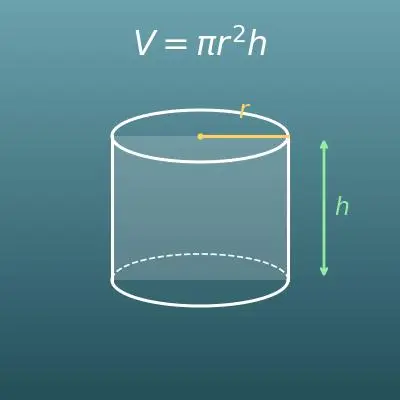
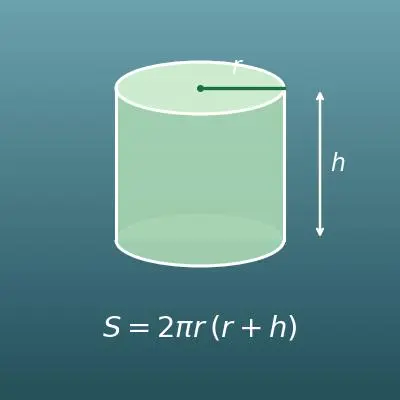










Enter the radius of the base and the height of the cylinder. The volume (V = πr²h) and the base area are shown, along with conversions between cm³, L and m³.
Table of Contents
-
What you can do on this page
-
What is this calculation used for?
-
How to Use
-
Formulas and figures
-
Symbols and terms
-
Good to know before you start
-
How to calculate it in Excel
-
How to calculate it in Google Sheets
-
How to calculate it in Python
-
How to write it in LaTeX and other math languages (copy and paste)
-
How to have ChatGPT do the calculation
-
DataChef Features
-
Related Features
-
NumberChef Calculators List
What you can do on this page
- Enter the radius of the base and the height, and the volume of the cylinder (\(V = \pi r^2 h\)) is calculated on the spot
- The result also shows the base area (\(\pi r^2\)) and the volume in other units: US gallons and cubic feet if you enter inches, and US gallons if you enter feet. Switch "Units" to Metric to get liters and cubic meters instead
- The result is also drawn as a 3D shape. Turn it with the mouse or a swipe to check its shape
- A plain-language explanation of the formulas and copy-and-paste formulas for Excel, Google Sheets and Python are all on this page
What is this calculation used for?
A pot 10 in across (radius 5 in) and 6 in deep holds \(\pi \times 5^2 \times 6 \approx 471\,\mathrm{in^3}\), which is \(471 \div 231 \approx 2.04\) gallons, or about 8 quarts (in practice you do not fill it to the brim, so you can use about 80% of that).
"Will 4 quarts of water plus the pasta fit in this pot?" "Does this tumbler hold a whole 12-ounce can?" You can check with numbers before you buy or cook.
A round rain barrel with a radius of 11 in and a height of 34 in holds \(\pi \times 11^2 \times 34 \approx 12925\,\mathrm{in^3}\), or about \(12925 \div 231 \approx 56\) gallons, close to the familiar 55-gallon drum.
Rainwater is not safe to drink untreated, but it can flush toilets and water the garden during a water outage. A newer US toilet uses at most 1.6 gallons per flush, so 56 gallons is about 35 flushes. The tank size tells you how long your backup water will last.
Treat a log 12 in across (radius 0.5 ft) and 16 ft long as a cylinder, and its volume is \(\pi \times 0.5^2 \times 16 \approx 12.57\,\mathrm{ft^3}\).
Real logs taper toward the top, and in the US, logs are usually measured in board feet with log rules such as Doyle or Scribner. The idea underneath all of them is still the volume of a cylinder.
A round pier poured in a tube form 12 in across (radius 0.5 ft) and 4 ft deep needs \(\pi \times 0.5^2 \times 4 \approx 3.14\,\mathrm{ft^3}\) of concrete, so 10 piers need about 31.4 ft³, or \(31.4 \div 27 \approx 1.16\) yd³.
Ready-mix concrete is ordered by the cubic yard, and an 80 lb bag makes only about 0.6 ft³, so you would need about 53 bags instead. Running short stops the job and leftovers cost money, so this volume calculation goes straight to your budget.
An 8-inch round cake pan (radius 4 in) that is 2 in deep holds \(\pi \times 4^2 \times 2 \approx 100.5\,\mathrm{in^3}\).
When your pan is a different size from the recipe's, scale the batter by the ratio of the volumes. For the same depth, going from an 8-inch pan to a 9-inch pan takes \((4.5 \div 4)^2 \approx 1.27\) times as much. You can decide "make about 1.25 times the recipe" by calculation instead of guessing.
Formulas and figures
Symbols and terms
Symbols
| \(V\) | vee | The usual symbol for volume, from the first letter of "volume". |
| \(r\) | ar | The radius of the base circle (the distance from its center to its edge), from the first letter of "radius". It is half the diameter. |
| \(h\) | aitch | The height of the cylinder (the straight distance from the bottom face to the top face), from the first letter of "height". |
| \(\pi\) | pi | The Greek letter for the ratio of a circle's circumference to its diameter. It goes on forever as \(3.14159\ldots\), and 3.14 is a common rounded value. |
| \(r^2\) | r squared | The number \(r\) multiplied by itself (\(r \times r\)). The small raised 2 is an exponent that shows how many times the number is used as a factor. |
| \(S\) | ess | A common symbol for area. On this page it stands for the area of the base (the area of the base circle, \(\pi r^2\)). Many US textbooks write \(B\) for this. |
| \(\mathrm{in^3}\) | cubic inches | A unit of volume. A cube that is 1 inch on each side has a volume of 1 in³. 1 US gallon is exactly 231 in³. |
| \(\mathrm{ft^3}\) | cubic feet | A unit of volume. A cube that is 1 foot on each side has a volume of 1 ft³. \(1\,\mathrm{ft^3} = 1728\,\mathrm{in^3} \approx 7.48\) gallons, and \(1\,\mathrm{yd^3} = 27\,\mathrm{ft^3}\). |
| \(\mathrm{gal}\) | gallons | A unit for amounts of liquid, familiar from milk jugs and gas pumps. 1 US gallon is \(231\,\mathrm{in^3}\) (about 3.785 liters), and 1 gallon = 4 quarts. |
Terms
| cylinder | A straight solid with circular bases, where every slice across it is a circle of the same size. Cans, drums and paper towel tubes are all around us. |
| base | The top and bottom faces of a prism or cylinder. A cylinder has two circles of the same size, one at the top and one at the bottom, and both are called bases. |
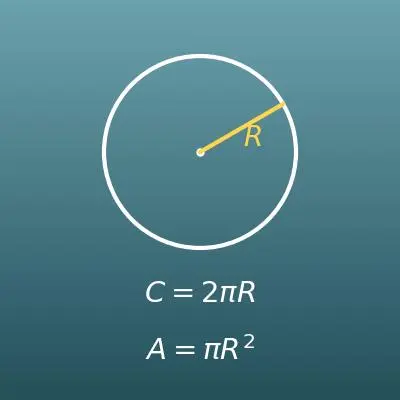
| area of the base | The area of a base. For a cylinder the base is a circle, so the base area comes from the circle area formula \(\pi r^2\) (\(\pi\) × radius × radius). |
| volume | The amount of space a solid takes up, given as a number. It is measured by how many unit cubes, such as 1-inch cubes (1 in³), fit inside. |
| prism | A solid made by stacking the same polygon straight up, such as a triangular or rectangular prism. A cylinder is built the same way with a circle, so for all of them, volume = area of the base × height. |
| pi | The number of times a circle's diameter fits around its circumference. It is the same for every circle, is written \(\pi\), and is about 3.14. |
| unit conversion | Writing the same amount in a different unit. For volume, the key point is that the volume factor is the length factor cubed (1 yd = 3 ft, so 1 yd³ = 27 ft³). |
Good to know before you start
Here is what helps you use the calculation on this page with real understanding, not just by pressing the button.
| Area of a circle (Grade 7) |
|
| What volume is and its units (Grade 5) |
|
| Volume of prisms and cylinders (Grades 6–8) |
|
| Pi and answers in terms of pi (Grades 7–8) |
|
| Multiplying decimals (Grades 5–6) |
|
How to calculate it in Excel
| Radius of the base r (in) | 3 |
| Height h (in) | 4 |
| Volume (in³) | =PI()*B1^2*B2 |
| Radius of the base r (in) | 3 |
| Area of the base, πr² (in²) | =PI()*B1^2 |
| Height h (in) | 4 |
| Volume (in³) | =B2*B3 |
| Volume in in³ | 2714.3 |
| Volume in ft³ | =B1/1728 |
| Volume in ft³ | 31.4 |
| Volume in yd³ | =B1/27 |
In a formula, "PI()" is the Excel function that returns pi (3.14159…), "B1" and "B2" mean "use the number in that cell", "*" is multiplication, "/" is division and "^" is an exponent (how many times to multiply).
In the first table, for example, B3 shows about 113.097 (in³, since the inputs are in inches). The second table shows the same value in B4, the third table shows about 1.571 in B2, and the fourth table shows about 1.163 in B2. To get US gallons from cubic inches, use "=B1/231". Just replace the input numbers with the size of your own cylinder.
How to calculate it in Google Sheets
| Radius of the base r (in) | 3 |
| Height h (in) | 4 |
| Volume (in³) | =PI()*B1^2*B2 |
| Radius of the base r (in) | 3 |
| Area of the base, πr² (in²) | =PI()*B1^2 |
| Height h (in) | 4 |
| Volume (in³) | =B2*B3 |
| Volume in in³ | 2714.3 |
| Volume in ft³ | =B1/1728 |
| Volume in ft³ | 31.4 |
| Volume in yd³ | =B1/27 |
How to calculate it in Python
import math

radius = 3   # radius of the base (inches in this example)
height = 4   # height (same unit as the radius)

base_area = math.pi * radius ** 2   # area of the base circle (in2 in this example)
volume = base_area * height         # volume of the cylinder (input unit cubed, in3 in this example)
volume_gal = volume / 231           # in US gallons (for inputs in inches)

print(f"Base area: {base_area} in2")
print(f"Volume: {volume} in3")
print(f"In US gallons: {volume_gal} gal")
How to write it in LaTeX and other math languages (copy and paste)
V = π × r² × h
V = \pi r^{2} h
<math xmlns="http://www.w3.org/1998/Math/MathML" display="block">
<mrow>
<mi>V</mi>
<mo>=</mo>
<mi>π</mi>
<mo>⁢</mo>
<msup><mi>r</mi><mn>2</mn></msup>
<mo>⁢</mo>
<mi>h</mi>
</mrow>
</math>
V = pi r^2 h
Pi*r^2*h
V := Pi*r^2*h;
V = pi*r^2*h;
V = πr^2 h
V = S × h
V = S \times h
<math xmlns="http://www.w3.org/1998/Math/MathML" display="block">
<mrow>
<mi>V</mi>
<mo>=</mo>
<mi>S</mi>
<mo>×</mo>
<mi>h</mi>
</mrow>
</math>
V = S xx h
S*h
V := S*h;
V = S*h;
V = S × h
V[ft³] = V[in³] ÷ 1728
V_{\mathrm{ft^3}} = V_{\mathrm{in^3}} \div 1728
<math xmlns="http://www.w3.org/1998/Math/MathML" display="block">
<mrow>
<msub><mi>V</mi><mrow><msup><mi mathvariant="normal">ft</mi><mn>3</mn></msup></mrow></msub>
<mo>=</mo>
<msub><mi>V</mi><mrow><msup><mi mathvariant="normal">in</mi><mn>3</mn></msup></mrow></msub>
<mo>÷</mo>
<mn>1728</mn>
</mrow>
</math>
V_(ft^3) = V_(in^3) -: 1728
vIn3/1728
vFt3 := vIn3/1728;
v_ft3 = v_in3/1728;
V(ft³) = V(in³)/1728
V[yd³] = V[ft³] ÷ 27
V_{\mathrm{yd^3}} = V_{\mathrm{ft^3}} \div 27
<math xmlns="http://www.w3.org/1998/Math/MathML" display="block">
<mrow>
<msub><mi>V</mi><mrow><msup><mi mathvariant="normal">yd</mi><mn>3</mn></msup></mrow></msub>
<mo>=</mo>
<msub><mi>V</mi><mrow><msup><mi mathvariant="normal">ft</mi><mn>3</mn></msup></mrow></msub>
<mo>÷</mo>
<mn>27</mn>
</mrow>
</math>
V_(yd^3) = V_(ft^3) -: 27
vFt3/27
vYd3 := vFt3/27;
v_yd3 = v_ft3/27;
V(yd³) = V(ft³)/27
How to have ChatGPT do the calculation
You are a math calculation assistant. Do the following calculation by actually running Python code, and base your answer only on the numbers from the execution result (do not answer by mental math or guessing).

A cylinder has a base radius of 3 inches and a height of 4 inches.
Find each of the following:
1. The area of the base in square inches (in²)
2. The volume of the cylinder in cubic inches (in³)
3. That volume in US gallons (1 gallon = 231 in³)

Show the formulas you used and the numbers from the execution result.
How to Use
-
1Enter your numbersType the numbers you want to calculate with into the input fields
-
2CalculatePress the "Calculate" button
-
3Check the resultThe result appears on the spot. The same page also explains the idea behind the calculation and the formula
DataChef Features

No technical knowledge required.
Intuitive and user-friendly operation.

Can be used without registering personal information.

Automatic file deletion by clicking "download".

and rapid file conversion.
No attribution required.

No need to contact us for commercial use permission.
Related Features
Circle Calculator (Radius, Diameter, Circumference and Area)
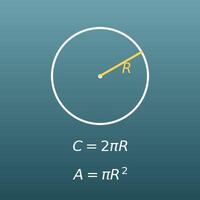
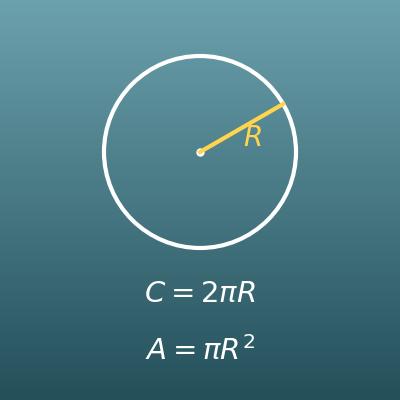
Explains the area of a circle (πr²), which is the base area of a cylinder. Also handy for getting the radius from the diameter
Exponent Calculator (Powers, a to the nth Power)
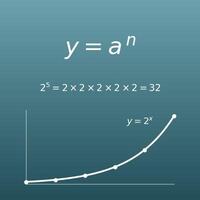
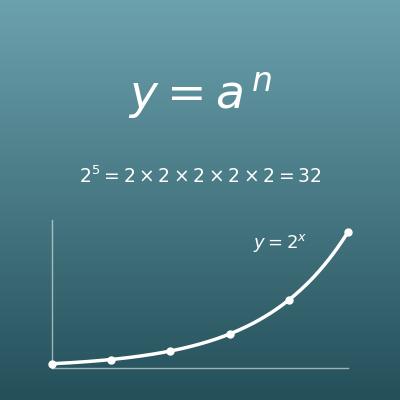
Calculate powers (a to the nth power), such as the "radius squared" in the volume formula
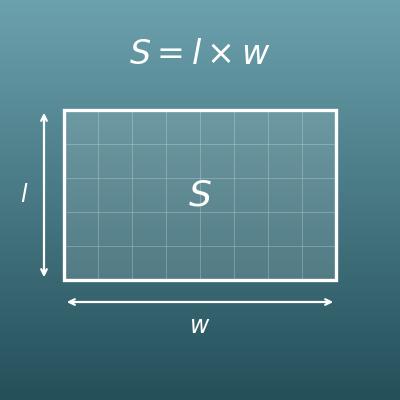
Area of a Rectangle Calculator (Length × Width)
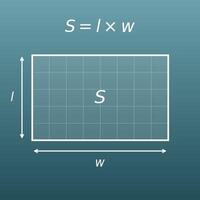
Explains the basics of area and unit conversion (the length factor squared) with the simplest shape