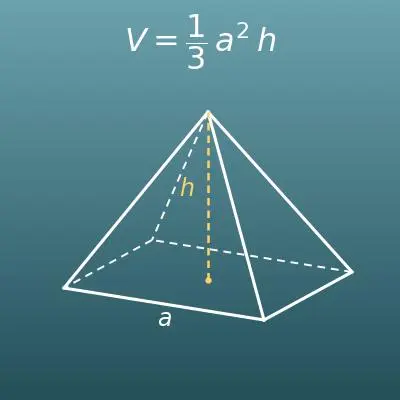


Enter the base side length and the height of a square pyramid (a pyramid with a square base). You get the volume (side × side × height ÷ 3), converted to cm³, m³ and L as well.
Table of Contents
-
What you can do on this page
-
What is this calculation used for?
-
How to Use
-
Formulas and figures
-
Symbols and terms
-
Good to know before you start
-
How to calculate it in Excel
-
How to calculate it in Google Sheets
-
How to calculate it in Python
-
How to write it in LaTeX and other math languages (copy and paste)
-
How to have ChatGPT do the calculation
-
DataChef Features
-
Related Features
-
NumberChef Calculators List
What you can do on this page
- Just enter the side length of the base and the height, and you get the volume of a square pyramid (side × side × height ÷ 3) on the spot
- The pyramid you entered is drawn in 3D (drag to spin it around)
- The base area and the steps are shown too, so you can check how the answer was reached, not just the answer
- The volume is also converted to other units (gal and ft³ if you enter inches, gal if you enter feet)
- A plain-language explanation of why we divide by 3 and copy-and-paste formulas for Excel, Google Sheets and Python are all on this page
What is this calculation used for?
The Great Pyramid of Giza (the Pyramid of Khufu) is almost a right square pyramid, with a base side of about 756 ft and an original height of about 481 ft. Its volume is about \(756 \times 756 \times 481 \div 3 \approx 91{,}600{,}000\,\mathrm{ft^3}\), or about 92 million cubic feet (about 2.6 million m³). That is enough stone to fill roughly 1,000 Olympic-size swimming pools.
The real pyramid has passages and rooms inside, and its faces are not perfectly flat, so this is an estimate. Still, one formula lets you put the scale of a World Heritage Site into numbers.
A tent held up by a single center pole (a pyramid tent, also called a teepee-style tent) is almost a square pyramid if its floor is square. For a 10 ft × 10 ft floor and a 7 ft pole, the space inside is about \(10 \times 10 \times 7 \div 3 \approx 233\,\mathrm{ft^3}\).
Knowing the amount of air in the tent helps you judge how well a heater can warm it on a winter camping trip, or how likely condensation is (many real tents have short vertical walls at the bottom, so this is an estimate).
A pyramid hip roof on a square building is exactly a square pyramid. For a 20 ft × 20 ft roof that rises 6 ft, the attic space under it is about \(20 \times 20 \times 6 \div 3 = 800\,\mathrm{ft^3}\).
The attic volume is a number used when planning attic ventilation and insulation. Many pointed roofs you see around you, such as gazebo and tower roofs, can be estimated with this formula.
A hopper is a funnel-shaped bin that stores grain, plastic pellets or powder and lets it out little by little from the bottom. It is often an upside-down square pyramid. For a hopper 6 ft across the top and 4.5 ft deep, the capacity is \(6 \times 6 \times 4.5 \div 3 = 54\,\mathrm{ft^3}\), which is 2 yd³, or about 43 bushels of grain (1 bushel ≈ 1.24 ft³).
Questions like "how many more tons will fit?" or "can it hold a day's worth of material?" start from this volume calculation (real hoppers are often cut off at the narrow bottom, forming a frustum; then you subtract the small pyramid from the large one).
The volume of pyramids and cones is a staple of middle school and high school geometry, and the pyramid formula appears on the formula sheet of tests such as the SAT. For example, "What is the volume of a right square pyramid with a base side of 6 in and a height of 8 in?" The answer is \(6 \times 6 \times 8 \div 3 = 96\,\mathrm{in^3}\).
Forgetting to divide by 3 is the most common mistake. Remember it together with "a pointed solid is 1/3 of the prism", and you will get these points on the test.
Formulas and figures
Symbols and terms
Symbols
| \(V\) | vee | A common symbol for volume, from the first letter of "volume". On this page it stands for the volume of the square pyramid. |
| \(a\) | a | The side length of the square base. The length and width of the base are the same, so one symbol is enough. |
| \(a^2\) | a squared | The number \(a\) multiplied by itself (\(a \times a\)). The small 2 at the upper right is an exponent. On this page it is the base area (the area of the square). |
| \(h\) | aitch | The height, from the first letter of "height". It is measured straight up (at a right angle) from the base to the apex, not along a slanted edge. |
| \(S\) | ess | A symbol used here for the base area (the area of the base). US textbooks often use \(B\) instead. For a square pyramid, \(S = a \times a\). |
| \(\mathrm{in^3}\) | cubic inches | A unit of volume. A cube with 1-inch sides has a volume of 1 in³. Do not mix it up with in² (square inches), the unit of area. |
| \(\mathrm{ft^3}\) | cubic feet | A unit of volume. A cube with 1-foot sides has a volume of 1 ft³, and \(1\,\mathrm{ft^3} = 1728\,\mathrm{in^3}\). |
| \(\mathrm{gal}\) | gallons | A unit of volume, mostly used for liquids. One US gallon is \(1\,\mathrm{gal} = 231\,\mathrm{in^3}\). It is the familiar unit on milk jugs and at the gas pump. |
Terms
| square pyramid | A solid with a four-sided base that narrows to a single point (the apex). This page covers the ones with a square base (the classic pyramid shape). |
| right square pyramid | A square pyramid whose apex is directly above the center of the square base. The pyramids of Egypt have this shape. Even if the apex is not directly above the center, the volume does not change as long as the base area and the height stay the same. |
| pyramid | The general name for a solid with a polygon base (a triangle, a four-sided shape, a pentagon and so on) that narrows to a single point. With a triangle base it is a triangular pyramid; with a four-sided base, a square or rectangular pyramid. |
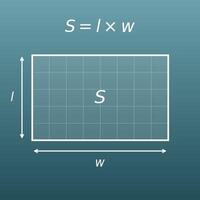
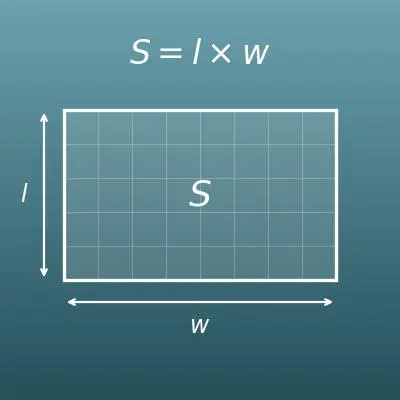
| base area | The area of the bottom face (the base) of a solid. For a square pyramid, it is the area of the square base (side × side). |
| volume | The amount of space a solid takes up, given as a number. It is measured by how many cubes with 1-inch sides (1 in³) would fill it. |
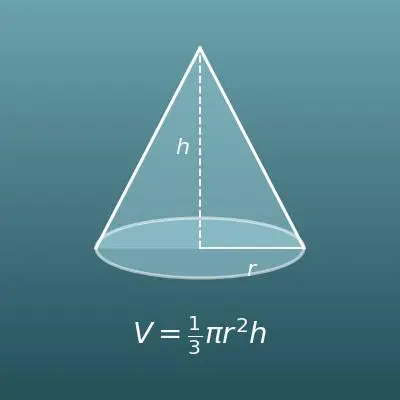
| apex | The single point at the top of a pyramid or a cone, where the faces meet. Every solid that narrows from its base to one apex, pyramids and cones alike, has volume "base area × height ÷ 3". |
Good to know before you start
Here is what helps you use the calculation on this page with real understanding, not just by pressing the button.
| Multiplication and division (Grades 3–4) |
|
| Area of a square (Grade 3) |
|
| What volume is and its units (Grade 5) |
|
| Pyramids as solids (Grade 7 and geometry) |
|
How to calculate it in Excel
| Base side length | 5 |
| Height | 12 |
| Pyramid volume | =B1^2*B2/3 |
| Base area | 25 |
| Height | 12 |
| Volume | =B1*B2/3 |
| Volume in in³ | 100 |
| Volume in ft³ | =B1/1728 |
In a formula, "B1" and "B2" tell Excel to use the number in that cell. "*" is multiplication, "/" is division and "^" is a power (how many times to multiply).
In the first table, for example, B3 shows 5 × 5 × 12 ÷ 3 = 100 (in³ if you entered inches). The second table shows 100 in B3, and the third table shows about 0.0579 in B2. Just replace the input numbers with your own lengths.
How to calculate it in Google Sheets
| Base side length | 5 |
| Height | 12 |
| Pyramid volume | =B1^2*B2/3 |
| Base area | 25 |
| Height | 12 |
| Volume | =B1*B2/3 |
| Volume in in³ | 100 |
| Volume in ft³ | =B1/1728 |
How to calculate it in Python
a = 5    # base side length (in inches in this example)
h = 12   # height (straight up from the base to the apex; same unit as a)

base_area = a ** 2            # base area (area of the square)
volume = base_area * h / 3    # pyramid volume (input unit cubed; in3 in this example)
volume_gal = volume / 231     # volume in US gallons, if you entered inches

print(f"Base area: {base_area} in2")
print(f"Pyramid volume: {volume} in3")
print(f"In gallons: {volume_gal} gal")
How to write it in LaTeX and other math languages (copy and paste)
V = a² × h ÷ 3
V = \frac{1}{3} a^{2} h
<math xmlns="http://www.w3.org/1998/Math/MathML" display="block">
  <mrow>
    <mi>V</mi>
    <mo>=</mo>
    <mfrac><mn>1</mn><mn>3</mn></mfrac>
    <msup><mi>a</mi><mn>2</mn></msup>
    <mi>h</mi>
  </mrow>
</math>
V = 1/3 a^2 h
a^2*h/3
V := a^2*h/3;
V = a^2*h/3;
V = (a^2 × h)/3
V = S × h ÷ 3
V = \frac{1}{3} S h
<math xmlns="http://www.w3.org/1998/Math/MathML" display="block">
  <mrow>
    <mi>V</mi>
    <mo>=</mo>
    <mfrac><mn>1</mn><mn>3</mn></mfrac>
    <mi>S</mi>
    <mi>h</mi>
  </mrow>
</math>
V = 1/3 S h
s*h/3
V := S*h/3;
V = s*h/3;
V = (S × h)/3
V[ft³] = V[in³] ÷ 1728
V_{\mathrm{ft^3}} = V_{\mathrm{in^3}} \div 1728
<math xmlns="http://www.w3.org/1998/Math/MathML" display="block">
<mrow>
<msub><mi>V</mi><mrow><msup><mi mathvariant="normal">ft</mi><mn>3</mn></msup></mrow></msub>
<mo>=</mo>
<msub><mi>V</mi><mrow><msup><mi mathvariant="normal">in</mi><mn>3</mn></msup></mrow></msub>
<mo>÷</mo>
<mn>1728</mn>
</mrow>
</math>
V_(ft^3) = V_(in^3) -: 1728
vIn3/1728
vFt3 := vIn3/1728;
v_ft3 = v_in3/1728;
V(ft³) = V(in³)/1728
How to have ChatGPT do the calculation
You are a math calculation assistant. Do the following calculation by actually running Python code, and base your answer only on the numbers from the execution result (do not answer by mental math or guessing).

A square pyramid has a square base with 5 in sides and a height of 12 in.
Find each of the following:
1. The base area of this pyramid in in²
2. The volume of this pyramid in in³ (volume = base area × height ÷ 3)
3. That volume in US gallons (1 gal = 231 in³)

Show the formulas you used and the numbers from the execution result.
How to Use
-
1Enter your numbersType the numbers you want to calculate with into the input fields
-
2CalculatePress the "Calculate" button
-
3Check the resultThe result appears on the spot. The same page also explains the idea behind the calculation and the formula
DataChef Features

No technical knowledge required.
Intuitive and user-friendly operation.

Can be used without registering personal information.

Automatic file deletion by clicking "download".

and rapid file conversion.
No attribution required.

No need to contact us for commercial use permission.
Related Features
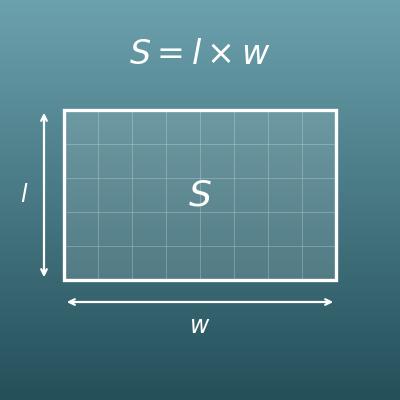
Area of a Rectangle Calculator (Length × Width)
Finds the area of a square or rectangle (length × width), which is the base area of a pyramid
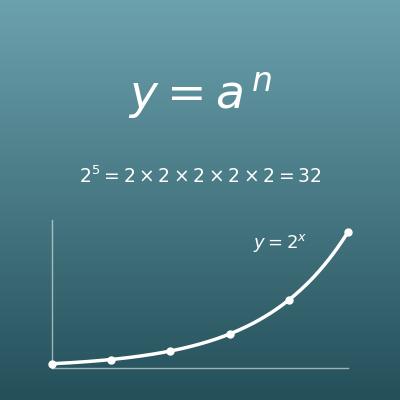
Exponent Calculator (Powers, a to the nth Power)
Calculates powers (a to the n-th power), such as the "side squared" in the base area