
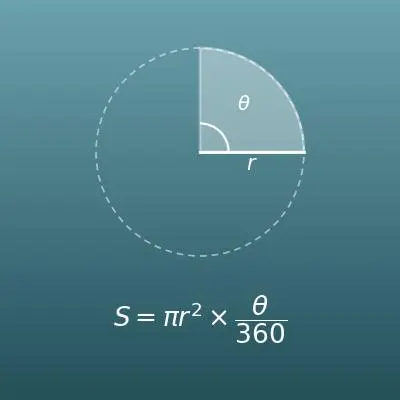
Enter the radius and the central angle of the sector. The area (πr² × central angle ÷ 360) is calculated and a figure of the sector is drawn.
Table of Contents
-
What you can do on this page
-
What is this calculation used for?
-
How to Use
-
Formulas and figures
-
Symbols and terms
-
Good to know before you start
-
How to calculate it in Excel
-
How to calculate it in Google Sheets
-
How to calculate it in Python
-
How to write it in LaTeX and other math languages (copy and paste)
-
How to have ChatGPT do the calculation
-
DataChef Features
-
Related Features
-
NumberChef Calculators List
What you can do on this page
- Enter the radius and the central angle, and you get the area of the sector (\(\pi r^2 \times\) central angle \(\div\, 360\)) right away
- The central angle can be entered in degrees (°) or in radians (fill in only one of the two fields)
- When it divides evenly, the exact answer in terms of \(\pi\) is shown too (for a radius of 30 and a central angle of 90°, \(225\pi\))
- A figure of the sector is drawn with the result, so you can see at a glance which part of the whole circle you found the area of
- A plain-language explanation of the formulas and copy-and-paste formulas for Excel, Google Sheets and Python are all on this page
What is this calculation used for?
Cut a 14-inch pizza (radius 7 in) into 8 slices, and each slice is a sector with a central angle of \(360^\circ \div 8 = 45^\circ\). Its area is \(\pi \times 7^2 \times \dfrac{45}{360} = \dfrac{49\pi}{8} \approx 19.24\,\mathrm{in^2}\).
Questions like "Which is bigger, a slice of a medium cut into 8 or a slice of a large cut into 12?" can be settled with numbers by finding the areas with this formula.
A rotating sprinkler waters a sector whose radius is how far the water reaches and whose central angle is how far it turns. A sprinkler that reaches 30 ft and turns 180° covers \(\pi \times 30^2 \times \dfrac{180}{360} = 450\pi \approx 1{,}413.7\,\mathrm{ft^2}\).
Compare this with the size of your lawn or garden, and you can plan how many sprinklers you need and where to put them before you buy (wind and water pressure change the actual coverage, so treat it as a rough guide).
A wiper swings in a sector around the base of its arm. If the tip reaches 24 in and it swings through 90°, the sector it sweeps is \(\pi \times 24^2 \times \dfrac{90}{360} = 144\pi \approx 452.4\,\mathrm{in^2}\) (about 3.14 ft²).
The part actually wiped is this sector minus the small inner sector the blade does not reach (a shape like a piece of a ring), so you use this formula twice: "large sector − small sector".
Fan-shaped flower beds and lawns are common at street corners and in front of buildings. A bed with a radius of 10 ft and a central angle of 120° has an area of \(\pi \times 10^2 \times \dfrac{120}{360} = \dfrac{100\pi}{3} \approx 104.7\,\mathrm{ft^2}\).
Sod, soil and mulch are sold by how much area they cover (a bag covers so many ft², and so on), so once you know the area, you can estimate how much to buy.
Specs for security cameras and motion sensors say things like "90° field of view, 25 ft detection range". Treating the area covered at ground level as a sector gives \(\pi \times 25^2 \times \dfrac{90}{360} = 156.25\pi \approx 490.9\,\mathrm{ft^2}\).
Lay this over a plan of a parking lot or a store, and you can check for blind spots and how many units you need before installing (obstacles and the tilt of the camera change the area it actually sees).
Formulas and figures
Symbols and terms
Symbols
| \(S\) | ess | A symbol often used for area. On this page it is the area of the sector. (Many US textbooks write area as \(A\).) |
| \(r\) | ar | The radius, from the first letter of "radius". It is the length from the center of the circle to the arc. |
| \(r^2\) | r squared | The number \(r\) multiplied by itself (\(r \times r\)). The small 2 at the upper right is an exponent that tells you to multiply the number by itself. |
| \(\theta\) | theta | A Greek letter often used for the size of an angle. On this page it is the central angle of the sector. |
| \(\pi\) | pi | Pi - the number of times the circumference of a circle is longer than its diameter. It is \(3.14159265\ldots\), a decimal that goes on forever without repeating (an irrational number). In school it is often rounded to 3.14. |
| \(^\circ\) | degree | A unit of angle. One full turn divided into 360 equal parts is 1°. It is the most familiar way to write an angle, the one you measure with a protractor (degree measure). |
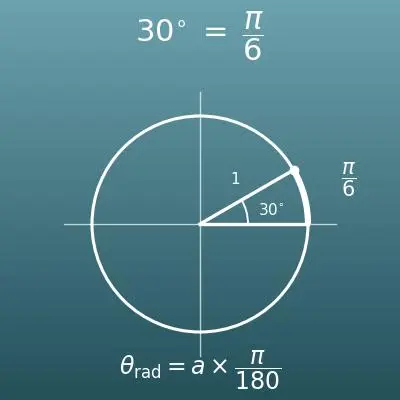
| \(\mathrm{rad}\) | radian | A unit of angle taught in high school (radian measure). The central angle of an arc as long as the radius is 1 radian, and \(180^\circ = \pi\) radians (1 radian ≈ 57.3°). |
Terms
| sector | A shape cut from a circle by two radii, like a slice of pizza or an open folding fan. It is bounded by two radii and an arc. |
| central angle | The angle at the point of the sector, that is, at the center of the circle. It shows how wide the sector opens; the larger it is, the larger the area and the arc. |
| arc | Part of the circumference of a circle. It is the curved outer edge of the sector. |
| pi | The value of circumference ÷ diameter. It is the same for a circle of any size (\(3.14159\ldots\)). The symbol is \(\pi\). |
| degree measure | Measuring angles with one full turn as 360°. It is the familiar degree (°) measure used since elementary school. |
| radian measure | Measuring angles by arc length (the unit is the radian). One full turn is \(2\pi\) radians. It is used from Algebra 2 and precalculus on. |
| fraction of the whole circle | A number that shows how much of the whole something takes up. On this page, "central angle ÷ angle of the whole circle" shows what fraction of the whole circle the sector is. |
Good to know before you start
Here is what helps you use the calculation on this page with real understanding, not just by pressing the button.
| Fractions of a whole and multiplying fractions (Grades 5–6) |
|
| Area of a circle (Grade 7) |
|
| Expressions with variables and pi (Grade 7) |
|
| Arcs and sectors (high school Geometry) |
|
| Radian measure (Algebra 2 and precalculus; only if you use the radians field) |
|
How to calculate it in Excel
| Radius | 30 |
| Central angle (degrees) | 90 |
| Area of the sector | =PI()*B1^2*B2/360 |
| Radius | 10 |
| Central angle (radians) | 1.5708 |
| Area of the sector | =B1^2*B2/2 |
"B1" and "B2" in a formula stand for "the number in that cell". "*" is multiplication, "/" is division and "^" is a power (how many times to multiply). "PI()" is a function that returns pi (3.14159…).
In the first table, B3 shows π × 30² × 90 ÷ 360 ≈ 706.86 (in² if you entered inches). The second table (the radian version, radius² × central angle ÷ 2) shows 78.54 in B3. Just replace the inputs with the numbers for your own sector.
How to calculate it in Google Sheets
| Radius | 30 |
| Central angle (degrees) | 90 |
| Area of the sector | =PI()*B1^2*B2/360 |
| Radius | 10 |
| Central angle (radians) | 1.5708 |
| Area of the sector | =B1^2*B2/2 |
How to calculate it in Python
import math

radius = 30    # radius (inches in this example)
degrees = 90   # central angle (degrees)

area = math.pi * radius ** 2 * degrees / 360   # area of the sector (input unit squared; in2 in this example)

print(f"Area of the sector: {area} in2")

# With the central angle in radians, it is "radius squared x central angle / 2"
radians = 1.5708
area_by_radians = radius ** 2 * radians / 2
print(f"With a central angle of {radians} radians: {area_by_radians} in2")
How to write it in LaTeX and other math languages (copy and paste)
S = πr² × θ ÷ 360
S = \pi r^{2} \times \dfrac{\theta}{360}
<math xmlns="http://www.w3.org/1998/Math/MathML" display="block">
<mrow>
<mi>S</mi>
<mo>=</mo>
<mi>π</mi>
<msup><mi>r</mi><mn>2</mn></msup>
<mo>×</mo>
<mfrac><mi>θ</mi><mn>360</mn></mfrac>
</mrow>
</math>
S = pi r^2 xx theta/360
Pi r^2 theta/360
S := Pi*r^2*theta/360;
S = pi*r^2*theta/360;
S = πr^2 × θ/360
S = πr² × θ ÷ (2π)
S = \pi r^{2} \times \dfrac{\theta}{2\pi}
<math xmlns="http://www.w3.org/1998/Math/MathML" display="block">
<mrow>
<mi>S</mi>
<mo>=</mo>
<mi>π</mi>
<msup><mi>r</mi><mn>2</mn></msup>
<mo>×</mo>
<mfrac><mi>θ</mi><mrow><mn>2</mn><mi>π</mi></mrow></mfrac>
</mrow>
</math>
S = pi r^2 xx theta/(2 pi)
Pi r^2 theta/(2 Pi)
S := Pi*r^2*theta/(2*Pi);
S = pi*r^2*theta/(2*pi);
S = πr^2 × θ/(2π)
How to have ChatGPT do the calculation
You are a math calculation assistant. Do the following calculation by actually running Python code, and base your answer only on the numbers from the execution result (do not answer by mental math or guessing).

A sector has a radius of 30 in and a central angle of 90°.
Find each of the following:
1. The area of this sector in in² (as a decimal)
2. The same area written exactly in terms of pi (π)

Show the formulas you used and the numbers from the execution result.
How to Use
-
1Enter your numbersType the numbers you want to calculate with into the input fields
-
2CalculatePress the "Calculate" button
-
3Check the resultThe result appears on the spot. The same page also explains the idea behind the calculation and the formula
DataChef Features

No technical knowledge required.
Intuitive and user-friendly operation.

Can be used without registering personal information.

Automatic file deletion by clicking "download".

and rapid file conversion.
No attribution required.

No need to contact us for commercial use permission.
Related Features
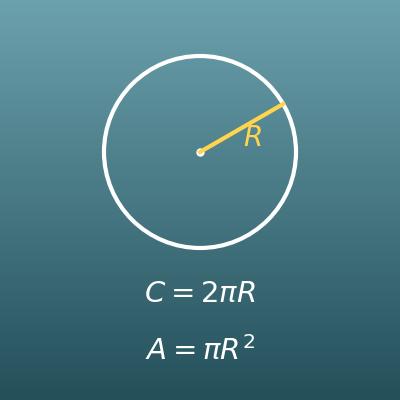
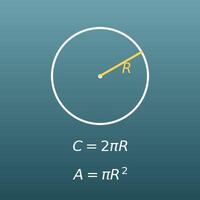
Circle Calculator (Radius, Diameter, Circumference and Area)
Calculations for the whole circle a sector comes from. Enter any one of radius, diameter, circumference or area to get the other three
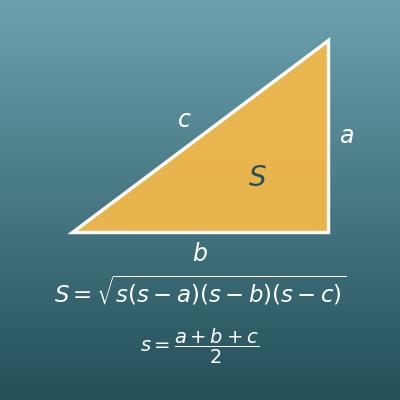
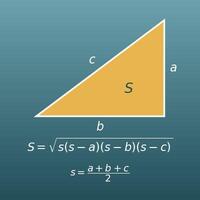
Triangle Area Calculator (from Three Sides with Heron's Formula)
Enter the three side lengths to get the area of a triangle. Part of the shape area series
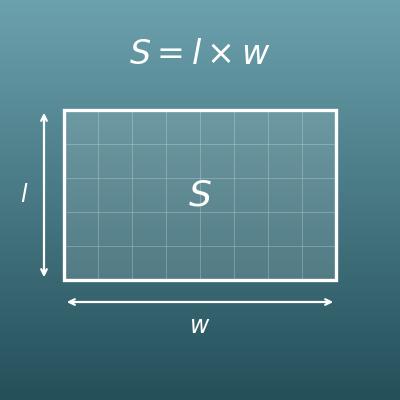
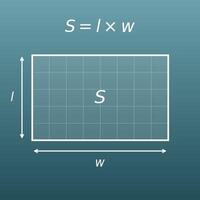
Area of a Rectangle Calculator (Length × Width)
Calculates the area of a rectangle (or square) from its length and width, with unit conversion
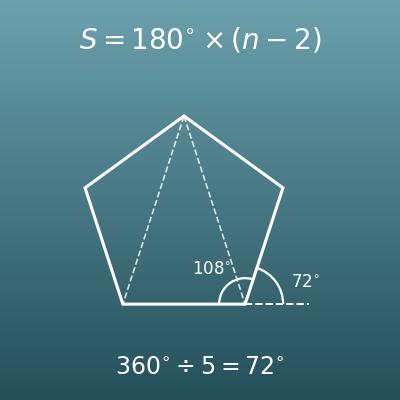
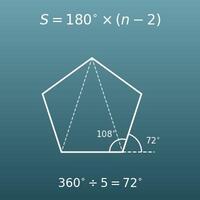
Polygon Angle Calculator (Sum of Interior and Exterior Angles, Regular Polygons)
Finds the sum of the interior and exterior angles of an n-sided polygon and each angle of a regular polygon, and works back from an angle to the number of sides
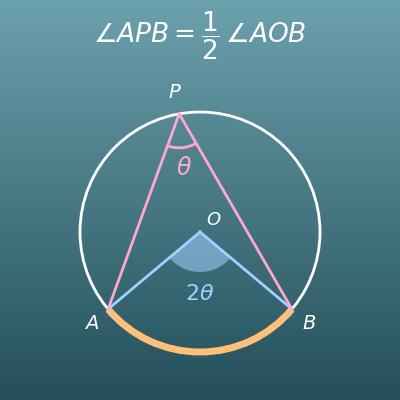
Inscribed Angle Theorem Calculator (Central Angle, Arc Ratio, Inscribed Quadrilateral)
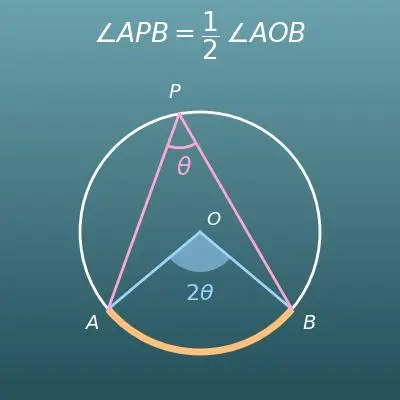
Finds the central angle from an inscribed angle (twice) and back (half), angles from arc ratios and opposite angles of a cyclic quadrilateral, with a figure