





Enter the weight you lifted (kg) and how many reps in a row you did with it. Your 1RM (the most you can lift for one rep) is estimated with three formulas, with a table by reps, a %1RM lookup table and a graph.
Table of Contents
-
What you can do on this page
-
What is this calculation used for?
-
How to Use
-
Formulas and graphs
-
Symbols and terms
-
Good to know before you start
-
How to calculate it in Excel
-
How to calculate it in Google Sheets
-
How to calculate it in Python
-
How to write it in LaTeX and other math languages (copy and paste)
-
How to have ChatGPT do the calculation
-
DataChef Features
-
Related Features
-
NumberChef Calculators List
What you can do on this page
- From a set such as "I lifted this weight for so many reps in a row" on the bench press or squat, estimate the most you could lift for a single rep (your 1RM)
- Enter the weight (lb) and the reps (1 to 10) to see the estimated 1RM from three formulas at once: Epley (standard), Brzycki and Lombardi
- From your estimated 1RM, a table shows the weight for each number of reps, and a lookup table shows the weight and reps for each %1RM (percentage of your 1RM). You can use them directly to plan your training weights
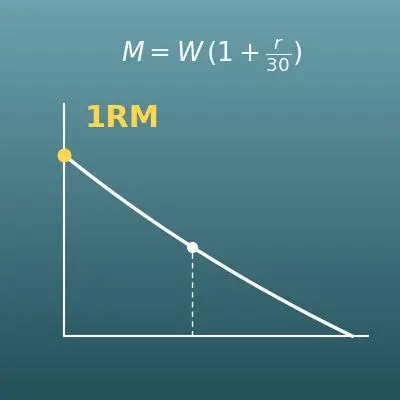
- A graph of weight against reps shows your set and your estimated 1RM at a glance
- A plain-language explanation of the formulas and copy-and-paste formulas for Excel, Google Sheets and Python are all on this page
What is this calculation used for?
In strength training, the basic idea is to plan your workouts as "so many reps at such a percentage of your 1RM", depending on your goal. Common guidelines from the National Strength and Conditioning Association (NSCA) are 85% of 1RM or more for 6 reps or fewer to build strength, 67–85% for 6 to 12 reps to build muscle size, and 67% or less for 12 reps or more for muscular endurance.
Once you can estimate your 1RM, each %1RM becomes an actual weight. For example, if 225 lb for 5 reps gives an estimated 1RM of 262.5 lb, 75% of that for muscle size is about 197 lb. It goes straight into setting the weight for today's workout.
To measure a true 1RM, you have to attempt your limit, and a very heavy attempt comes with the risk of failing under the bar and heavy stress on your joints and tendons. With the formulas, you can get an estimate of your 1RM from an everyday set such as "225 lb × 5", without going to your limit.
Especially for newer lifters, the usual advice is to avoid testing a true 1RM before your form is solid. The formulas are widely used as a safe alternative.
In powerlifting and weightlifting, your result is the heaviest single lift you make at a meet. You cannot go to your limit at every training session, so lifters calculate an estimated 1RM from their training sets of "weight × reps", follow how it changes, and use it to plan the weights they will attempt at the meet. In most powerlifting meets, attempts are declared in kilograms, so switching "Units" to Metric can help.
If a team uses the same formula as a common measure, it is also easier to compare progress between lifters of different sizes and in different lifts.
In rehabilitation and exercise programs for older adults, the load for strength training is sometimes set as a percentage of 1RM. Having someone with limited strength lift a maximum weight is dangerous, so estimating the 1RM from how many reps they can do with a light weight is considered the better approach.
In this way, the formulas are a tool not only for athletes but also for people who want to exercise with safety first. Rehab and exercise for people with health conditions should always be done under the guidance of a doctor, physical therapist or other professional.
Formulas and graphs
Symbols and terms
Symbols
| \(M\) | em | The estimated 1RM you want to find (lb or kg). M stands for "maximum". |
| \(W\) | double-u | The weight lifted (lb or kg), the weight you actually lifted for several reps in a row. W stands for "weight". |
| \(r\) | ar | The reps, how many times in a row you lifted that weight. r stands for "repetitions". |
| \(r^{0.1}\) | r to the power 0.1 | The reps raised to the power 0.1. The exponent (the small number at the upper right) is a decimal, which is not practical by hand, so use the power key on a calculator or "^" in Excel. It is used in the Lombardi formula. |
| \(w\) | lowercase double-u | The estimated weight you can lift for a given number of reps, worked back from the estimated 1RM (lb or kg). It is lowercase to tell it apart from capital \(W\) (the weight you entered). |
| \(R\) | capital ar | %1RM (a percentage of your 1RM). It shows what percentage of your estimated 1RM a weight is. |
Terms
| 1RM | The most weight you can lift for a single rep with correct form. It is short for one-repetition maximum, often called your one-rep max or simply your max. It is a standard measure of strength and the basis for setting training weights. |
| RM | Short for repetition maximum, used almost like a unit for "the weight at which that many reps is exactly your limit". For example, your 5RM is the weight you can lift for 5 reps in a row and no more. 1RM is the one-rep version. |
| rep | Short for repetition, one complete movement of an exercise. In training, the number of times you repeat the movement in a row is counted in reps, as in "3 sets of 10 reps". It is the same as \(r\) on this page. |
| %1RM | A measure of training intensity that shows what percentage of your 1RM a weight is. For example, 200 lb for someone with a 1RM of 250 lb is 80% of 1RM. Choosing the %1RM and reps to match your goal (strength, muscle size or muscular endurance) is the basic way to plan strength training. |
| Epley formula | The most widely used formula for estimating a 1RM, and the standard in this calculator. It is a linear formula in which each extra rep raises the estimated 1RM by 1/30 of the weight lifted. |
| Brzycki formula | A 1RM formula with the reps in the denominator. With few reps it gives a more cautious estimate than Epley, and at exactly 10 reps it gives the same value as Epley. |
| Lombardi formula | A 1RM formula that multiplies by the reps raised to the power 0.1. Its estimate grows slowly as the reps go up, so it rarely gives extreme values. |
| spotter | A helper who supports the bar if you cannot finish a rep. When you attempt a heavy weight in an exercise where the weight could fall on you, such as the bench press, using a spotter is a basic safety rule. |
Good to know before you start
Here is what helps you use the calculation on this page with real understanding, not just by pressing the button.
| Percentages (Grade 6) |
|
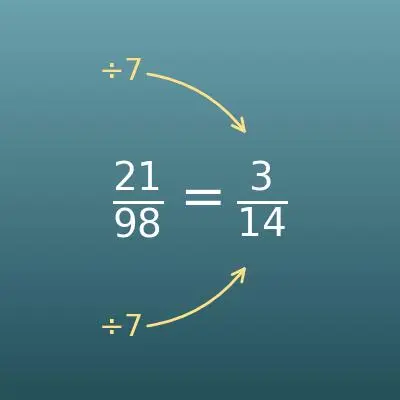
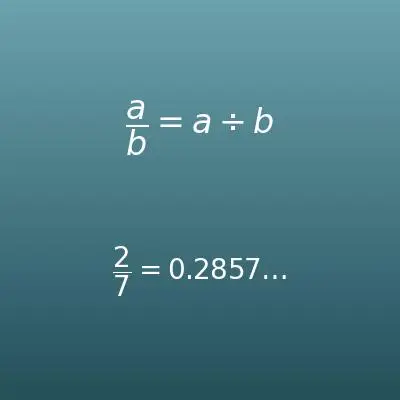
| Fractions and division (Grades 5–6) |
|
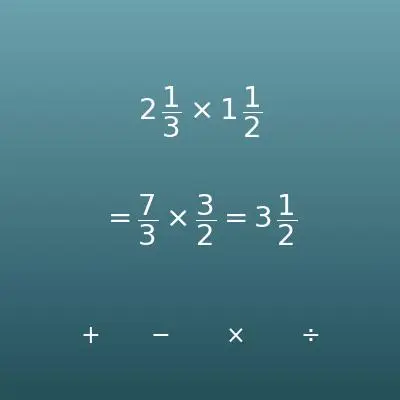
| Substituting into expressions (Grades 6–7) |
|
| Powers and exponents (Grade 6 and up) |
|
How to calculate it in Excel
| Weight lifted W (lb) | 225 |
| Reps r | 5 |
| Estimated 1RM (lb) | =IF(B2=1,B1,B1*(1+B2/30)) |
| Weight lifted W (lb) | 225 |
| Reps r | 5 |
| Estimated 1RM (lb) | =B1*36/(37-B2) |
| Weight lifted W (lb) | 225 |
| Reps r | 5 |
| Estimated 1RM (lb) | =B1*B2^0.1 |
| Estimated 1RM M (lb) | 262.5 |
| Reps you want r | 10 |
| Weight you can lift for those reps (lb) | =IF(B2=1,B1,B1/(1+B2/30)) |
| %1RM (%) | =ROUND(B3/B1*100,0) |
"^" is the power sign (how many times a number is multiplied by itself), and "ROUND(value,0)" rounds to a whole number. The "IF(B2=1,B1,…)" in the first and fourth tables gives back the weight you entered (your measured 1RM) without using the formula when the reps are 1, the same rule as this calculator.
For 225 lb × 5 reps, the first table shows 262.5, the second 253.125 and the third about 264.3. The fourth table gives a weight of about 196.9 lb and a %1RM of 75. Just replace the weight and reps with your own set. It works the same in kg.
How to calculate it in Google Sheets
| Weight lifted W (lb) | 225 |
| Reps r | 5 |
| Estimated 1RM (lb) | =IF(B2=1,B1,B1*(1+B2/30)) |
| Weight lifted W (lb) | 225 |
| Reps r | 5 |
| Estimated 1RM (lb) | =B1*36/(37-B2) |
| Weight lifted W (lb) | 225 |
| Reps r | 5 |
| Estimated 1RM (lb) | =B1*B2^0.1 |
| Estimated 1RM M (lb) | 262.5 |
| Reps you want r | 10 |
| Weight you can lift for those reps (lb) | =IF(B2=1,B1,B1/(1+B2/30)) |
| %1RM (%) | =ROUND(B3/B1*100,0) |
How to calculate it in Python
weight_lb = 225   # weight lifted (lb)
reps = 5          # reps (1 to 10)

if reps == 1:
    # A weight lifted once is itself your measured 1RM (the weight entered, whatever the formula)
    epley = brzycki = lombardi = weight_lb
else:
    epley = weight_lb * (1 + reps / 30)      # Epley formula (standard)
    brzycki = weight_lb * 36 / (37 - reps)   # Brzycki formula
    lombardi = weight_lb * reps ** 0.1       # Lombardi formula

print(f"Epley formula: {epley:.1f} lb")
print(f"Brzycki formula: {brzycki:.1f} lb")
print(f"Lombardi formula: {lombardi:.1f} lb")

# Weight for each %1RM (using the Epley estimated 1RM)
for pct in range(100, 45, -5):
    print(f"{pct}% of 1RM: {epley * pct / 100:.1f} lb")
How to write it in LaTeX and other math languages (copy and paste)
M = W × (1 + r ÷ 30)
M = W \left(1 + \dfrac{r}{30}\right)
<math xmlns="http://www.w3.org/1998/Math/MathML" display="block">
  <mrow>
    <mi>M</mi>
    <mo>=</mo>
    <mi>W</mi>
    <mrow>
      <mo>(</mo>
      <mn>1</mn>
      <mo>+</mo>
      <mfrac><mi>r</mi><mn>30</mn></mfrac>
      <mo>)</mo>
    </mrow>
  </mrow>
</math>
M = W(1 + r/30)
W*(1 + r/30)
M := W*(1 + r/30);
M = W*(1 + r/30);
M = W(1 + r/30)
M = W × 36 ÷ (37 − r)
M = W \times \dfrac{36}{37 - r}
<math xmlns="http://www.w3.org/1998/Math/MathML" display="block">
<mrow>
<mi>M</mi>
<mo>=</mo>
<mi>W</mi>
<mo>×</mo>
<mfrac>
<mn>36</mn>
<mrow><mn>37</mn><mo>−</mo><mi>r</mi></mrow>
</mfrac>
</mrow>
</math>
M = W xx 36/(37 - r)
36*W/(37 - r)
M := 36*W/(37 - r);
M = 36*W/(37 - r);
M = 36W/(37 − r)
M = W \times r^{0.1}
<math xmlns="http://www.w3.org/1998/Math/MathML" display="block">
<mrow>
<mi>M</mi>
<mo>=</mo>
<mi>W</mi>
<mo>×</mo>
<msup><mi>r</mi><mn>0.1</mn></msup>
</mrow>
</math>
M = W xx r^(0.1)
W*r^0.1
M := W*r^0.1;
M = W*r^0.1;
M = W r^0.1
w = M ÷ (1 + r ÷ 30), R = w ÷ M × 100
w = \dfrac{M}{1 + \dfrac{r}{30}}, \quad R = \dfrac{w}{M} \times 100
<math xmlns="http://www.w3.org/1998/Math/MathML" display="block">
<mrow>
<mi>w</mi>
<mo>=</mo>
<mfrac>
<mi>M</mi>
<mrow><mn>1</mn><mo>+</mo><mfrac><mi>r</mi><mn>30</mn></mfrac></mrow>
</mfrac>
<mo>,</mo>
<mi>R</mi>
<mo>=</mo>
<mfrac><mi>w</mi><mi>M</mi></mfrac>
<mo>×</mo>
<mn>100</mn>
</mrow>
</math>
w = M/(1 + r/30), R = w/M xx 100
{M/(1 + r/30), 100*w/M}
w := M/(1 + r/30); R := 100*w/M;
w = M/(1 + r/30); R = 100*w/M;
w = M/(1 + r/30), R = w/M × 100
How to have ChatGPT do the calculation
You are a strength training calculation assistant. Do the following calculation by actually running Python code, and base your answer only on the numbers from the execution result (do not answer by mental math or guessing).

I bench pressed 225 lb for 5 reps in a row. Estimate my 1RM (the most I can lift for one rep) with each of these three formulas (keep the weight in pounds).
1. Epley formula: weight lifted × (1 + reps ÷ 30)
2. Brzycki formula: weight lifted × 36 ÷ (37 − reps)
3. Lombardi formula: weight lifted × reps to the power 0.1
If the reps are 1, do not use a formula; the 1RM is the weight lifted itself.

Then, using the Epley estimate, list the weight for each %1RM from 100% down to 50% in steps of 5% (in lb, to one decimal place).

Show the formulas you used and the numbers from the execution result. Also note that these are estimates from rules of thumb and do not guarantee what I can actually lift.
How to Use
-
1Enter your numbersType the numbers you want to calculate with into the input fields
-
2CalculatePress the "Calculate" button
-
3Check the resultThe result appears on the spot. The same page also explains the idea behind the calculation and the formula
DataChef Features

No technical knowledge required.
Intuitive and user-friendly operation.

Can be used without registering personal information.

Automatic file deletion by clicking "download".

and rapid file conversion.

No attribution required.

No need to contact us for commercial use permission.
Related Features
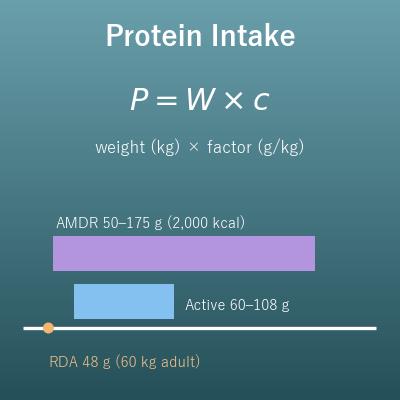
Protein Calculator (How Much Protein Do I Need per Day?)
Estimate how much protein a day supports your strength training, from your body size and activity level
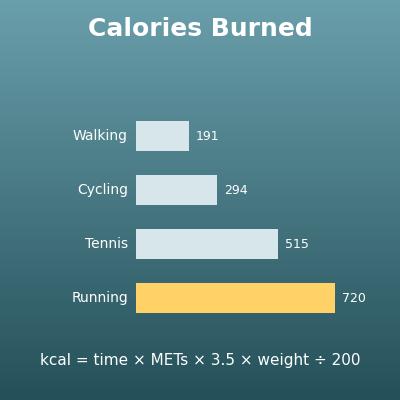
Calories Burned Calculator (Walking, Running, Chores and More with METs)
Find the calories burned by 44 activities, including strength training, from your weight and time
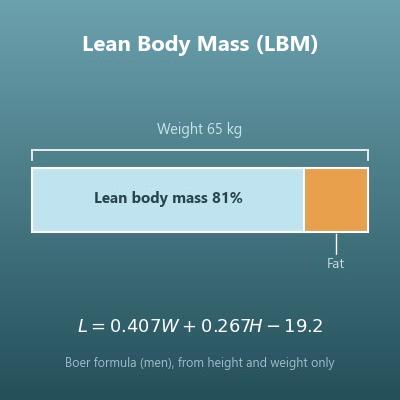
Lean Body Mass Calculator (LBM from Height and Weight with Three Formulas)
Estimate the weight of everything but fat (LBM), such as muscle and bone, from your height and weight