











Enter the seasonal energy use (kWh) of your air conditioner or heat pump and your electricity rate. To see the cost after a thermostat change, also enter the change (°C).
Table of Contents
-
What you can do on this page
-
What is this calculation used for?
-
How to Use
-
Formula
-
Symbols and terms
-
Good to know before you start
-
How to calculate it in Excel
-
How to calculate it in Google Sheets
-
How to calculate it in Python
-
How to write it in LaTeX and other math languages (copy and paste)
-
How to have ChatGPT do the calculation
-
DataChef Features
-
Related Features
-
NumberChef Calculators List
What you can do on this page
- Enter the seasonal energy use of your air conditioner or heat pump (kWh for the cooling season and the heating season, or the yearly total) and your electricity rate, and you instantly get the cost for cooling, heating and the whole year
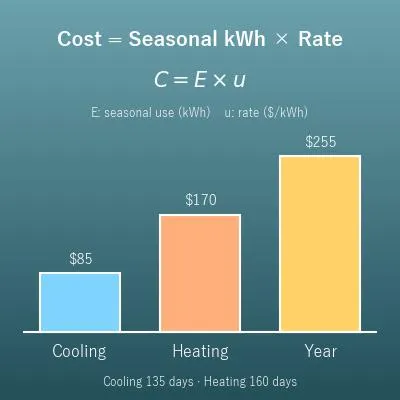
- It also shows the average cost per month and per day for the cooling season (May 23 to Oct 4) and the heating season (Nov 8 to Apr 16)
- You can estimate how much you save by setting the thermostat a few degrees higher for cooling and lower for heating, from a savings rate per degree (a rough value that you can change)
- A bar chart compares the cooling, heating and yearly costs (with the costs before and after a thermostat change side by side)
- How to find the kWh from the EnergyGuide label or the SEER2 and HSPF2 ratings, a plain-language explanation of the formulas, and copy-and-paste formulas for Excel, Google Sheets and Python are all on this page
What is this calculation used for?
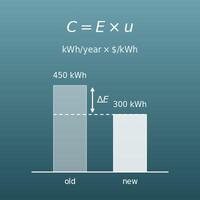
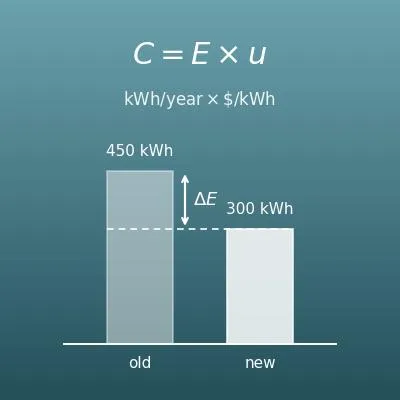
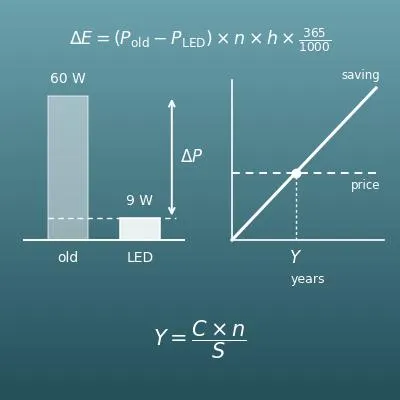
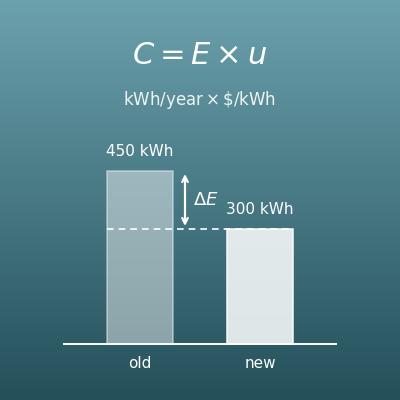
Two air conditioners of the same size can use quite different amounts of electricity. If a basic model uses about 600 kWh a year and an ENERGY STAR model about 480 kWh, at $0.17 per kWh the difference is \((600 - 480) \times 0.17 = 20.40\) dollars a year, or about $204 over 10 years (all rough values).
Put the difference in price next to this yearly difference in cost, and you can think about "how many years until the extra cost pays for itself" with numbers instead of a hunch. Values measured under the same test conditions are the best way to compare models.
For a unit that uses 500 kWh for cooling and 1,000 kWh for heating, at $0.17 per kWh the cooling season costs about $85 (about $19 a month) and the heating season about $170 (about $32 a month).
Knowing that heating tends to cost more than cooling, and that "heating adds about $30 a month in winter", helps you avoid surprises when the bill comes. Treat it as a guide for homes of similar size and insulation.
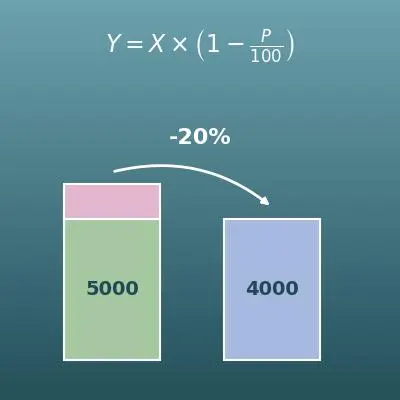
For $170 of heating, setting the thermostat 2°F lower saves about \(170 \times 2 \times 0.03 = 10.20\) dollars with the default 3% per °F. For $85 of cooling, setting it 2°F higher saves about \(85 \times 2 \times 0.03 = 5.10\) dollars. That is about $15 a year. With the larger values quoted in some guides (about 7.2% per °F for cooling and 5.6% for heating), it is about $31.
Knowing that "2 degrees is worth roughly $15 to $30 a year" helps you decide whether the change is worth it, or encourages you to combine it with warmer clothes or a fan. The savings rate depends on your home, so look at it as a range.
If you know the model number of the unit that comes with the home, look up its EnergyGuide label or ratings online and use this formula to estimate the yearly cost. An old, inefficient unit can use 1,200 kWh or more a year, which is \(1{,}200 \times 0.17 = 204\) dollars or more.
This helps you catch cases like "the rent is low but the air conditioner is expensive to run", and gives you a reason to ask the landlord for a newer unit if needed.
If a small shop or office uses several home-size units, add up the kWh of all the units and multiply by the rate for a rough yearly air conditioning cost. For example, three units using about 1,500 kWh a year each come to 4,500 kWh, or \(4{,}500 \times 0.17 = 765\) dollars.
A business with long hours usually uses more than the test assumptions, so treat the result as "at least this much" and use it as a starting point for your utility budget or a plan to replace old units with efficient ones.
Formula
Symbols and terms
Symbols
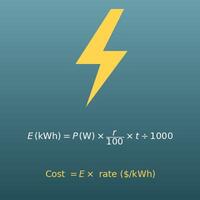
| \(E\) | E | Seasonal energy use - the electricity used in the cooling season, the heating season (or the whole year), in kWh (kilowatt-hours). From the first letter of "energy". |
| \(u\) | u | The electricity rate - what you pay for 1 kWh ($/kWh). From the first letter of "unit price". |
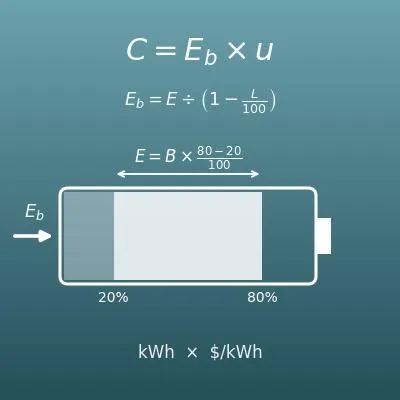
| \(C\) | C | The cost for the season ($), from the first letter of "cost". The same formula is used for cooling, heating and the whole year. |
| \(D\) | D | The days in the season. The cooling season is 135 days, the heating season is 160 days, and together they make 295 days of use. From the first letter of "days". |
| \(M\) | M | The months in the season: the days \(D\) divided by the average month length of 30.44 days. About 4.43 months for cooling and about 5.26 months for heating. From the first letter of "months". |
| \(C_{\text{mo}}\) | C sub mo | The cost per month in the season ($). The small "mo" (month) below the line shows that it is a per-month value. |
| \(\Delta T\) | delta T | The thermostat change (°F). \(\Delta\) (delta) is the Greek letter used for "change" or "difference", and \(T\) is for temperature. In this calculator, the energy-saving direction (cooling higher, heating lower) is positive. |
| \(r\) | r | The savings rate per degree of thermostat change (%), from the first letter of "rate". The default is 3% per °F for both cooling and heating (a rough value based on the US Department of Energy guide), and you can change it freely. |
| \(C'\) | C prime | The cost after the thermostat change ($). The small mark at the top right (prime) is often used for "a slightly changed version of \(C\)". |
Terms
| seasonal energy use | The electricity (kWh) an air conditioner or heat pump uses in one cooling or heating season. Catalogs in Japan list it for every model under the same test conditions. In the US you usually find the yearly kWh on the EnergyGuide label, or estimate it from the capacity, the hours of use and the SEER2, EER, CEER or HSPF2 rating. Because it is measured under set conditions, it is best for comparing models fairly. It is not the exact use in your own home. |
| EnergyGuide label | The yellow label required in the US on many appliances, including room air conditioners, central air conditioners and heat pumps. It shows the estimated yearly energy cost (and, depending on the product, the yearly kWh) along with the efficiency rating, such as CEER for room units or SEER2 and HSPF2 for central systems. The yearly cost is "yearly kWh × the rate stated on the label", the same formula as on this page. |
| cooling season | The period this calculator uses for cooling - May 23 to October 4, 135 days (taken from the Japanese test standard JIS C 9612). The cooling "per month" and "per day" values are based on these days. |
| heating season | The period this calculator uses for heating - November 8 to April 16, 160 days (taken from the Japanese test standard JIS C 9612). The heating "per month" and "per day" values are based on these days. |
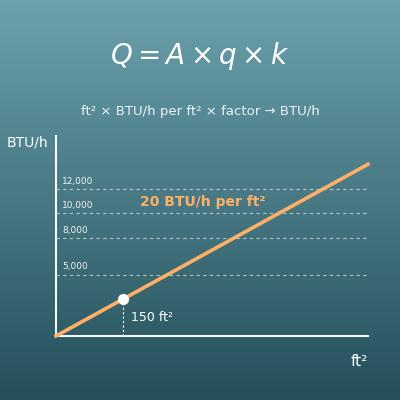
| SEER2 | Seasonal Energy Efficiency Ratio 2 - the cooling delivered over a season (BTU) divided by the electricity used (Wh), measured under the US test procedure in use since 2023. The higher, the more efficient. From it you can estimate the kWh: capacity (BTU/h) × hours of use ÷ (SEER2 × 1,000). A 12,000 BTU/h unit run 500 hours with a SEER2 of 12 uses 500 kWh. With a SEER2 of 20, the same cooling takes only 300 kWh. |
| HSPF2 | Heating Seasonal Performance Factor 2 - the heat a heat pump delivers over a heating season (BTU) divided by the electricity used (Wh). The higher, the more efficient. The heating kWh is about the heat needed for the season (BTU) ÷ (HSPF2 × 1,000). |
| electricity rate | The price of 1 kWh of electricity. This page uses $0.17 per kWh as an example, close to the US average residential price in recent years (US Energy Information Administration). Rates vary a lot by state and by plan, so for an accurate result use the rate from your own bill. |
| kWh (kilowatt-hour) | The unit for an amount of electricity used. Using 1 kW (1,000 W) for 1 hour is 1 kWh. Electric bills are based on kWh, and seasonal energy use is in kWh too. |
| power draw | The power (W) an appliance uses while it runs. Spec sheets list it for air conditioners, but an air conditioner lowers its output as the room nears the set temperature, so it is hard to get the cost right from the wattage. Seasonal energy use, which covers the whole season, is better for estimating the cost. |
| thermostat setting | The target room temperature you set on the thermostat or remote. The smaller the gap to the outdoor temperature, the less work the unit does, so a higher setting for cooling and a lower setting for heating lowers the cost. The savings rate per degree is a rough guide to how much. |
| inverter | A system that changes the speed of the compressor motor to fine-tune the output. Most mini-splits and many newer units are inverter models, which slow down as the room nears the set temperature. That is why "maximum wattage × hours" gives a cost that is far too high. |
Good to know before you start
Here is what helps you use the calculation on this page with real understanding, not just by pressing the button.
If you get stuck, going back to these topics is the quickest way forward.
| Multiplying and dividing decimals (Grades 5–6) |
|
| Percents (Grades 6–7) |
|
| Averages (Grade 6) |
|
| Unit conversion (Grades 4–8) |
|
| Power and energy (middle school science) |
|
How to calculate it in Excel
| Cooling season use (kWh) | 500 |
| Heating season use (kWh) | 1000 |
| Electricity rate ($/kWh) | 0.17 |
| Cooling season cost ($) | =ROUND(B1*B3,2) |
| Heating season cost ($) | =ROUND(B2*B3,2) |
| Yearly cost ($) | =B4+B5 |
| Cooling season cost ($) | 85 |
| Heating season cost ($) | 170 |
| Days in the cooling season | 135 |
| Days in the heating season | 160 |
| Average days per month | 30.44 |
| Cooling season, per month ($) | =ROUND(B1/(B3/B5),2) |
| Heating season, per month ($) | =ROUND(B2/(B4/B5),2) |
| Cooling season, per day ($) | =ROUND(B1/B3,2) |
| Heating season, per day ($) | =ROUND(B2/B4,2) |
| Yearly average per month ($) | =ROUND((B1+B2)/12,2) |
| Cost before the change ($) | 170 |
| Thermostat change (°F) | 2 |
| Savings per °F (%) | 5 |
| Cost after the change ($) | =ROUND(B1*(1-B2*B3/100),2) |
| Savings ($) | =B1-B4 |
The first table is the example of 500 kWh for cooling, 1,000 kWh for heating and $0.17 per kWh: B4 shows 85, B5 shows 170 and B6 shows 255 (dollars). ROUND(…,2) rounds to the cent.
The second table turns the season costs into per-month and per-day values: B6 shows 19.17, B7 shows 32.34, B8 shows 0.63, B9 shows 1.06 and B10 shows 21.25 (dollars). The days in B3 to B5 are the same values the calculator uses, so leave them as they are.
The third table is the thermostat change: for $170 of heating with the thermostat 2°F lower at 5% per °F, B4 shows 153 and B5 shows 17 (dollars). Just replace the numbers in column B with the values for your unit.
How to calculate it in Google Sheets
| Cooling season use (kWh) | 500 |
| Heating season use (kWh) | 1000 |
| Electricity rate ($/kWh) | 0.17 |
| Cooling season cost ($) | =ROUND(B1*B3,2) |
| Heating season cost ($) | =ROUND(B2*B3,2) |
| Yearly cost ($) | =B4+B5 |
| Cooling season cost ($) | 85 |
| Heating season cost ($) | 170 |
| Days in the cooling season | 135 |
| Days in the heating season | 160 |
| Average days per month | 30.44 |
| Cooling season, per month ($) | =ROUND(B1/(B3/B5),2) |
| Heating season, per month ($) | =ROUND(B2/(B4/B5),2) |
| Cooling season, per day ($) | =ROUND(B1/B3,2) |
| Heating season, per day ($) | =ROUND(B2/B4,2) |
| Yearly average per month ($) | =ROUND((B1+B2)/12,2) |
| Cost before the change ($) | 170 |
| Thermostat change (°F) | 2 |
| Savings per °F (%) | 5 |
| Cost after the change ($) | =ROUND(B1*(1-B2*B3/100),2) |
| Savings ($) | =B1-B4 |
How to calculate it in Python
cooling_kwh = 500          # cooling season use (kWh). 0 if none
heating_kwh = 1000         # heating season use (kWh). 0 if none
price_per_kwh = 0.17       # electricity rate ($/kWh)
delta_temp = 2             # thermostat change (°F; cooling higher / heating lower is positive)
cooling_rate = 3           # cooling savings per °F (%, rough value)
heating_rate = 3           # heating savings per °F (%, rough value)

COOLING_DAYS = 135         # cooling season May 23 - Oct 4
HEATING_DAYS = 160         # heating season Nov 8 - Apr 16
DAYS_PER_MONTH = 30.44     # average days per month

def round_half_up(value, digits=2):
    # Round half up (Python's round() rounds half to even, so do the same rounding as the calculator)
    scale = 10 ** digits
    return int(value * scale + 0.5) / scale if value >= 0 else -int(-value * scale + 0.5) / scale

total_cost = 0
total_after = 0
for label, kwh, days, rate in [("Cooling season", cooling_kwh, COOLING_DAYS, cooling_rate),
                               ("Heating season", heating_kwh, HEATING_DAYS, heating_rate)]:
    cost = round_half_up(kwh * price_per_kwh)                # season cost (rounded to the cent)
    monthly = round_half_up(cost / (days / DAYS_PER_MONTH))  # per month
    daily = round_half_up(cost / days)                       # per day
    after = round_half_up(cost * (1 - delta_temp * rate / 100))  # after the thermostat change
    print(f"{label}: {kwh} kWh / ${cost:.2f} (per month ${monthly:.2f}, per day ${daily:.2f})")
    print(f"  With a {delta_temp} °F change: ${after:.2f} (savings ${cost - after:.2f})")
    total_cost += cost
    total_after += after
print(f"Year: ${total_cost:.2f} (average per month ${round_half_up(total_cost / 12):.2f})")
print(f"  With the change: ${total_after:.2f} (savings ${total_cost - total_after:.2f})")
How to write it in LaTeX and other math languages (copy and paste)
C = E × u
C = E \times u
<math xmlns="http://www.w3.org/1998/Math/MathML" display="block">
<mrow>
<mi>C</mi>
<mo>=</mo>
<mi>E</mi>
<mo>×</mo>
<mi>u</mi>
</mrow>
</math>
C = E * u
cost = energy*price
cost := energy*price;
cost = energy*price;
C = E×u
C_mo = C ÷ M
C_{\text{mo}} = C \div M
<math xmlns="http://www.w3.org/1998/Math/MathML" display="block">
<mrow>
<msub><mi>C</mi><mtext>mo</mtext></msub>
<mo>=</mo>
<mi>C</mi>
<mo>÷</mo>
<mi>M</mi>
</mrow>
</math>
C_"mo" = C / M
monthlyCost = cost/months
monthlyCost := cost/months;
monthlyCost = cost/months;
C_mo = C/M
C′ = C × (1 − ΔT × r ÷ 100)
C' = C \times \left(1 - \Delta T \times \frac{r}{100}\right)
<math xmlns="http://www.w3.org/1998/Math/MathML" display="block">
<mrow>
<msup><mi>C</mi><mo>′</mo></msup>
<mo>=</mo>
<mi>C</mi>
<mo>×</mo>
<mo>(</mo>
<mn>1</mn>
<mo>−</mo>
<mi>Δ</mi><mi>T</mi>
<mo>×</mo>
<mfrac><mi>r</mi><mn>100</mn></mfrac>
<mo>)</mo>
</mrow>
</math>
C' = C * (1 - Delta T * r/100)
costAfter = cost*(1 - deltaT*rate/100)
costAfter := cost*(1 - deltaT*rate/100);
costAfter = cost*(1 - deltaT*rate/100);
C' = C×(1 − ΔT×r/100)
How to have ChatGPT do the calculation
You are a calculation assistant for electricity costs. Do the following calculation by actually running Python code, and base your answer only on the numbers from the execution result (do not answer by mental math or guessing).

A heat pump uses 500 kWh in the cooling season and 1,000 kWh in the heating season. The electricity rate is $0.17 per kWh.
The cooling season is 135 days (May 23 to Oct 4), the heating season is 160 days (Nov 8 to Apr 16), and 1 month is 30.44 days.
Find each of the following (round costs to the cent):
1. The cooling season, heating season and yearly cost ($)
2. For the cooling and heating seasons, the cost per month (cost ÷ (days ÷ 30.44)) and per day (cost ÷ days)
3. The cooling season, heating season and yearly cost and the savings when the cooling thermostat is set 2 °F higher (3% less per °F) and the heating thermostat 2 °F lower (3% less per °F)

Show the formulas you used and the numbers from the execution result.
How to Use
-
1Enter your numbersType the numbers you want to calculate with into the input fields
-
2CalculatePress the "Calculate" button
-
3Check the resultThe result appears on the spot. The same page also explains the idea behind the calculation and the formula
DataChef Features

No technical knowledge required.
Intuitive and user-friendly operation.

Can be used without registering personal information.

Automatic file deletion by clicking "download".

and rapid file conversion.

No attribution required.

No need to contact us for commercial use permission.
Related Features
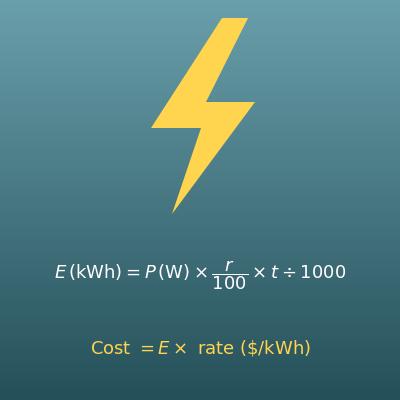
Electricity Cost Calculator (Appliance Energy Use and Cost)
Calculate the daily, weekly, monthly and yearly kWh and electricity cost of an appliance from its wattage and hours of use
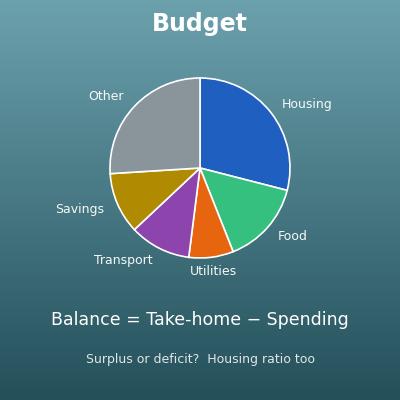
Monthly Budget Calculator (Income, Expenses and Housing Ratio)
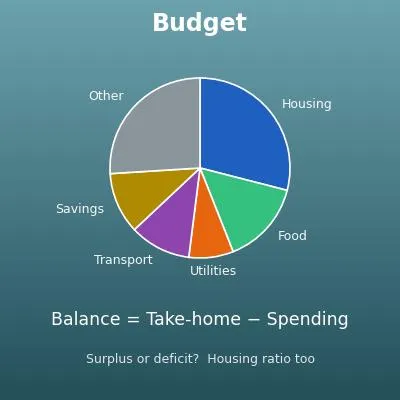
Calculate your household balance (surplus or deficit), including utilities, and see how your spending breaks down
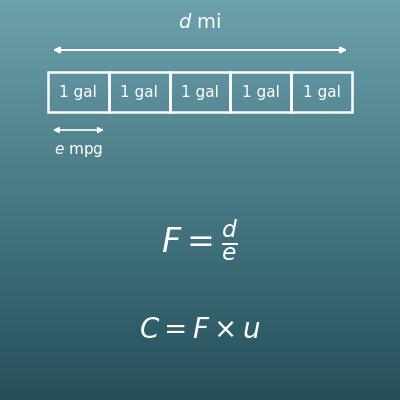
Gas Cost Calculator (Trip Fuel Cost from Distance, MPG and Gas Price)
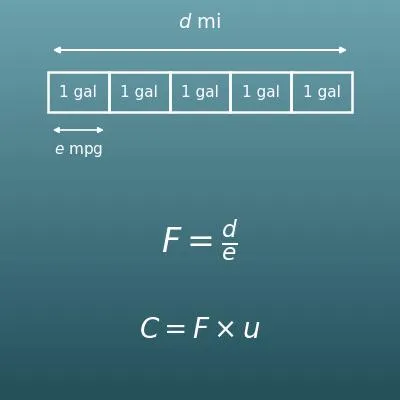
Calculate how much fuel you use and what it costs from the distance, fuel economy and gas price
Annual kWh to Cost Calculator (EnergyGuide Label)
Calculate the yearly, monthly and daily cost from the kWh per year on an energy label, and the savings from replacing an appliance