
Choose what you want to calculate and enter the numbers. The scale factor m : n is in the order "Figure ① : Figure ②".
Table of Contents
-
What you can do on this page
-
What is this calculation used for?
-
How to Use
-
Formulas and figures
-
Symbols and terms
-
Good to know before you start
-
How to calculate it in Excel
-
How to calculate it in Google Sheets
-
How to calculate it in Python
-
How to write it in LaTeX and other math languages (copy and paste)
-
How to have ChatGPT do the calculation
-
DataChef Features
-
Related Features
-
NumberChef Calculators List
What you can do on this page
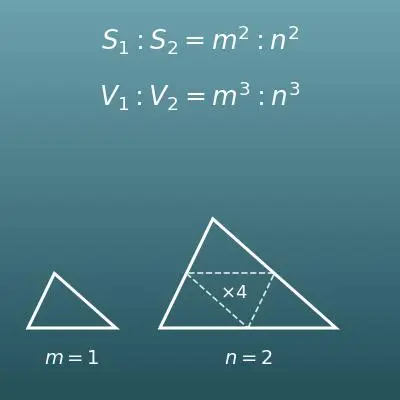
- Enter a scale factor \(m : n\), and you get the area ratio \(m^2 : n^2\) and the volume ratio \(m^3 : n^3\) on the spot. Ratios with decimals or fractions, such as 1.5 : 2, are rewritten in simplest whole-number form, such as 3 : 4
- From the scale factor and the length, area or volume of one figure, it finds the matching value for the other figure. The answer is shown both as an exact fraction in lowest terms, such as \(\dfrac{21}{2}\), and as a decimal
- It also handles map scales such as 1:24,000: map distance → actual distance, and actual distance → map distance, including unit conversion between inches, feet and miles (or cm, m and km)
- Formulas and figures explain why squaring the scale factor gives the area ratio and cubing it gives the volume ratio
- The result shows a figure of the two similar shapes (or, for map scales, a diagram of how the conversion works), so you can see the ratios at a glance
What is this calculation used for?
On a 1:25,000 topographic map, 4 cm on the map is 1 km in reality (4 × 25,000 = 100,000 cm). US Geological Survey topo maps use 1:24,000, where 1 inch on the map is 24,000 inches, or 2,000 feet. Measure a route on the map and multiply by the scale denominator, and you get a good idea of how far you will walk.
The same scale calculation is used to estimate the distance from your home to a shelter on an evacuation or flood map.
The "1:144" on a plastic model kit, "1:160" for N scale model trains or "1:87" for HO scale is the scale itself. An 80-foot passenger car in N scale is 80 ft = 960 in, and 960 ÷ 160 = 6 in long. Designing a model is a chain of calculations that make scale drawings and reduced solids similar to the real thing.
To make a recipe for an 8-inch round pan in a 10-inch round pan, the ratio of the diameters is 8 : 10 = 4 : 5. If the pan is also deeper in the same proportion (a similar pan), scale the ingredients by the volume ratio \(4^3 : 5^3 = 64 : 125\) (about 1.95 times). If the pans are the same depth, only the bottom area grows, so use the area ratio \(4^2 : 5^2 = 16 : 25\) (about 1.56 times).
Knowing that "a small change in length makes a big change in amount, squared or cubed" helps you avoid kitchen mistakes.
Enlarging a 4 × 6 inch photo to 8 × 12 inches doubles every length (a scale factor of 1 : 2), so the area becomes \(2^2 = 4\) times as large. That is why "doubling the size of a poster used four times the paper and ink".
In most countries outside the US, paper sizes are designed so that two A4 sheets make exactly one A3 sheet. The area ratio is \(1 : 2\), so the length ratio (the scale factor) is its square root, \(1 : \sqrt{2}\). That is why the "141%" copier button (\(\sqrt{2} \approx 1.41\)) enlarges A4 to A3.
If an animal's body keeps almost the same shape while its lengths double, the cross-section of its bones (the source of their strength) grows only \(2^2 = 4\) times, while its weight (volume) grows \(2^3 = 8\) times. This "square-cube law" is why larger animals have thicker, sturdier legs.
It is also one reason why, in building and machine design, something that worked as a model can break at full size: area and volume grow at different rates.
Formulas and figures
Symbols and terms
Symbols
| \(m,\ n\) | m, n | The two numbers of the scale factor. On this page, \(m\) is for Figure ① and \(n\) is for Figure ②. A ratio of whole numbers is the usual form, but a ratio such as 1.5 : 2 can also be rewritten in simplest whole-number form (3 : 4 in this example). |
| \(:\) | to | The symbol for a ratio. \(2 : 3\) is read "2 to 3", and it says that two amounts compare as 2 compares to 3. |
| \(a,\ b\) | a, b | Lengths of corresponding sides: \(a\) is a side of Figure ① and \(b\) is the corresponding side of Figure ②. Letters near the start of the alphabet are usually used for fixed lengths. |
| \(S_1,\ S_2\) | S sub 1, S sub 2 | The areas of Figure ① and Figure ②. \(S\) is often used for area; it is said to come from "square" or "surface". The small number at the lower right (the subscript) tells which figure it is. |
| \(V_1,\ V_2\) | V sub 1, V sub 2 | The volumes of solid ① and solid ②. \(V\) is the first letter of "volume". |
| \(m^2\) | m squared | \(m\) multiplied by itself (\(m^2 = m \times m\)), called "m squared" or "m to the second power". The area ratio is the scale factor squared. |
| \(m^3\) | m cubed | Three factors of \(m\) multiplied together (\(m^3 = m \times m \times m\)), called "m cubed" or "m to the third power". The volume ratio is the scale factor cubed. |
| \(\ell\) | ell | The map distance. It is a script form of l, from "length", used so it is not confused with the number 1 or a capital I. |
| \(L\) | capital L | The actual distance. It is a capital letter to tell it apart from the map distance \(\ell\). |
| \(d\) | d | The scale denominator. For a scale of \(1 : 24000\) (\(\dfrac{1}{24000}\)), \(d = 24000\). It comes from the first letter of "denominator". |
Terms
| similar figures | Two figures with the same shape but possibly different sizes. Enlarging or reducing one makes it fit exactly on the other. It is written with the symbol ~, as in \(\triangle ABC \sim \triangle DEF\). |
| scale factor | The ratio of the lengths of corresponding sides of two similar figures. It is the same whichever pair of corresponding sides you take. It is written as a ratio \(m : n\) or as a single multiplier \(\dfrac{n}{m}\). |
| corresponding sides | In two similar (or congruent) figures, the sides that are in matching positions. In similar figures, the ratios of the lengths of all corresponding sides are equal. |
| area ratio | The ratio of the areas of two figures. For similar figures, it is the scale factor \(m : n\) squared, \(m^2 : n^2\). |
| volume ratio | The ratio of the volumes of two solids. For similar solids, it is the scale factor \(m : n\) cubed, \(m^3 : n^3\). |
| surface area | The total area of the outside of a solid. It is a kind of area, so the ratio of the surface areas of similar solids is the same as the area ratio, \(m^2 : n^2\). |
| map scale | How much the real thing was shrunk to make a map or plan. It is written as a ratio such as 1 : 25,000 or a fraction such as \(\dfrac{1}{25000}\). A map with a scale of 1 : 25,000 is a scale drawing with a scale factor of \(1 : 25000\) to the real land. |
| scale drawing | A drawing reduced (or enlarged) without changing its shape. Scale drawings are taught in Grade 7, and similar figures in Grade 8 and Geometry put the same idea into mathematical language. |
| enlargement | A figure made larger without changing its shape (also called a dilation with a scale factor greater than 1). It is the opposite of a reduction. |
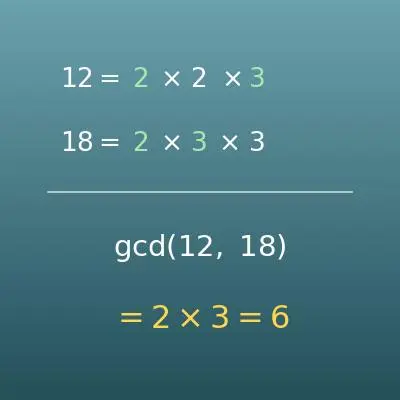
| simplify a ratio | To rewrite a ratio with the smallest possible whole numbers. Divide both terms by their greatest common factor (for example, \(12 : 18 = 2 : 3\)). For a ratio with decimals or fractions, first multiply both terms to make whole numbers, then simplify (for example, \(1.5 : 2 = 3 : 4\)). |
| greatest common factor (GCF) | The largest number that divides two or more whole numbers evenly. To simplify a ratio, divide both terms by this number. |
| power | A number multiplied by itself repeatedly. In \(2^3 = 2 \times 2 \times 2 = 8\), the small raised number (the exponent) tells how many times it is used as a factor. |
Good to know before you start
Here is what helps you use the calculation on this page with real understanding, not just by pressing the button.
If you get stuck, going back to the topics in this list is the quickest way forward.
| Ratios (Grade 6) |
|
| Scale drawings (Grade 7) |
|
| Exponents (Grade 6) |
|
| Multiplying and dividing fractions (Grades 5–6) |
|
| Converting units of length (Grades 4–5) |
|
| Similar figures (Grade 8 and Geometry) |
|
How to calculate it in Excel
| Scale factor m (Figure ①) | 2 |
| Scale factor n (Figure ②) | 3 |
| Area ratio, Figure ① term m² | =B1^2 |
| Area ratio, Figure ② term n² | =B2^2 |
| Volume ratio, Figure ① term m³ | =B1^3 |
| Volume ratio, Figure ② term n³ | =B2^3 |
| Scale factor m (Figure ①) | 3 |
| Scale factor n (Figure ②) | 5 |
| Area of Figure ① | 18 |
| Area of Figure ② (×(n/m)²) | =B3*(B2/B1)^2 |
| Scale denominator (the 63360 in 1:63360) | 63360 |
| Map distance (in) | 4 |
| Actual distance (in) | =B1*B2 |
| Actual distance (ft) | =B3/12 |
| Actual distance (mi) | =B3/63360 |
| Scale denominator (the 24000 in 1:24000) | 24000 |
| Actual distance (mi) | 3 |
| Actual distance (in) | =B2*63360 |
| Map distance (in) | =B3/B1 |
The first table is for a scale factor of 2 : 3, and it gives the area ratio 4 and 9 and the volume ratio 8 and 27. Enter the scale factor as whole numbers (for a ratio such as 1.5 : 2, the results are easier to read if you first rewrite it as whole numbers, such as 3 : 4 by doubling both terms).
The second table is for a scale factor of 3 : 5 with an area of 18 for Figure ①, and the area of Figure ② comes out as 50. To convert a length, remove "^2"; for a volume, change it to "^3".
The third table is for 4 in on a 1:63,360 map (1 inch = 1 mile). The actual distance is 253,440 in = 21,120 ft = 4 mi.
The fourth table puts an actual distance of 3 mi on a 1:24,000 topographic map. The map distance is 7.92 in (1 mi = 63,360 in).
How to calculate it in Google Sheets
| Scale factor m (Figure ①) | 2 |
| Scale factor n (Figure ②) | 3 |
| Area ratio, Figure ① term m² | =B1^2 |
| Area ratio, Figure ② term n² | =B2^2 |
| Volume ratio, Figure ① term m³ | =B1^3 |
| Volume ratio, Figure ② term n³ | =B2^3 |
| Scale factor m (Figure ①) | 3 |
| Scale factor n (Figure ②) | 5 |
| Area of Figure ① | 18 |
| Area of Figure ② (×(n/m)²) | =B3*(B2/B1)^2 |
| Scale denominator (the 63360 in 1:63360) | 63360 |
| Map distance (in) | 4 |
| Actual distance (in) | =B1*B2 |
| Actual distance (ft) | =B3/12 |
| Actual distance (mi) | =B3/63360 |
| Scale denominator (the 24000 in 1:24000) | 24000 |
| Actual distance (mi) | 3 |
| Actual distance (in) | =B2*63360 |
| Map distance (in) | =B3/B1 |
How to calculate it in Python
from fractions import Fraction

# Scale factor m : n (Figure ① : Figure ②). Decimals such as 1.5 can be written as is
ratio_m = Fraction('1.5')
ratio_n = Fraction('2')

# Rewrite in simplest whole-number form (reducing m ÷ n gives numerator : denominator as whole numbers)
reduced = ratio_m / ratio_n
int_m, int_n = reduced.numerator, reduced.denominator
print(f"Scale factor: {int_m} : {int_n}")
print(f"Area ratio: {int_m ** 2} : {int_n ** 2}")
print(f"Volume ratio: {int_m ** 3} : {int_n ** 3}")

# Area of Figure ② from the scale factor and the area of Figure ① (areas use the scale factor squared)
area_of_first = Fraction(18)
area_of_second = area_of_first * (ratio_n / ratio_m) ** 2
print(f"Area of Figure ②: {area_of_second} = {float(area_of_second)}")
How to write it in LaTeX and other math languages (copy and paste)
b = a × n/m
b = a \times \dfrac{n}{m}
<math xmlns="http://www.w3.org/1998/Math/MathML" display="block">
<mrow>
<mi>b</mi>
<mo>=</mo>
<mi>a</mi>
<mo>×</mo>
<mfrac><mi>n</mi><mi>m</mi></mfrac>
</mrow>
</math>
b = a xx n/m
b = a*(n/m)
b := a*n/m;
b = a*n/m;
b = a(n/m)
S₁ : S₂ = m² : n²
S_{1} : S_{2} = m^{2} : n^{2}
<math xmlns="http://www.w3.org/1998/Math/MathML" display="block">
  <mrow>
    <msub><mi>S</mi><mn>1</mn></msub>
    <mo>:</mo>
    <msub><mi>S</mi><mn>2</mn></msub>
    <mo>=</mo>
    <msup><mi>m</mi><mn>2</mn></msup>
    <mo>:</mo>
    <msup><mi>n</mi><mn>2</mn></msup>
  </mrow>
</math>
S_1 : S_2 = m^2 : n^2
S1/S2 == m^2/n^2
S1/S2 = m^2/n^2;
S1/S2 == m^2/n^2
S_1 : S_2 = m^2 : n^2
V₁ : V₂ = m³ : n³
V_{1} : V_{2} = m^{3} : n^{3}
<math xmlns="http://www.w3.org/1998/Math/MathML" display="block">
  <mrow>
    <msub><mi>V</mi><mn>1</mn></msub>
    <mo>:</mo>
    <msub><mi>V</mi><mn>2</mn></msub>
    <mo>=</mo>
    <msup><mi>m</mi><mn>3</mn></msup>
    <mo>:</mo>
    <msup><mi>n</mi><mn>3</mn></msup>
  </mrow>
</math>
V_1 : V_2 = m^3 : n^3
V1/V2 == m^3/n^3
V1/V2 = m^3/n^3;
V1/V2 == m^3/n^3
V_1 : V_2 = m^3 : n^3
L = ℓ × d
L = \ell \times d
<math xmlns="http://www.w3.org/1998/Math/MathML" display="block">
<mrow>
<mi>L</mi>
<mo>=</mo>
<mi>ℓ</mi>
<mo>×</mo>
<mi>d</mi>
</mrow>
</math>
L = l xx d
L = l*d
L := l*d;
L = l*d;
L = ℓ × d
How to have ChatGPT do the calculation
You are a math (similar figures) calculation assistant. Do the following calculation by actually running Python code, and base your answer only on the numbers from the execution result (do not answer by mental math or guessing).

For similar figures with a scale factor of 1.5 : 2, show each of the following:
1. The scale factor in simplest whole-number form
2. The area ratio (scale factor squared) and the volume ratio (scale factor cubed), both as whole-number ratios
3. The area of Figure ② when the area of Figure ① is 18 in²
Also, on a map with a scale of 1:24,000, find how many feet and how many miles 5 inches on the map is in reality.

In Python, use the fractions module from the standard library to calculate exactly, and show the formulas you used and the numbers from the execution result.
How to Use
-
1Enter your numbersType the numbers you want to calculate with into the input fields
-
2CalculatePress the "Calculate" button
-
3Check the resultThe result appears on the spot. The same page also explains the idea behind the calculation and the formula
DataChef Features

No technical knowledge required.
Intuitive and user-friendly operation.

Can be used without registering personal information.

Automatic file deletion by clicking "download".

and rapid file conversion.
No attribution required.

No need to contact us for commercial use permission.
Related Features
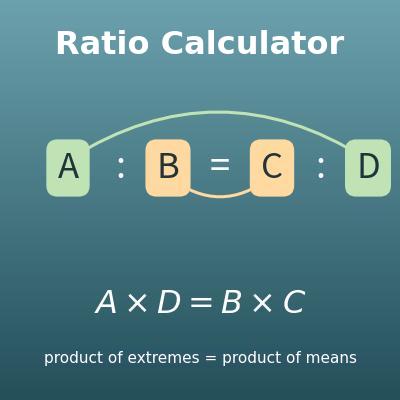
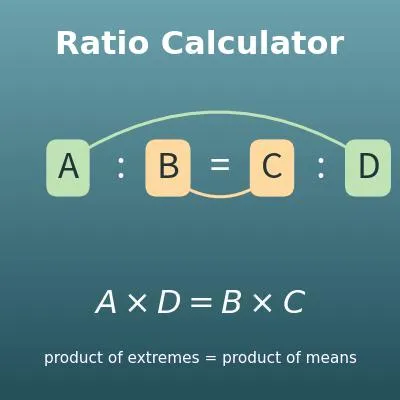
Ratio and Proportion Calculator (Solve A:B = C:D, Scale a Ratio)
Solves for the unknown in a proportion such as "3 : 4 = 600 : ?" with cross multiplication
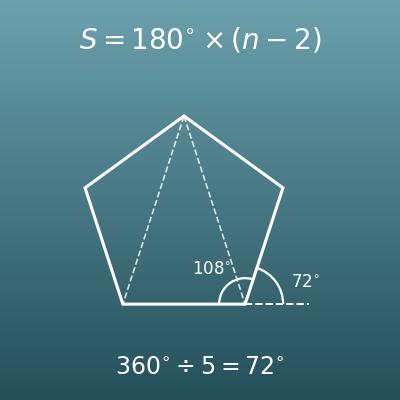
Polygon Angle Calculator (Sum of Interior and Exterior Angles, Regular Polygons)
Finds the interior and exterior angle sums of an n-gon and each angle of a regular n-gon, with a figure that splits it into triangles
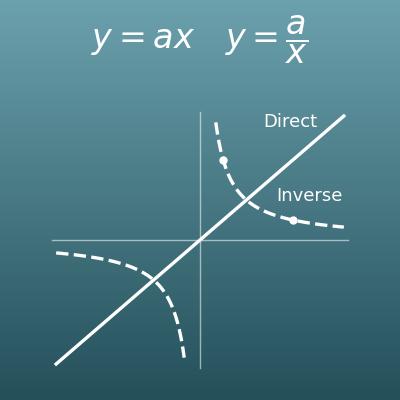
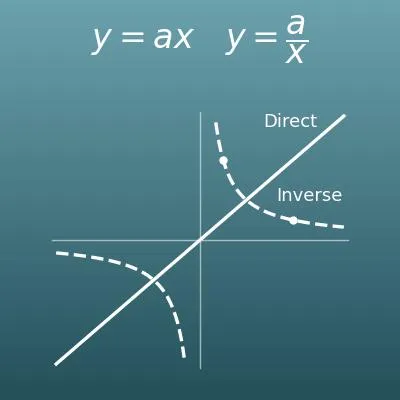
Direct and Inverse Variation Calculator (Equation and Constant of Variation from One Point)
From one point on the graph, finds the equation of direct variation y=ax or inverse variation y=a/x and the constant a, with steps and a graph