



































Choose the number of bands on the resistor and the color of each band, then press "Calculate". Each option is shown as "color (value)".
Table of Contents
-
What you can do on this page
-
What is this calculation used for?
-
How to Use
-
Formulas and figures
-
Symbols and terms
-
Good to know before you start
-
How to calculate it in Excel
-
How to calculate it in Google Sheets
-
How to calculate it in Python
-
How to write it in LaTeX and other math languages (copy and paste)
-
How to have ChatGPT do the calculation
-
DataChef Features
-
Related Features
-
NumberChef Calculators List
What you can do on this page
- Just choose the colors of a resistor's bands (the color code) to read its resistance (Ω). Works for 3, 4, 5 and 6 bands
- You also get the tolerance (±% and letter codes such as F and J) and the actual resistance range (minimum to maximum) that the tolerance allows
- For 6-band resistors, the temperature coefficient (ppm/K) is read too
- A drawing of the resistor with the colors you chose appears on the spot (you can save it as PNG or SVG)
- A plain-language explanation of the formulas, a color-to-number chart and copy-and-paste formulas for Excel, Google Sheets and Python are all on this page
What is this calculation used for?
When you connect an LED to a power supply, you need a resistor to limit the current. For example, to run 10 mA through an LED with a forward voltage of 2 V from a 5 V supply, you need \((5-2) \div 0.01 = 300\) Ω.
Every time you pick a 300 Ω resistor (orange, black, brown) out of a parts box, or check that the resistors you bought are the right value, you need to read the color code. It is the most-used basic skill in electronics projects.
For repairs and part replacements, you need a replacement with the same value as the resistor on the board. Resistors often have no numbers printed on them, so you read the value from the color bands.
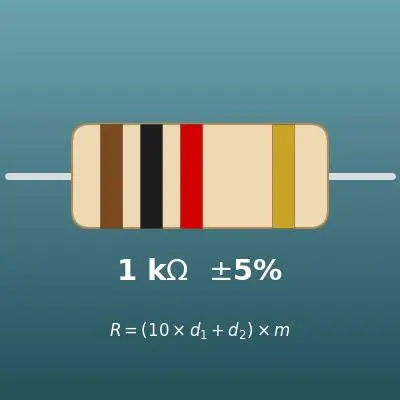
For example, brown, black, orange, gold is 10 kΩ ±5%. If the value you measure with a multimeter falls within the tolerance range (9,500 Ω to 10,500 Ω here), that is a good sign the resistor is not damaged.
Note that devices that plug into a wall outlet contain parts (capacitors) that keep storing electricity even after unplugging, which can give an electric shock. Repairs that involve taking a device apart are for people with electrical knowledge. If you are not confident, leave it to a professional repair service.
In school science labs (such as Ohm's law experiments), technology classes and electronics courses at technical schools and colleges, students pick the specified resistors themselves and build circuits.
A classic reason an experiment fails is using the wrong resistor. If both the people handing out parts and the people using them get in the habit of reading the color bands to check the value, there are fewer experiments to redo.
In electronics manufacturing, workers check that the resistors being mounted have the value and tolerance on the bill of materials (BOM). For example, a precision measuring circuit may call for precision resistors of ±1% (brown) or better, and mixing them up with general ±5% (gold) parts hurts performance.
Tolerance letter codes (F = ±1%, J = ±5% and so on) also appear in part numbers, so knowing how the bands match the codes makes it easier to check the BOM against the actual parts.
Formulas and figures
Symbols and terms
Symbols
| \(R\) | are | The resistance read from the colors (the marked value of the resistor). The unit is Ω (ohms). |
| \(d_1, d_2, d_3\) | d one, d two, d three | The digits (0 to 9) shown by the 1st, 2nd and 3rd bands. Only 5-band and 6-band resistors have the 3rd digit \(d_3\). |
| \(m\) | em | The multiplier, the factor you multiply the digits by. It ranges from ×0.01 (silver) to ×1,000,000,000 (white). |
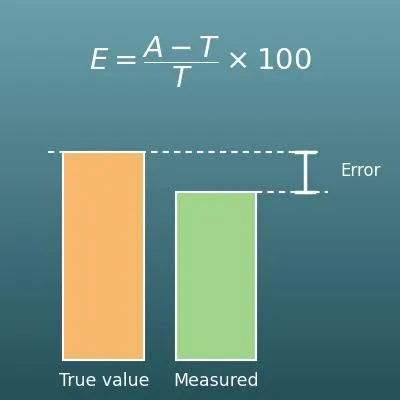
| \(t\) | tee | The tolerance (%). For example, a gold band gives \(t = 5\) (±5%). |
| \(R_{min}\), \(R_{max}\) | R min, R max | The minimum and maximum of the real resistance, allowing for the tolerance. The real resistor is somewhere in this range. |
| \(\Omega\) | ohm | The unit of resistance. 1,000 Ω = 1 kΩ (kilohm) and 1,000,000 Ω = 1 MΩ (megohm). |
| ppm/K | parts per million per kelvin | The unit of the temperature coefficient: how many millionths the resistance changes when the temperature changes by 1 K (the same size as 1 °C). For example, if a 1 kΩ, 50 ppm/K resistor warms up by 10 °C (18 °F), it changes by at most 1,000 × 50 ÷ 1,000,000 × 10 = 0.5 Ω. |
Terms
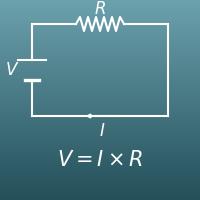
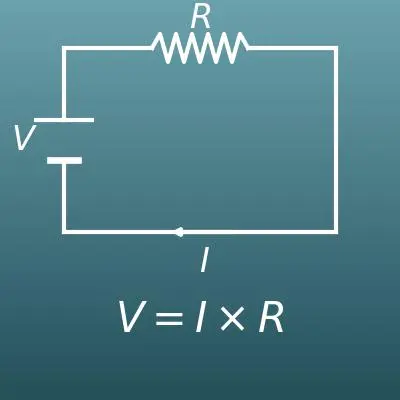
| resistance | How strongly something resists the flow of current. At the same voltage, the higher the resistance, the smaller the current. Its relation to voltage \(V\) (V) and current \(I\) (A) is Ohm's law, \(R = \dfrac{V}{I}\), and its unit is Ω (ohms). |
| nominal value | The resistance marked on a resistor (for example, 4.7 kΩ). This is the value this page reads from the color code. The real resistance can differ from the nominal value by up to the tolerance, so it falls somewhere between \(R_{min}\) and \(R_{max}\). |
| color code | An international system that shows the value of resistors and other parts with colored bands. The digits are black = 0, brown = 1, red = 2, orange = 3, yellow = 4, green = 5, blue = 6, violet = 7, gray = 8, white = 9. The same color means a digit, a multiplier or a tolerance depending on its position. |
| resistor | An electronic part that resists current. It is used to set the current in a circuit and to divide voltage. Resistors are too small to print numbers on easily, so their values are shown with color bands. |
| multiplier | The band that gives the factor to multiply the digits by. It grows 10 times at each step in the same order as the digits: black = ×1, brown = ×10, red = ×100 and so on (white = ×1 billion). Gold = ×0.1 and silver = ×0.01 are used for small resistances, from under 1 Ω to a few Ω. |
| tolerance | The guaranteed limit on how far the real resistance may be from the marked value (±%). Brown = ±1%, red = ±2%, green = ±0.5%, blue = ±0.25%, violet = ±0.1%, gray = ±0.01%, orange = ±0.05%, yellow = ±0.02%, gold = ±5%, silver = ±10%. It is also shown with letter codes such as F (±1%), J (±5%), K (±10%) and M (±20%). |
| temperature coefficient | How easily the resistance changes when the temperature changes (ppm/K), also called TCR. It is the 6th band of a 6-band resistor: black = 250, brown = 100, red = 50, orange = 15, yellow = 25, green = 20, blue = 10, violet = 5, gray = 1 ppm/K. It matters in circuits that must stay accurate as the temperature changes, such as measuring circuits. |
| E series | The series of standard values that resistors are sold in (IEC 60063). For example, the E12 series is the 12 values 1.0, 1.2, 1.5, 1.8, 2.2, 2.7, 3.3, 3.9, 4.7, 5.6, 6.8 and 8.2, repeated at every power of 10, and the resistors sold in stores have one of these values. If the value you read is not in the E series (for example, the 1st band is black), you may be reading the bands backward. |
| IEC 60062 | The international standard that sets how the values of resistors and capacitors are marked (color codes and letter codes). The color chart on this page is based on this standard. |
Good to know before you start
Here is what helps you use the calculation on this page with real understanding, not just by pressing the button.
| Place value and large numbers (Grade 4) |
|
| Decimals and percents (Grade 6) |
|
| Powers of 10 and unit prefixes (Grades 6–8 math and science) |
|
| Ohm's law (middle and high school science) |
|
How to calculate it in Excel
| Color | Digit | Multiplier | Tolerance (±%) | Temp. coefficient (ppm/K) |
| Black | 0 | 1 | 250 | |
| Brown | 1 | 10 | 1 | 100 |
| Red | 2 | 100 | 2 | 50 |
| Orange | 3 | 1000 | 0.05 | 15 |
| Yellow | 4 | 10000 | 0.02 | 25 |
| Green | 5 | 100000 | 0.5 | 20 |
| Blue | 6 | 1000000 | 0.25 | 10 |
| Violet | 7 | 10000000 | 0.1 | 5 |
| Gray | 8 | 100000000 | 0.01 | 1 |
| White | 9 | 1000000000 | ||
| Gold | 0.1 | 5 | ||
| Silver | 0.01 | 10 |
| 1st digit (brown = 1) | 1 |
| 2nd digit (black = 0) | 0 |
| Multiplier (red = 100) | 100 |
| Tolerance % (gold = 5) | 5 |
| Resistance (Ω) | =(B1*10+B2)*B3 |
| Minimum resistance (Ω) | =B5*(1-B4/100) |
| Maximum resistance (Ω) | =B5*(1+B4/100) |
| 1st digit (red = 2) | 2 |
| 2nd digit (violet = 7) | 7 |
| 3rd digit (black = 0) | 0 |
| Multiplier (orange = 1000) | 1000 |
| Tolerance % (brown = 1) | 1 |
| Resistance (Ω) | =(B1*100+B2*10+B3)*B4 |
| Minimum resistance (Ω) | =B6*(1-B5/100) |
| Maximum resistance (Ω) | =B6*(1+B5/100) |
The second table is for 4 bands. Enter the numbers you read from the colors in B1 to B4, and B5 gives the resistance while B6 and B7 give the range with tolerance. "*" is multiplication and "/" is division.
With the example values (brown, black, red, gold), B5 shows 1000 (= 1 kΩ), B6 shows 950 and B7 shows 1050.
The third table is for 5 bands; the formula changes only because there are 3 digits. With the example values (red, violet, black, orange, brown), B6 shows 270000 (= 270 kΩ).
How to calculate it in Google Sheets
| Color | Digit | Multiplier | Tolerance (±%) | Temp. coefficient (ppm/K) |
| Black | 0 | 1 | 250 | |
| Brown | 1 | 10 | 1 | 100 |
| Red | 2 | 100 | 2 | 50 |
| Orange | 3 | 1000 | 0.05 | 15 |
| Yellow | 4 | 10000 | 0.02 | 25 |
| Green | 5 | 100000 | 0.5 | 20 |
| Blue | 6 | 1000000 | 0.25 | 10 |
| Violet | 7 | 10000000 | 0.1 | 5 |
| Gray | 8 | 100000000 | 0.01 | 1 |
| White | 9 | 1000000000 | ||
| Gold | 0.1 | 5 | ||
| Silver | 0.01 | 10 |
| 1st digit (brown = 1) | 1 |
| 2nd digit (black = 0) | 0 |
| Multiplier (red = 100) | 100 |
| Tolerance % (gold = 5) | 5 |
| Resistance (Ω) | =(B1*10+B2)*B3 |
| Minimum resistance (Ω) | =B5*(1-B4/100) |
| Maximum resistance (Ω) | =B5*(1+B4/100) |
| 1st digit (red = 2) | 2 |
| 2nd digit (violet = 7) | 7 |
| 3rd digit (black = 0) | 0 |
| Multiplier (orange = 1000) | 1000 |
| Tolerance % (brown = 1) | 1 |
| Resistance (Ω) | =(B1*100+B2*10+B3)*B4 |
| Minimum resistance (Ω) | =B6*(1-B5/100) |
| Maximum resistance (Ω) | =B6*(1+B5/100) |
How to calculate it in Python
# Color chart (IEC 60062)
digit_of_color = {'black': 0, 'brown': 1, 'red': 2, 'orange': 3, 'yellow': 4,
                  'green': 5, 'blue': 6, 'violet': 7, 'gray': 8, 'white': 9}
multiplier_of_color = {'black': 1, 'brown': 10, 'red': 100, 'orange': 1000, 'yellow': 10000,
                       'green': 100000, 'blue': 1000000, 'violet': 10000000,
                       'gray': 100000000, 'white': 1000000000, 'gold': 0.1, 'silver': 0.01}
tolerance_of_color = {'brown': 1, 'red': 2, 'orange': 0.05, 'yellow': 0.02, 'green': 0.5,
                      'blue': 0.25, 'violet': 0.1, 'gray': 0.01, 'gold': 5, 'silver': 10}

band1 = 'brown'       # color of the 1st band (1st digit)
band2 = 'black'       # color of the 2nd band (2nd digit)
multiplier = 'red'    # color of the multiplier band
tolerance = 'gold'    # color of the tolerance band

resistance = (digit_of_color[band1] * 10 + digit_of_color[band2]) * multiplier_of_color[multiplier]
tolerance_percent = tolerance_of_color[tolerance]
resistance_min = resistance * (1 - tolerance_percent / 100)
resistance_max = resistance * (1 + tolerance_percent / 100)

print(f"Resistance: {resistance} Ω")
print(f"Tolerance: ±{tolerance_percent}%")
print(f"Actual resistance range: {resistance_min} Ω to {resistance_max} Ω")
How to write it in LaTeX and other math languages (copy and paste)
R = (10 × d₁ + d₂) × m
R = (10 d_{1} + d_{2}) \times m
<math xmlns="http://www.w3.org/1998/Math/MathML" display="block">
<mrow>
<mi>R</mi>
<mo>=</mo>
<mo>(</mo>
<mn>10</mn>
<mo>×</mo>
<msub><mi>d</mi><mn>1</mn></msub>
<mo>+</mo>
<msub><mi>d</mi><mn>2</mn></msub>
<mo>)</mo>
<mo>×</mo>
<mi>m</mi>
</mrow>
</math>
R = (10 d_1 + d_2) xx m
(10 d1 + d2) m
R := (10*d1 + d2)*m;
R = (10*d1 + d2)*m;
R = (10 d_1 + d_2) × m
R = (100 × d₁ + 10 × d₂ + d₃) × m
R = (100 d_{1} + 10 d_{2} + d_{3}) \times m
<math xmlns="http://www.w3.org/1998/Math/MathML" display="block">
<mrow>
<mi>R</mi>
<mo>=</mo>
<mo>(</mo>
<mn>100</mn>
<mo>×</mo>
<msub><mi>d</mi><mn>1</mn></msub>
<mo>+</mo>
<mn>10</mn>
<mo>×</mo>
<msub><mi>d</mi><mn>2</mn></msub>
<mo>+</mo>
<msub><mi>d</mi><mn>3</mn></msub>
<mo>)</mo>
<mo>×</mo>
<mi>m</mi>
</mrow>
</math>
R = (100 d_1 + 10 d_2 + d_3) xx m
(100 d1 + 10 d2 + d3) m
R := (100*d1 + 10*d2 + d3)*m;
R = (100*d1 + 10*d2 + d3)*m;
R = (100 d_1 + 10 d_2 + d_3) × m
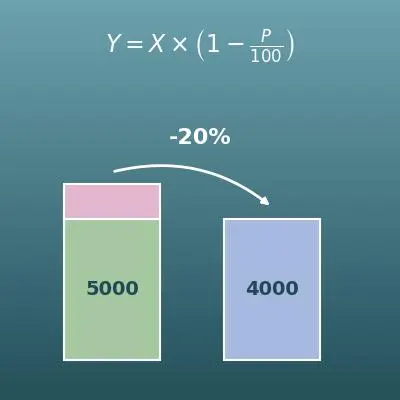
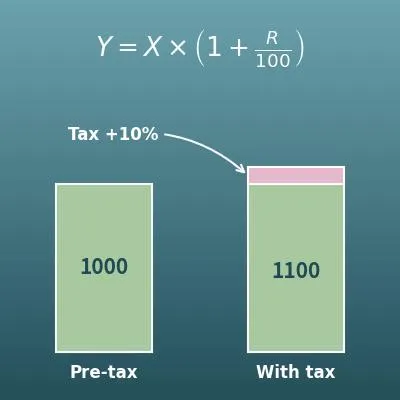
Rmin = R × (1 − t/100), Rmax = R × (1 + t/100)
R_{\min} = R \left( 1 - \frac{t}{100} \right), \quad R_{\max} = R \left( 1 + \frac{t}{100} \right)
<math xmlns="http://www.w3.org/1998/Math/MathML" display="block">
<mrow>
<msub><mi>R</mi><mi>min</mi></msub>
<mo>=</mo>
<mi>R</mi>
<mo>×</mo>
<mrow>
<mo>(</mo>
<mn>1</mn>
<mo>−</mo>
<mfrac><mi>t</mi><mn>100</mn></mfrac>
<mo>)</mo>
</mrow>
<mo>,</mo>
<msub><mi>R</mi><mi>max</mi></msub>
<mo>=</mo>
<mi>R</mi>
<mo>×</mo>
<mrow>
<mo>(</mo>
<mn>1</mn>
<mo>+</mo>
<mfrac><mi>t</mi><mn>100</mn></mfrac>
<mo>)</mo>
</mrow>
</mrow>
</math>
R_(min) = R xx (1 - t/100), R_(max) = R xx (1 + t/100)
{R (1 - t/100), R (1 + t/100)}
Rmin := R*(1 - t/100); Rmax := R*(1 + t/100);
Rmin = R*(1 - t/100); Rmax = R*(1 + t/100);
R_min = R(1 - t/100), R_max = R(1 + t/100)
How to have ChatGPT do the calculation
You are a calculation assistant for electronic components. Do the following calculation by actually running Python code, and base your answer only on the numbers from the execution result (do not answer by mental math or guessing).

Read a resistor color code. Use the IEC 60062 standard chart (black 0, brown 1, red 2, orange 3, yellow 4, green 5, blue 6, violet 7, gray 8, white 9; multipliers ×1 to ×1 billion in the same order, gold = ×0.1, silver = ×0.01; tolerance gold = ±5%, silver = ±10%, brown = ±1%).

A 4-band resistor has the bands brown, black, red, gold, in order from one end.
Find each of the following:
1. The resistance (in Ω, and in easy-to-read kΩ)
2. The tolerance (±%)
3. The actual resistance range allowing for the tolerance (minimum to maximum)

Show the formulas you used and the numbers from the execution result.
How to Use
-
1Enter your numbersType the numbers you want to calculate with into the input fields
-
2CalculatePress the "Calculate" button
-
3Check the resultThe result appears on the spot. The same page also explains the idea behind the calculation and the formula
DataChef Features

No technical knowledge required.
Intuitive and user-friendly operation.

Can be used without registering personal information.

Automatic file deletion by clicking "download".

and rapid file conversion.

No attribution required.

No need to contact us for commercial use permission.
Related Features
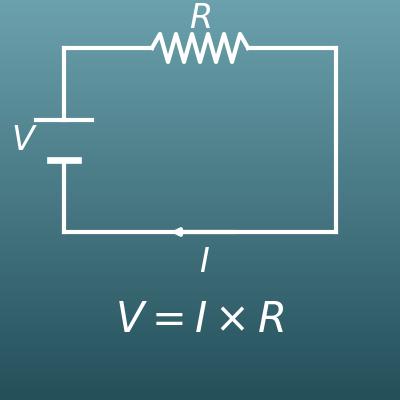
Ohm's Law Calculator (Voltage, Current, Resistance and Power)
Find the other two of voltage, current, resistance and power from any two. For circuit calculations with the resistance you read
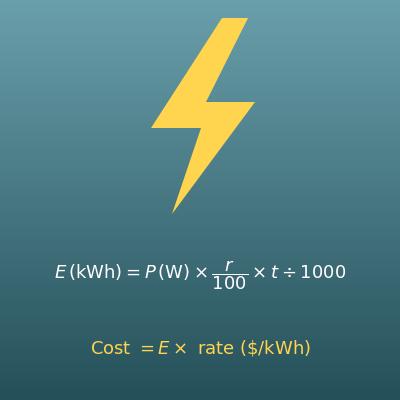
Electricity Cost Calculator (Appliance Energy Use and Cost)
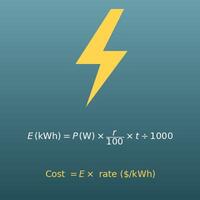
Find energy use (kWh) and the electricity cost from power and hours of use
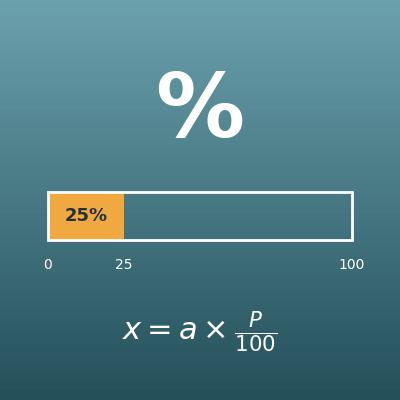
Percentage Calculator (Percent, Part and Whole)
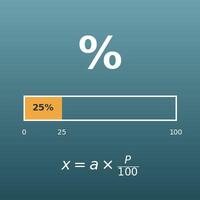
Solve percentage questions such as "What is 5% of 1,000?". The basis for working with ±% tolerance
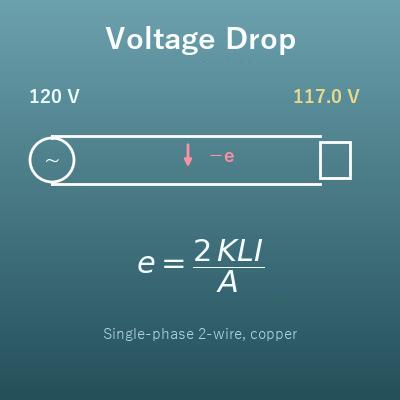
Voltage Drop Calculator (Wire Size, Length and Current)
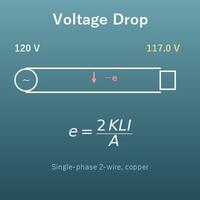
Find the voltage drop and percent drop in wiring from wire size, length and current