















































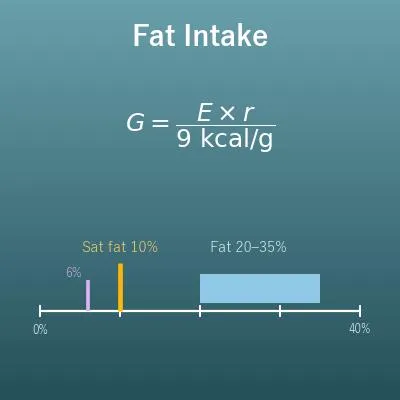





















Enter your age, sex, height, weight, activity level and goal. Your maintenance calories (TDEE) and calories for each goal are calculated, and the daily grams for the fat range (20–35% of calories) and the saturated fat limit (under 10%, plus the stricter 6% for reference) are shown in a bar graph and a table.
Table of Contents
-
What you can do on this page
-
What is this calculation used for?
-
How to Use
-
Formulas and figures
-
Symbols and terms
-
Good to know before you start
-
How to calculate it in Excel
-
How to calculate it in Google Sheets
-
How to calculate it in Python
-
How to write it in LaTeX and other math languages (copy and paste)
-
How to have ChatGPT do the calculation
-
DataChef Features
-
Related Features
-
NumberChef Calculators List
What you can do on this page
- Enter your age, sex, height, weight and activity level, and you see on the spot your maintenance calories (TDEE) and how many grams of fat to eat per day for each goal (lose, maintain or gain)
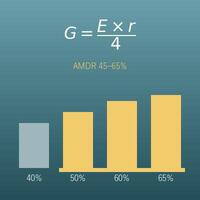
- It shows in grams the fat range from the AMDR of the US Dietary Reference Intakes (20–35% of calories) and the saturated fat limit from the Dietary Guidelines for Americans (under 10%). For reference, it also shows the stricter limit of the American Heart Association (6%)
- The results come in a table of 5 goals (maintain, lose about 1 lb or 2 lb a week, gain about 1 lb or 2 lb a week) × 4 values, plus a bar graph for your chosen goal
- Calories are turned into grams with the Atwater factor (1 g of fat = 9 kcal), the same factor used for US Nutrition Facts labels
- A plain-language explanation of the formulas and copy-and-paste formulas for Excel, Google Sheets and Python are all on this page
What is this calculation used for?
If a checkup shows that your LDL ("bad") cholesterol is high, saturated fat is usually the first thing to look at in your diet. The Dietary Guidelines for Americans advise keeping it below 10% of calories, and the American Heart Association suggests 5–6% for people who need to lower LDL.
For someone eating 2,000 kcal a day, 10% is about 22 g and 6% is about 13 g. One tablespoon of butter alone has about 7 g of saturated fat. Knowing your own limit in grams lets you decide "I have had enough today" with numbers instead of by feel. (Improving cholesterol also depends on medicine and on your body, so if you are under treatment, your doctor's advice comes first.)
When dieting, it is tempting to cut fat first because it is high in calories. But fat is used to build hormones and cell membranes and is needed to absorb the fat-soluble vitamins (A, D, E and K). Cutting it too much can lead to dry skin, hormone problems and constipation, which is one reason the AMDR has a lower limit of 20% of calories.
If your calorie target for weight loss is 1,700 kcal, 20% is about 38 g. Knowing the floor in grams, "even when cutting, not below this", puts a brake on going too far.
US Nutrition Facts labels always list Total Fat, Saturated Fat and Trans Fat in grams. If you know your own daily range, you can tell on the spot what share of your day a food is.
For example, if your range is 41 to 72 g, a pastry with 25 g of fat is about 60% of your low end and about a third of your high end by itself. Once you can think "what share of today's fat is this one item?", you start choosing differently in the store.
One tablespoon of cooking oil is almost pure fat, about 14 g. If your daily range is 41 to 72 g, that is about 3 to 5 tablespoons of oil. In real life, meat, fish, dairy and eggs also contain fat, so the oil you use for cooking can only be part of it.
Fried foods soak up oil in the batter, so one serving can easily have 20 to 30 g of fat. Knowing your daily budget helps you plan across the day, such as "on a day with fried food, keep the other meals lighter".
To build muscle, you need to eat more calories than you burn, and energy-dense fat (about 9 kcal per gram) helps you get calories without eating a lot of food. But if you fill the extra calories with fried food and sweets, you will quickly go over your saturated fat limit.
The row for gaining about 1 lb a week (+500 kcal a day) shows your fat range and saturated fat limit in numbers. That helps you plan a high-quality gain, adding calories mainly from unsaturated fat such as nuts, fish and olive oil.
Formulas and figures
Symbols and terms
Symbols
| \(E\) | Your daily calorie target (kcal/day), your maintenance calories (TDEE) plus the goal adjustment. Part of it comes from fat. From the first letter of "energy". |
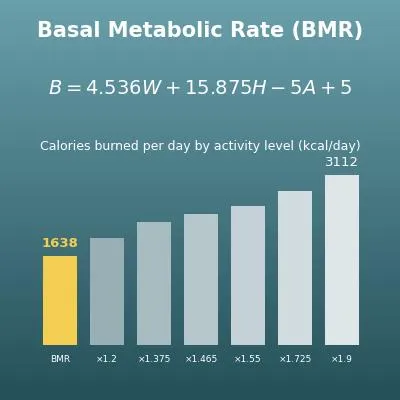
| \(B\) | Basal metabolic rate (BMR), an estimate of the calories you burn in a day even at complete rest (kcal/day). From the first letter of "basal". |
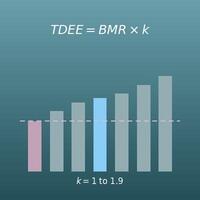
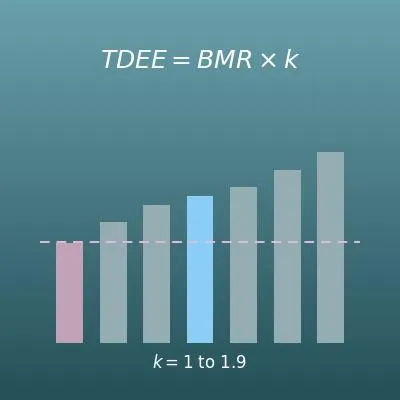
| \(k\) | The activity factor, a multiplier for how many times your BMR you burn in a day. This page uses six levels from 1.2 to 1.9. |
| \(a\) | The goal adjustment (kcal/day). It is 0 to maintain, negative to lose weight (−500 or −1,000) and positive to gain (+500 or +1,000). From the first letter of "adjustment". |
| \(r\) | The share of your daily calorie target that comes from fat (or saturated fat), for example 0.20 for 20%. From the first letter of "ratio". |
| \(G\) | The daily grams of fat you want to find (g/day). From the first letter of "gram". |
| \(W\) | Body weight in kg, used in the BMR formula (in pounds for the pounds-and-inches version). From the first letter of "weight". |
| \(H\) | Height in cm, used in the BMR formula (in inches for the pounds-and-inches version). From the first letter of "height". |
| \(A\) | Age in years, used in the BMR formula. From the first letter of "age". |
| \(F\) | Body fat percentage written as a decimal (for example, 20% → 0.20). Used in the Katch-McArdle formula. From the first letter of "fat". |
Terms
| fat | One of the 3 macronutrients. At about 9 kcal per gram, it has more than twice the energy of protein or carbs (about 4 kcal/g), so it is an efficient energy source. It is also needed to build cell membranes and hormones and to absorb the fat-soluble vitamins (A, D, E and K). Cooking oils, butter, fatty meat, nuts and fish are rich in it. |
| saturated fat | Fat found mostly in fats that are solid at room temperature, such as butter, lard, fatty meat and palm oil. Too much is said to raise LDL cholesterol and the risk of heart and blood vessel disease. The Dietary Guidelines for Americans advise less than 10% of calories, and the American Heart Association suggests 5–6% for people who need to lower LDL. |
| unsaturated fat | A general name for monounsaturated fats, found in olive oil and similar oils, and polyunsaturated fats, found in fish oil (omega-3s such as DHA and EPA) and vegetable oils. They are common in oils that are liquid at room temperature, and eating them in place of saturated fat is said to help lower LDL cholesterol. They are the "good" side when people say fats differ in quality. |
| trans fat | Fat formed mainly when liquid oils are processed (partially hydrogenated). It raises LDL cholesterol and lowers HDL, a double harm, and has no health benefit. The WHO advises keeping it below 1% of calories. In the US, the FDA's action on partially hydrogenated oils means they have been largely removed from foods since 2018, but check labels, because small amounts can still appear. |
| cholesterol | A fat-like substance in the blood. It is often discussed as LDL ("bad") and HDL ("good") cholesterol, depending on how it is carried. Eating too much saturated fat or trans fat tends to raise LDL. |
| LDL ("bad" cholesterol) | The cholesterol that is called "bad" because, when there is too much, it builds up in the walls of blood vessels and speeds up hardening of the arteries. Eating too much saturated fat or trans fat tends to raise it. |
| HDL ("good" cholesterol) | The cholesterol that is called "good" because it helps carry extra cholesterol away. |
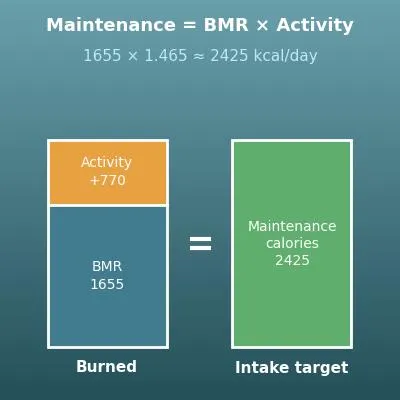
| TDEE (total daily energy expenditure) | The total calories you burn in a day (kcal/day), your BMR plus the calories used for exercise and daily activities. It is estimated as "BMR × activity factor". It is also called maintenance calories. See the related "TDEE Calculator" page for details. |
| BMR (basal metabolic rate) | The energy you use just to stay alive, for things like keeping your body temperature, breathing and a beating heart (kcal/day). On this page it is estimated with a formula (Mifflin-St Jeor or Katch-McArdle). |
| activity factor | A multiplier for how many extra calories you use for exercise and daily activities. Multiply your BMR by it to estimate TDEE. This page uses six levels from 1.2 to 1.9. |
| lean body mass | The weight of your muscles, bones, organs and so on, which is your body weight minus your body fat. It is found as weight × (1 − body fat percentage). The Katch-McArdle formula estimates BMR from this value. |
| Atwater factors | The energy per gram of each nutrient - fat 9 kcal/g, protein and carbohydrate 4 kcal/g. They are also used for the calories on US Nutrition Facts labels. This calculator uses the same 9 kcal/g. |
| Dietary Guidelines for Americans | The official US advice on healthy eating, updated every 5 years by the US Departments of Agriculture and of Health and Human Services. The 2020–2025 edition advises keeping saturated fat below 10% of calories, and uses the AMDR for fat (20–35% of calories for adults) from the Dietary Reference Intakes (DRI). The fat range and saturated fat limit on this page are based on them. |
| American Heart Association (AHA) | A US nonprofit that works against heart disease and stroke. For people who need to lower their LDL cholesterol, it suggests keeping saturated fat to 5–6% of calories. The "reference 6%" on this page is based on this advice, a stricter line than 10%. |
Good to know before you start
Here is what helps you use the calculation on this page with real understanding, not just by pressing the button.
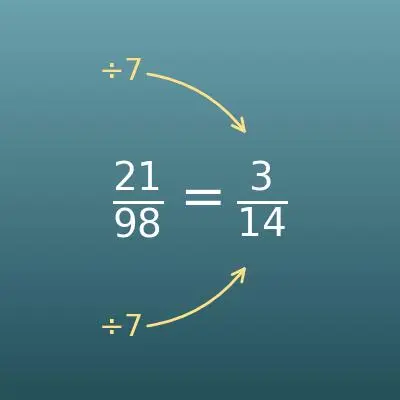
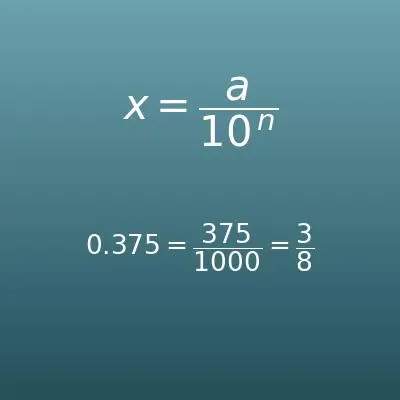
| Percents (Grade 6) |
|
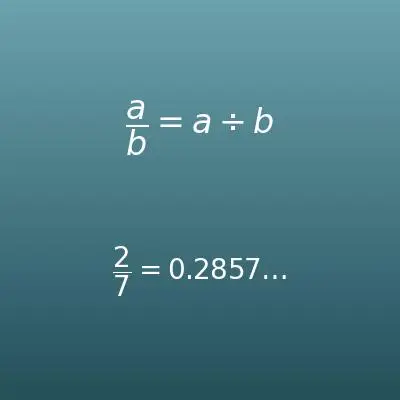
| Multiplying and dividing decimals (Grades 5–6) |
|
| Positive and negative numbers (Grade 7) |
|
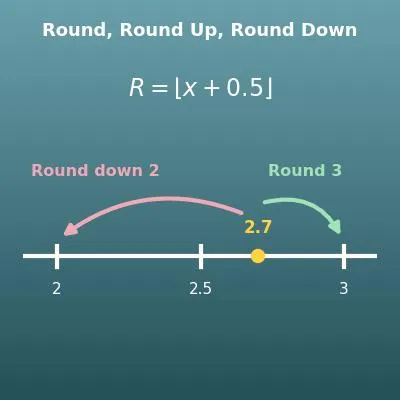
| Rounding (Grades 4–5) |
|
How to calculate it in Excel
| Sex (male or female) | male |
| Weight (lb) | 160 |
| Height (in) | 70 |
| Age (years) | 25 |
| Activity factor | 1.375 |
| Goal adjustment (kcal/day; 0 to maintain, negative to lose) | -500 |
| BMR (kcal/day) | =4.5359237*B2+15.875*B3-5*B4+IF(B1="male",5,-161) |
| TDEE, maintenance calories (kcal/day) | =ROUND(B7*B5,0) |
| Daily calorie target (kcal/day) | =B8+B6 |
| Daily calorie target (kcal/day) | 1861 |
| Fat range, low end (20%) (g/day) | =ROUND(B1*0.2/9,0) |
| Fat range, high end (35%) (g/day) | =ROUND(B1*0.35/9,0) |
| Saturated fat limit (10%) (g/day) | =ROUND(B1*0.1/9,0) |
| Reference: AHA saturated fat limit (6%) (g/day) | =ROUND(B1*0.06/9,0) |
The BMR row in the first table uses the Mifflin-St Jeor formula in pounds and inches. Its IF function adds 5 if B1 is "male" and subtracts 161 otherwise (female). With the example numbers, you get a BMR of about 1717, a TDEE of 2361 and a calorie target of 1861.
The second table uses the calorie target of 1,861 kcal and gives a fat range of 41 to 72 g, a saturated fat limit of 21 g and the reference AHA limit of 12 g (all g/day). Just replace the numbers in column B with your own.
This page's calculator works out the grams from TDEE before rounding, so near a rounding boundary, this table (which rounds TDEE first) can very rarely be 1 g off.
How to calculate it in Google Sheets
| Sex (male or female) | male |
| Weight (lb) | 160 |
| Height (in) | 70 |
| Age (years) | 25 |
| Activity factor | 1.375 |
| Goal adjustment (kcal/day; 0 to maintain, negative to lose) | -500 |
| BMR (kcal/day) | =4.5359237*B2+15.875*B3-5*B4+IF(B1="male",5,-161) |
| TDEE, maintenance calories (kcal/day) | =ROUND(B7*B5,0) |
| Daily calorie target (kcal/day) | =B8+B6 |
| Daily calorie target (kcal/day) | 1861 |
| Fat range, low end (20%) (g/day) | =ROUND(B1*0.2/9,0) |
| Fat range, high end (35%) (g/day) | =ROUND(B1*0.35/9,0) |
| Saturated fat limit (10%) (g/day) | =ROUND(B1*0.1/9,0) |
| Reference: AHA saturated fat limit (6%) (g/day) | =ROUND(B1*0.06/9,0) |
How to calculate it in Python
sex = "male"             # "male" or "female"
age = 25                 # age (years)
height_in = 70           # height (inches). 5 ft 10 in = 70 in
weight_lb = 160          # weight (lb)
activity_factor = 1.375  # activity factor (1.2 to 1.9. See the "TDEE Calculator" page for how to choose)
goal_adjust = -500       # goal adjustment (kcal/day. 0 to maintain, negative to lose, positive to gain)

# BMR (Mifflin-St Jeor formula in pounds and inches) -> TDEE -> daily calorie target
bmr = 4.5359237 * weight_lb + 15.875 * height_in - 5 * age
bmr = bmr + 5 if sex == "male" else bmr - 161
tdee = bmr * activity_factor              # TDEE before rounding (used for the grams)
calories = tdee + goal_adjust             # calorie target before rounding

print(f"Maintenance calories (TDEE): {round(tdee)} kcal/day")
print(f"Daily calorie target: {round(calories)} kcal/day")

# Grams of fat and saturated fat (9 kcal/g is the Atwater factor for fat).
# Shares: fat 20-35% (US AMDR), saturated fat under 10% (Dietary Guidelines for Americans),
# reference 6% (American Heart Association). Work from the unrounded calories and round only at the end
fat_low = round(calories * 20 / 100 / 9)
fat_high = round(calories * 35 / 100 / 9)
sat_limit = round(calories * 10 / 100 / 9)
sat_limit_aha = round(calories * 6 / 100 / 9)

print(f"Fat range (20-35%): {fat_low}-{fat_high} g/day")
print(f"Saturated fat limit (10%): under {sat_limit} g/day")
print(f"Reference, AHA saturated fat limit (6%): up to {sat_limit_aha} g/day")
How to write it in LaTeX and other math languages (copy and paste)
E = B × k + a
E = B \times k + a
<math xmlns="http://www.w3.org/1998/Math/MathML" display="block">
<mrow>
<mi>E</mi><mo>=</mo>
<mi>B</mi><mo>×</mo><mi>k</mi>
<mo>+</mo><mi>a</mi>
</mrow>
</math>
E = B xx k + a
b*k + a
E := B*k + a;
E = B*k + a;
E = B × k + a
G = E × r ÷ 9
G = \dfrac{E \times r}{9}
<math xmlns="http://www.w3.org/1998/Math/MathML" display="block">
<mrow>
<mi>G</mi><mo>=</mo>
<mfrac>
<mrow><mi>E</mi><mo>×</mo><mi>r</mi></mrow>
<mn>9</mn>
</mfrac>
</mrow>
</math>
G = (E xx r) / 9
e*r/9
G := E*r/9;
G = E*r/9;
G = E × r / 9
How to have ChatGPT do the calculation
You are an assistant for fat intake calculations. Do the following calculation by actually running Python code, and base your answer only on the numbers from the execution result (do not answer by mental math or guessing).

A 25-year-old man is 5 ft 10 in tall, weighs 160 lb and does light exercise (activity factor 1.375). He wants to lose about 1 lb a week (−500 kcal a day).
1. Find his BMR with the Mifflin-St Jeor formula (men: BMR = 10 × weight in kg + 6.25 × height in cm − 5 × age + 5; 1 lb = 0.45359237 kg, 1 in = 2.54 cm), multiply by the activity factor 1.375 and round to a whole number (TDEE), then add −500 kcal to get his daily calorie target.
2. Take 20% and 35% of the calorie target (the US AMDR for fat), 10% (the saturated fat limit in the Dietary Guidelines for Americans) and 6% (reference: the stricter American Heart Association limit), divide each by 9 kcal/g (the Atwater factor) and round to a whole number to get the daily grams.
3. Add a short note that the AHA's 6% is stricter than the 10% in the Dietary Guidelines and is meant for people who need to lower their LDL cholesterol.

Show the formulas you used and the numbers from the execution result in a table. Also add a note that these are estimates for healthy adults, not medical advice.
How to Use
-
1Enter your numbersType the numbers you want to calculate with into the input fields
-
2CalculatePress the "Calculate" button
-
3Check the resultThe result appears on the spot. The same page also explains the idea behind the calculation and the formula
DataChef Features

No technical knowledge required.
Intuitive and user-friendly operation.

Can be used without registering personal information.

Automatic file deletion by clicking "download".

and rapid file conversion.

No attribution required.

No need to contact us for commercial use permission.
Related Features
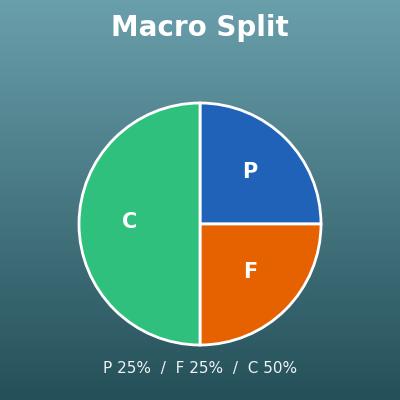
Macro Calculator (Daily Protein, Fat and Carbs)
Calculates the split of all 3 macronutrients, protein and carbs as well as fat, for 4 plans
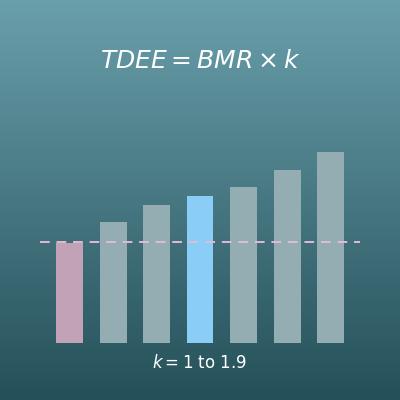
TDEE Calculator (Total Daily Energy Expenditure and How to Choose Your Activity Level)
Explains TDEE, which this page uses inside its calculation, including how to choose an activity factor
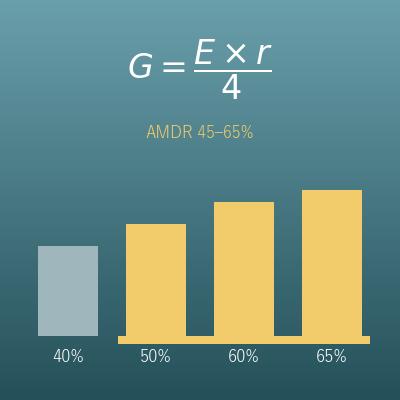
Carb Calculator (How Many Carbs Should I Eat a Day?)
Focuses on carbs and calculates the grams for 5 goals × 4 shares in the same way