







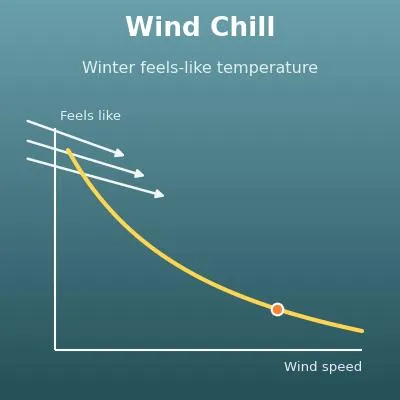


Enter the air temperature and wind speed. The wind chill (the feels-like temperature in the wind) is calculated in °C, °F and K, with a graph of wind speed against the wind chill.
Table of Contents
-
What you can do on this page
-
What is this calculation used for?
-
How to Use
-
Formulas and graphs
-
Symbols and terms
-
Good to know before you start
-
How to calculate it in Excel
-
How to calculate it in Google Sheets
-
How to calculate it in Python
-
How to write it in LaTeX and other math languages (copy and paste)
-
How to have ChatGPT do the calculation
-
DataChef Features
-
Related Features
-
NumberChef Calculators List
What you can do on this page
- Enter the air temperature and wind speed, and you get the wind chill, the winter feels-like temperature used by the US National Weather Service (NWS), on the spot
- Wind speed can be entered in mph, as in US forecasts, or in km/h, m/s or knots (air temperature in °F, °C or K)
- The result is shown in °F, °C and K
- A graph shows at a glance how much colder the same temperature feels when the wind is stronger
- A plain-language explanation of the formulas and copy-and-paste formulas for Excel, Google Sheets and Python are all on this page
What is this calculation used for?
"It's 37°F, so last week's coat should be fine." If you ignore the wind, this can be wrong. At 37°F with an 11 mph wind, the wind chill is about 30°F, which feels below freezing.
Put the temperature and wind speed from the forecast into this page, and you can decide in numbers whether it is a day for a scarf and gloves.
23°F at a ski resort may feel fine with no wind, but on a lift in a 22 mph wind the wind chill is about 7.5°F. On a lift you sit still in the wind, so it is one of the coldest places on the mountain.
From the forecast temperature and wind speed for the summit, you can plan ahead to cover exposed skin with goggles and a face mask and to close up your collar.
Winds of 34 mph are not unusual on winter ridges. At 14°F the wind chill is already about −8°F, and at 5°F it is about −20°F, colder than the roughly −18°F wind chill at which, according to the NWS, exposed skin can get frostbite within about 30 minutes (the formula assumes dry skin and shade; wet skin and sunshine are not included).
Combining the summit temperature with the ridge wind forecast to estimate the wind chill is one input for choosing gear and deciding when to turn back. For real trips, also check mountain weather forecasts and other expert sources.
Even on a calm day, riding at 19 mph feels like facing a 19 mph headwind. On a 40°F morning, the wind chill while riding comes out to about 31°F, just below freezing.
This riding wind is why your hands start to hurt after you set off even though you felt fine at the door, and why windproof gloves and jackets are must-haves for riders.
"Breezy, and it will feel colder than the numbers suggest" is common in winter forecasts for the northern US, and this page turns it into a number. For example, at 28°F with an 18 mph wind, the wind chill is about 15°F, about 13°F colder than on a calm day at the same temperature.
The winter "Wind Chill" and "Feels like" values in US and Canadian weather apps use this same index. Local NWS offices also issue cold weather alerts when wind chills reach dangerous levels, with thresholds that differ by region.
Formulas and graphs
Symbols and terms
Symbols
| \(WCT\) | W C T | The wind chill temperature, a winter feels-like temperature found from air temperature and wind speed. The formula works in °F; the calculator on this page also converts the result to °C and K. |
| \(T\) | tee | The air temperature. The wind chill formula uses °F (a Celsius temperature is converted to °F first). |
| \(V\) | vee | The wind speed. The wind chill formula uses mph (miles per hour); m/s or km/h values are converted to mph first. |
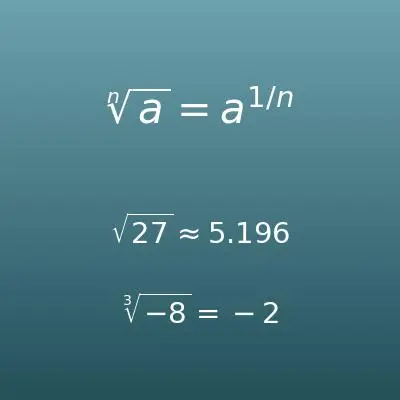
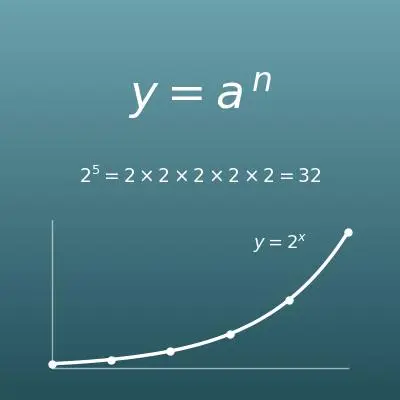
| \(V^{0.16}\) | V to the power 0.16 | The wind speed \(V\) raised to the power 0.16. Because the exponent is less than 1, doubling the wind speed does not double the effect, and each extra 1 mph matters less as the wind gets stronger. Use "^" in Excel or "**" in Python to calculate \(V^{0.16}\). |
Terms
| wind chill | An index that shows, as a temperature, how much colder the wind makes it feel. The formula on this page was introduced jointly by the US National Weather Service and the Meteorological Service of Canada in 2001. It is based on a model of heat loss from the face of a person walking in the wind, checked with wind tunnel tests and volunteers. It assumes shade and dry skin, and does not include sunshine or wet skin (sweat or rain). |
| feels-like temperature | A temperature that shows how hot or cold it actually feels, rather than what the thermometer reads. In winter, strong wind blows away the thin layer of warm air around the body, so the same temperature feels colder. The wind chill puts this effect of winter wind into a formula, and the heat index on the sister page does the same for summer humidity. |
| knot | A unit of speed used at sea, in aviation and in weather reports. 1 knot is 1 nautical mile (1852 m) per hour, about 0.514 m/s or 1.15078 mph. Wind on weather maps and in aviation reports is often given in knots. |
| mph (miles per hour) | The unit of speed used in the US. 1 mile is about 1609.34 m, so 1 mph is about 0.447 m/s or about 1.609 km/h. The wind chill formula takes the wind speed in mph. |
| °F (Fahrenheit) | The temperature unit used in the US. Water freezes at 32°F and boils at 212°F. To convert from Celsius, °F = °C × 9/5 + 32. |
| kelvin | The unit of absolute temperature used in science (symbol K). It is the Celsius temperature plus 273.15 (0°C = 273.15 K). |
| frostbite | Injury caused by the skin and the tissue under it freezing. The NWS uses the wind chill to warn about it - the lower the wind chill, the sooner exposed skin can get frostbite. The NWS wind chill chart shades the conditions where frostbite can occur within 30, 10 or 5 minutes; as a rough guide, frostbite is possible within about 30 minutes at a wind chill of around −18°F (about −28°C). |
| hypothermia | A condition in which the body's core temperature drops to 95°F (35°C) or below. It can happen when cold and wind keep taking heat from the body. When deciding how to dress for the cold, it is important to consider the wind (the wind chill) as well as the air temperature. |
| empirical formula | A formula whose coefficients are chosen to fit experimental or observed data, rather than derived from theory alone. The four coefficients of the wind chill formula (35.74, 0.6215, 35.75 and 0.4275) also come from experimental data, and the formula does not give meaningful values outside its valid range. |
Good to know before you start
Here is what helps you use the calculation on this page with real understanding, not just by pressing the button.
| Variables and substitution (Grades 6–7) |
|
| Positive and negative numbers (Grades 6–7) |
|
| Speed and unit conversion (Grades 5–7) |
|
| Temperature units (middle school science) |
|
| Powers and exponents (Grade 6 to Algebra 2) |
|
How to calculate it in Excel
| Air temperature (°F) | 32 |
| Wind speed (mph) | 20 |
| Air temperature (°C) | =(B1-32)*5/9 |
| Wind speed (km/h) | =B2*1.609344 |
| Wind chill (°F) | =35.74+0.6215*B1-35.75*B2^0.16+0.4275*B1*B2^0.16 |
| Wind chill (°C) | =(B5-32)*5/9 |
| Temperature (°C) | 5 |
| Temperature (°F) | =B1*9/5+32 |
| Wind speed (m/s) | 8 |
| Wind speed (mph) | =B1*3600/1609.34 |
The first table puts the air temperature (°F) and wind speed (mph) straight into the NWS formula. With the example values (32°F, 20 mph), B5 shows about 19.99 (°F) and B6 about −6.7 (°C).
A wind speed of 0 (no wind) does not cause an error, but treat values outside the valid range of the formula (50°F or below, 3 mph or above) as a rough reference only.
The second and third tables are unit conversions only. With the example values, they give 41 (°F) and about 17.90 (mph).
How to calculate it in Google Sheets
| Air temperature (°F) | 32 |
| Wind speed (mph) | 20 |
| Air temperature (°C) | =(B1-32)*5/9 |
| Wind speed (km/h) | =B2*1.609344 |
| Wind chill (°F) | =35.74+0.6215*B1-35.75*B2^0.16+0.4275*B1*B2^0.16 |
| Wind chill (°C) | =(B5-32)*5/9 |
| Temperature (°C) | 5 |
| Temperature (°F) | =B1*9/5+32 |
| Wind speed (m/s) | 8 |
| Wind speed (mph) | =B1*3600/1609.34 |
How to calculate it in Python
air_temperature_f = 32    # air temperature (°F)
wind_speed_mph = 20       # wind speed (mph)

# If you have °C and m/s, convert them first:
# air_temperature_f = air_temperature_c * 9 / 5 + 32
# wind_speed_mph = wind_speed_ms * 3600 / 1609.34

t_f = air_temperature_f
v_mph = wind_speed_mph

v_pow = v_mph ** 0.16                      # wind speed to the power 0.16 (0 when there is no wind)
wind_chill_f = 35.74 + 0.6215 * t_f - 35.75 * v_pow + 0.4275 * t_f * v_pow

wind_chill_c = (wind_chill_f - 32) * 5 / 9
wind_chill_k = wind_chill_c + 273.15
print(f"Wind chill: {wind_chill_f:.1f} °F ({wind_chill_c:.1f} °C / {wind_chill_k:.1f} K)")
How to write it in LaTeX and other math languages (copy and paste)
WCT = 35.74 + 0.6215\,T - 35.75\,V^{0.16} + 0.4275\,T\,V^{0.16}
<math xmlns="http://www.w3.org/1998/Math/MathML" display="block">
<mrow>
<mi>WCT</mi>
<mo>=</mo>
<mn>35.74</mn>
<mo>+</mo><mn>0.6215</mn><mi>T</mi>
<mo>−</mo><mn>35.75</mn><msup><mi>V</mi><mn>0.16</mn></msup>
<mo>+</mo><mn>0.4275</mn><mi>T</mi><msup><mi>V</mi><mn>0.16</mn></msup>
</mrow>
</math>
WCT = 35.74 + 0.6215 T - 35.75 V^0.16 + 0.4275 T V^0.16
wct = 35.74 + 0.6215*t - 35.75*v^0.16 + 0.4275*t*v^0.16
WCT := 35.74 + 0.6215*T - 35.75*V^0.16 + 0.4275*T*V^0.16;
WCT = 35.74 + 0.6215*T - 35.75*V^0.16 + 0.4275*T*V^0.16;
WCT = 35.74 + 0.6215T - 35.75V^0.16 + 0.4275T V^0.16
°F = °C × 9/5 + 32, mph = m/s × 3600 ÷ 1609.34
T_{\mathrm{F}} = T_{\mathrm{C}} \times \dfrac{9}{5} + 32, \quad V_{\mathrm{mph}} = V_{\mathrm{m/s}} \times \dfrac{3600}{1609.34}
<math xmlns="http://www.w3.org/1998/Math/MathML" display="block">
<mrow>
<msub><mi>T</mi><mi>F</mi></msub>
<mo>=</mo>
<msub><mi>T</mi><mi>C</mi></msub>
<mo>×</mo>
<mfrac><mn>9</mn><mn>5</mn></mfrac>
<mo>+</mo><mn>32</mn>
<mo>,</mo>
<msub><mi>V</mi><mtext>mph</mtext></msub>
<mo>=</mo>
<msub><mi>V</mi><mtext>m/s</mtext></msub>
<mo>×</mo>
<mfrac><mn>3600</mn><mn>1609.34</mn></mfrac>
</mrow>
</math>
T_F = T_C * 9/5 + 32, V_"mph" = V_"m/s" * 3600/1609.34
tf = tc*9/5 + 32; vmph = vms*3600/1609.34
TF := TC*9/5 + 32; Vmph := Vms*3600/1609.34;
TF = TC*9/5 + 32; Vmph = Vms*3600/1609.34;
T_F = T_C × 9/5 + 32, V_mph = V_ms × 3600/1609.34
How to have ChatGPT do the calculation
You are a weather calculation assistant. Do the following calculation by actually running Python code, and base your answer only on the numbers from the execution result (do not answer by mental math or guessing).

Find the wind chill (the NWS 2001 Wind Chill Temperature) at an air temperature of 32°F and a wind speed of 20 mph.
Steps:
1. Calculate the NWS formula WCT = 35.74 + 0.6215T − 35.75V^0.16 + 0.4275T·V^0.16 (T in °F, V in mph)
2. Give the result in both °F and °C (°C = (°F − 32) × 5/9)

Show the formulas you used and the numbers from the execution result.
How to Use
-
1Enter your numbersType the numbers you want to calculate with into the input fields
-
2CalculatePress the "Calculate" button
-
3Check the resultThe result appears on the spot. The same page also explains the idea behind the calculation and the formula
DataChef Features

No technical knowledge required.
Intuitive and user-friendly operation.

Can be used without registering personal information.

Automatic file deletion by clicking "download".

and rapid file conversion.

No attribution required.

No need to contact us for commercial use permission.
Related Features
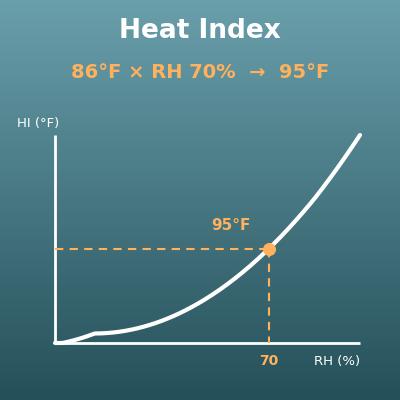
Heat Index Calculator (Feels-Like Temperature from Temperature and Humidity)
Calculates the summer feels-like temperature (NWS heat index) from the air temperature and humidity
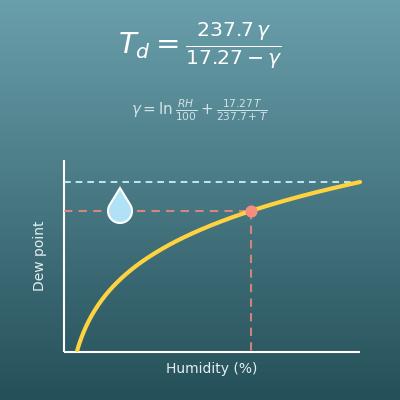
Dew Point Calculator (Temperature, Relative Humidity and Dew Point)
Calculates the dew point (the temperature where condensation starts) from temperature and humidity, and works in reverse too
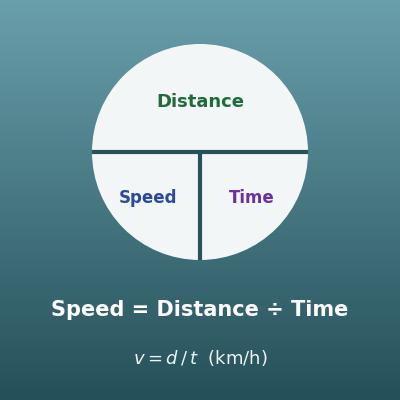
Speed, Distance and Time Calculator
Calculates speed, distance or time, and converts between speeds per hour, per minute and per second