

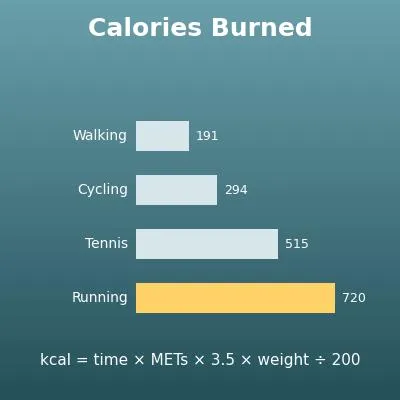
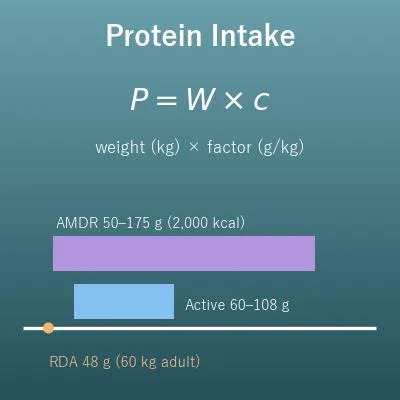
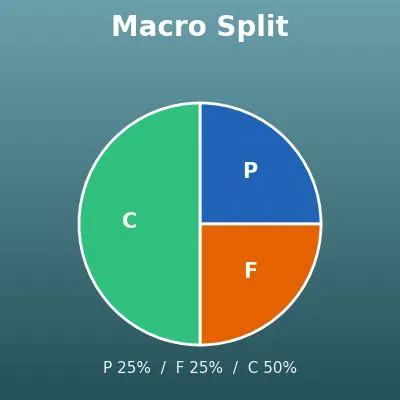
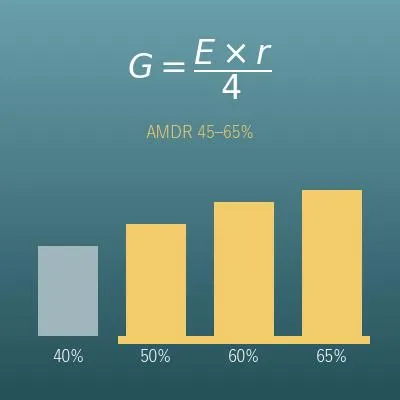

Enter the activity, how long you did it and your weight. The calories burned (kcal) are calculated with the MET method, and a bar graph compares the calories burned by different activities.
Table of Contents
-
What you can do on this page
-
What is this calculation used for?
-
How to Use
-
Formula and figure
-
Symbols and terms
-
Good to know before you start
-
How to calculate it in Excel
-
How to calculate it in Google Sheets
-
How to calculate it in Python
-
How to write it in LaTeX and other math languages (copy and paste)
-
How to have ChatGPT do the calculation
-
DataChef Features
-
Related Features
-
NumberChef Calculators List
What you can do on this page
- Choose from 44 everyday activities, such as walking, running, swimming, strength training, cleaning and shoveling snow, enter the time and your weight, and see the calories burned (kcal) on the spot
- The calculation uses the standard MET method, and the page explains in plain language what the formula does and what METs are
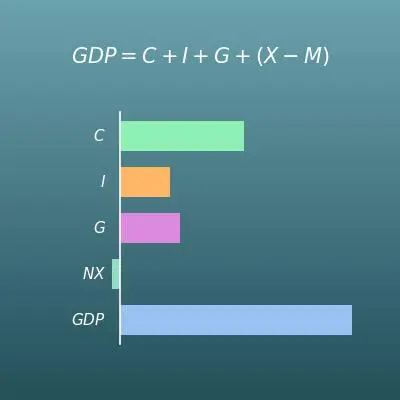
- A bar graph compares the calories you would burn doing other activities for the same time at the same weight
- An explanation of the formula and copy-and-paste formulas for Excel, Google Sheets and Python are all on this page
What is this calculation used for?
A common rule of thumb is that losing 1 lb of body fat takes burning about 3,500 kcal. If a 154-lb person walks at a normal pace (2.6 METs) for 30 minutes every day, that is about 95 kcal a day, so it takes about 37 days to burn the equivalent of 1 lb of body fat.
Many people feel this is less than they expected. Knowing these realistic numbers is the starting point for a weight loss plan you can stick to, combining exercise and diet.
A slice of frosted cake can be about 350 Calories. For a 130-lb person to burn the same amount by jogging (7.0 METs), it takes about 48 minutes.
Being able to convert "this snack equals so many minutes of running" gives you numbers you can trust, both to avoid overeating and to feel fine about a treat on a day you were active.
If a 143-lb person bikes 20 minutes each way to work (6.8 METs), that is about 154 kcal each way and about 309 kcal for the round trip. Commuting 20 days a month adds up to about 6,200 kcal.
Seeing that commuting and errands can add up as daily exercise, without setting aside special time for a workout, makes everyday choices easier, such as walking an extra stop or biking instead of driving.
If a 132-lb person finishes a marathon in 4 hours 30 minutes (slow running, about 8.3 METs), the formula on this page gives about 2,350 kcal burned. The body can store only a limited amount of energy from carbohydrates, so refueling along the way is essential in long events.
In marathons and long-distance cycling, estimating calories burned like this and planning how much to eat and when is a standard part of getting ready.
METs are used in cardiac rehabilitation and in exercise therapy for conditions such as diabetes and high blood pressure, as a unit for setting how hard to exercise (for example, "start with light activity of about 3 METs").
Knowing what METs are when your doctor or physical therapist mentions them helps you choose activities at the right intensity for you. Always follow your own doctor's advice on intensity and on whether you can exercise.
Formula and figure
Symbols and terms
Symbols
| \(K\) | kay | Calories burned (kcal), the amount this calculator finds. |
| \(t\) | tee | Exercise time in minutes. 1 hour 30 minutes counts as 90 minutes. |
| \(M\) | em | Intensity in METs. Each activity has a set typical value. |
| \(W\) | double-u | Weight in kg (kg = lb × 0.4536). The heavier you are, the more calories the same activity burns. |
Terms
| MET (metabolic equivalent) | A unit for the intensity of exercise or an activity, based on how many times the energy of sitting at rest it uses. Rest is 1 MET, so an activity of 3 METs uses 3 times the resting energy. Typical values for hundreds of activities are listed in the Compendium of Physical Activities, and the Physical Activity Guidelines for Americans use METs too (moderate intensity is 3.0 to 5.9 METs, vigorous intensity is 6.0 METs or more). |
| resting metabolism | The energy you use while sitting at rest. It is the baseline for METs (1 MET) and matches using about 3.5 mL of oxygen per kg of body weight per minute (where the "3.5" in the formula comes from). |
| kcal (kilocalorie) | A unit of energy. The "Calories" on a US Nutrition Facts label are the same unit (1 kcal = 1,000 cal). |
| calories burned | The amount of energy your body uses for an activity. You burn calories not only in exercise but also in everyday movement such as chores and work. |
| oxygen uptake | The amount of oxygen your body takes in and uses. It is known to be roughly proportional to the energy used, so calories burned can be estimated from oxygen. The MET method is an estimate based on this relationship. |
Good to know before you start
It is fine if METs are new to you (they are explained in the "Formula and figure" section).
Just make sure you have the basic math behind them.
| Multiplying and dividing decimals (Grades 5–6) |
|
| Speed, time and distance (Grades 6–7) |
|
| Thinking in "times as much" (Grade 5) |
|
How to calculate it in Excel
| Exercise time (min) | 60 |
| Intensity (METs) | 2.6 |
| Weight (lb) | 154 |
| Calories burned (kcal) | =B1*B2*3.5*B3/440.9 |
With the example numbers, B4 shows about 190.7 (about 191 kcal). Just replace B1 to B3 with your own numbers.
For the intensity (B2), enter the MET value shown in the result when you choose an activity in this calculator (for example, 7.0 for jogging (general)).
How to calculate it in Google Sheets
| Exercise time (min) | 60 |
| Intensity (METs) | 2.6 |
| Weight (lb) | 154 |
| Calories burned (kcal) | =B1*B2*3.5*B3/440.9 |
How to calculate it in Python
minutes = 60       # exercise time (min)
met = 2.6          # intensity (METs), the typical value for the activity
weight_lb = 154    # weight (lb)

# 440.9 = 200 x 2.2046 (use 200 instead if the weight is in kg)
calories = minutes * met * 3.5 * weight_lb / 440.9
print(f"Calories burned: {calories:.1f} kcal")
How to write it in LaTeX and other math languages (copy and paste)
K = t × M × 3.5 × W ÷ 200
K = \dfrac{t \times M \times 3.5 \times W}{200}
<math xmlns="http://www.w3.org/1998/Math/MathML" display="block">
<mrow>
<mi>K</mi>
<mo>=</mo>
<mfrac>
<mrow>
<mi>t</mi><mo>×</mo><mi>M</mi><mo>×</mo><mn>3.5</mn><mo>×</mo><mi>W</mi>
</mrow>
<mn>200</mn>
</mfrac>
</mrow>
</math>
K = (t * M * 3.5 * W) / 200
t*m*3.5*w/200
K := t*M*3.5*W/200;
K = t*M*3.5*W/200;
K = (t×M×3.5×W)/200
How to have ChatGPT do the calculation
You are a calories-burned calculation assistant. Do the following calculation by actually running Python code, and base your answer only on the numbers from the execution result (do not answer by mental math or guessing).

MET formula: calories burned (kcal) = time (min) × METs × 3.5 × weight (kg) ÷ 200
(1 lb = 0.45359237 kg)

A person who weighs 154 lb walked at a normal pace (2.6 METs) for 45 minutes.
1. Find the calories burned.
2. Also find the calories burned by jogging (7.0 METs) for the same time, and compare the two.

Show the formulas you used and the numbers from the execution result. Also mention that the MET method gives estimates based on averages.
How to Use
-
1Enter your numbersType the numbers you want to calculate with into the input fields
-
2CalculatePress the "Calculate" button
-
3Check the resultThe result appears on the spot. The same page also explains the idea behind the calculation and the formula
DataChef Features

No technical knowledge required.
Intuitive and user-friendly operation.

Can be used without registering personal information.

Automatic file deletion by clicking "download".

and rapid file conversion.
No attribution required.

No need to contact us for commercial use permission.
Related Features
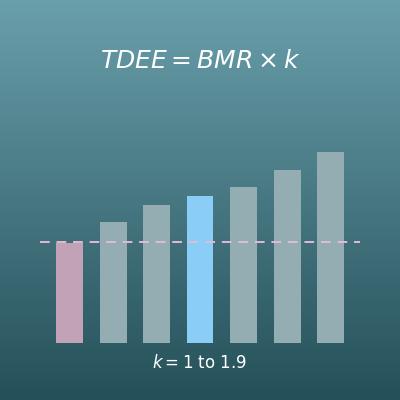
TDEE Calculator (Total Daily Energy Expenditure and How to Choose Your Activity Level)
Instead of one workout, find the total energy you burn in a day from your BMR and activity level
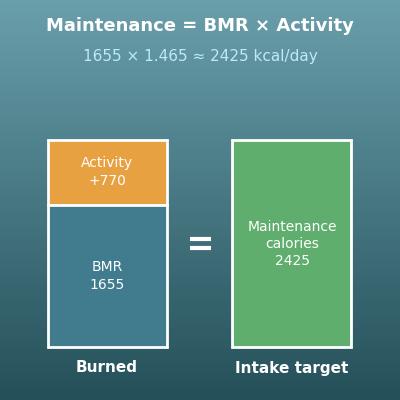
Calorie Calculator (Maintenance Calories and Weight Loss or Gain Plans)
Find daily calorie targets for losing or gaining weight at different rates
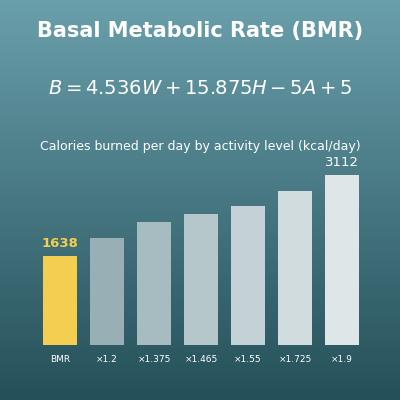
BMR Calculator (Basal Metabolic Rate and Daily Calories by Activity Level)
Estimate the calories you burn at complete rest (BMR) with three formulas