
Enter only one value you know out of radius, diameter, circumference and area. The other three are calculated together.
Table of Contents
-
What you can do on this page
-
What is this calculation used for?
-
How to Use
-
Formulas and figures
-
Symbols and terms
-
Good to know before you start
-
How to calculate it in Excel
-
How to calculate it in Google Sheets
-
How to calculate it in Python
-
How to write it in LaTeX and other math languages (copy and paste)
-
How to have ChatGPT do the calculation
-
DataChef Features
-
Related Features
-
NumberChef Calculators List
What you can do on this page
- Enter just one value you know out of radius, diameter, circumference and area, and you get the other three right away
- It also works backward from the circumference or the area, such as "What is the radius of a circle with a circumference of 100 in?" or "What is the diameter of a circle with an area of 100 in²?"
- Besides the decimal answer, it shows the exact answer in terms of \(\pi\) (for a radius of 5, circumference \(= 10\pi\) and area \(= 25\pi\))
- A plain-language explanation of the formulas and copy-and-paste formulas for Excel, Google Sheets and Python are all on this page
What is this calculation used for?
An 18-inch pizza has an area of \(\pi \times 9^2 \approx 254\) in², and a 12-inch pizza \(\pi \times 6^2 \approx 113\) in². The diameter is only 1.5 times larger, but the amount you can eat (the area) is \(1.5^2 = 2.25\) times larger.
So one 18-inch pizza has more pizza than two 12-inch pizzas (about 226 in²). To compare deals like this correctly, use the area formula, not the diameter.
You cannot measure the diameter of a standing tree directly, so you wrap a tape measure around the trunk (the circumference) and convert it with \(D = C \div \pi\). A trunk 60 in around is about 19.1 in in diameter.
Foresters actually use a "diameter tape" (D-tape) with this calculation built into its markings (it treats the trunk's cross section as a circle, so the result is an approximation).
For a round flower bed with a radius of 5 ft, the area is \(\pi \times 5^2 \approx 78.5\) ft², and the distance around it is \(2\pi \times 5 \approx 31.4\) ft.
From the area you can estimate how much soil, fertilizer or sod you need, and from the circumference how much edging or brick to buy, before you go to the store.
The two curves of a running track together make exactly one full circle, so running one lane farther out (lanes are about 1.22 m, or 48 in, wide) adds \(2\pi \times 1.22 \approx 7.7\) m per lap.
In the 400 m race, the outer lanes start farther ahead to cancel out this difference found with the circumference formula (the official rules also take into account where the measuring line is).
A pipe with an inside diameter of 1 in has a cross-sectional area of \(\pi \times 0.5^2 \approx 0.785\) in². With a 2-inch inside diameter it is \(\pi \times 1^2 \approx 3.14\) in², 4 times as much.
"Double the diameter and the cross-sectional area becomes 4 times larger (because it is squared)" is a basic rule when choosing the size of water pipes, ducts and electrical wires.
A bicycle tire with an outside diameter of 26 in moves forward one circumference per turn, \(\pi \times 26 \approx 81.7\) in (about 6.8 ft). In 100 turns it goes about 681 ft.
Bike computers and car speedometers find speed and distance from this "one turn = one circumference" rule and how fast the wheel turns.
Formulas and figures
Symbols and terms
Symbols
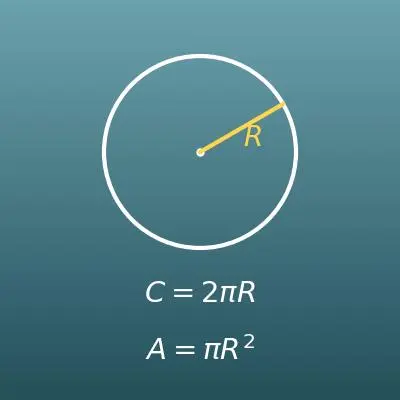
| \(R\) | ar | The radius - the length from the center of the circle to the edge. Many US textbooks write it as a lowercase \(r\). |
| \(D\) | dee | The diameter - the length from edge to edge through the center, twice the radius (\(D = 2R\)). |
| \(C\) | see | The circumference - the distance once around the circle. |
| \(A\) | a | The area - the size of the space inside the circle. If lengths are in inches, the area is in in². |
| \(\pi\) | pi | Pi - the number of times the circumference is longer than the diameter. It is \(3.14159265\ldots\) and goes on forever. In school it is often rounded to 3.14. |
| \(R^2\) | R squared | Radius × radius. The small 2 at the upper right is an exponent that tells you to multiply the number by itself. (Example - \(5^2 = 5 \times 5 = 25\)) |
| \(\sqrt{\ }\) | square root | The positive number that gives the number inside when squared. (Example - \(\sqrt{25} = 5\), and 5 squared is 25 again) |
Terms
| circle | The shape made of all the points on a flat surface that are the same distance from one point (the center). That distance is the radius. |
| radius | The length from the center of a circle to its edge. It is the most basic value that sets the size of a circle, and every calculation on this page first converts to the radius. |
| diameter | The length of a line segment drawn through the center from one side of the circle to the other. It is exactly twice the radius. |
| circumference | The distance once around a circle. For any circle, "circumference ÷ diameter" is always pi (about 3.14). |
| pi | The number of times the circumference is longer than the diameter (symbol π). It is 3.14159265…, a decimal that goes on forever without repeating, and it has been proven that no fraction can express it exactly (an irrational number). People have looked for more accurate values ever since Archimedes in ancient Greece. |
| irrational number | A number that cannot be written exactly as a fraction (integer ÷ integer). Pi is the best-known example, which is why calculations either use a rounded value such as 3.14 or leave π as it is. |
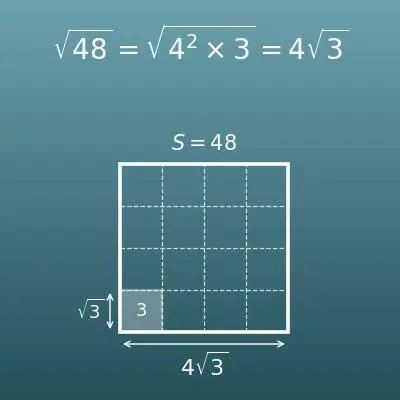
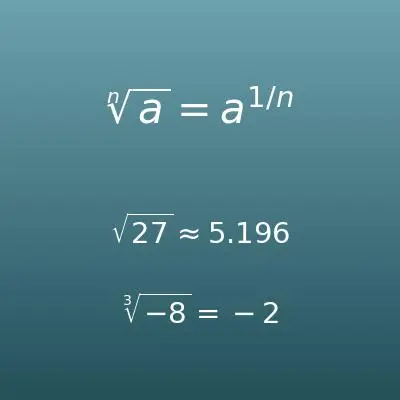
| square root | A number that gives the original number when squared (symbol √). It is used to work back from the area to the radius. It is taught in middle school math (around Grade 8). |
Good to know before you start
Here is what helps you use the calculation on this page with real understanding, not just by pressing the button.
| Circles and pi (Grade 7) |
|
| Area of a circle (Grade 7) |
|
| Writing expressions with variables (Grades 6–7) |
|
| Square roots (Grade 8) |
|
| Multiplying and dividing decimals (Grades 5–6) |
|
How to calculate it in Excel
| Radius R | 5 |
| Diameter D | =2*B1 |
| Radius R | 5 |
| Circumference C | =2*PI()*B1 |
| Radius R | 5 |
| Area A | =PI()*B1^2 |
| Circumference C | 100 |
| Radius R | =B1/(2*PI()) |
| Area A | 100 |
| Radius R | =SQRT(B1/PI()) |
"PI()" is a function that returns pi (3.14159…), "SQRT()" finds a square root, and "^2" squares a number.
In the second table, for example, B2 shows about 31.42 (the circumference of a circle with a radius of 5). The fourth table shows about 15.92 and the fifth about 5.64. Just replace B1 with your own number.
How to calculate it in Google Sheets
| Radius R | 5 |
| Diameter D | =2*B1 |
| Radius R | 5 |
| Circumference C | =2*PI()*B1 |
| Radius R | 5 |
| Area A | =PI()*B1^2 |
| Circumference C | 100 |
| Radius R | =B1/(2*PI()) |
| Area A | 100 |
| Radius R | =SQRT(B1/PI()) |
How to calculate it in Python
import math

radius = 5  # radius (enter the value you know)

diameter = radius * 2                 # diameter
circumference = 2 * math.pi * radius  # circumference
area = math.pi * radius ** 2          # area

print(f"Diameter: {diameter}")
print(f"Circumference: {circumference}")
print(f"Area: {area}")

# Working back: find the radius from the circumference or the area
radius_from_circumference = 100 / (2 * math.pi)  # radius of a circle with circumference 100
radius_from_area = math.sqrt(100 / math.pi)      # radius of a circle with area 100
print(f"Radius of a circle with circumference 100: {radius_from_circumference}")
print(f"Radius of a circle with area 100: {radius_from_area}")
How to write it in LaTeX and other math languages (copy and paste)
D = 2R
D = 2R
<math xmlns="http://www.w3.org/1998/Math/MathML" display="block">
  <mrow>
    <mi>D</mi>
    <mo>=</mo>
    <mn>2</mn>
    <mi>R</mi>
  </mrow>
</math>
D = 2R
2 r
d := 2*r; # D (the differential operator) is reserved in Maple, so all variables are lowercase
D = 2*R;
D = 2R
C = 2πR
C = 2\pi R
<math xmlns="http://www.w3.org/1998/Math/MathML" display="block">
<mrow>
<mi>C</mi>
<mo>=</mo>
<mn>2</mn>
<mi>π</mi>
<mi>R</mi>
</mrow>
</math>
C = 2 pi R
2 Pi r
C := 2*Pi*R;
C = 2*pi*R;
C = 2πR
A = πR²
A = \pi R^{2}
<math xmlns="http://www.w3.org/1998/Math/MathML" display="block">
<mrow>
<mi>A</mi>
<mo>=</mo>
<mi>π</mi>
<msup><mi>R</mi><mn>2</mn></msup>
</mrow>
</math>
A = pi R^2
Pi r^2
A := Pi*R^2;
A = pi*R^2;
A = πR^2
R = C ÷ (2π)
R = \dfrac{C}{2\pi}
<math xmlns="http://www.w3.org/1998/Math/MathML" display="block">
<mrow>
<mi>R</mi>
<mo>=</mo>
<mfrac>
<mi>C</mi>
<mrow><mn>2</mn><mi>π</mi></mrow>
</mfrac>
</mrow>
</math>
R = C/(2 pi)
c/(2 Pi)
R := C/(2*Pi);
R = C/(2*pi);
R = C/(2π)
R = √(A ÷ π)
R = \sqrt{\dfrac{A}{\pi}}
<math xmlns="http://www.w3.org/1998/Math/MathML" display="block">
<mrow>
<mi>R</mi>
<mo>=</mo>
<msqrt>
<mfrac><mi>A</mi><mi>π</mi></mfrac>
</msqrt>
</mrow>
</math>
R = sqrt(A/pi)
Sqrt[a/Pi]
R := sqrt(A/Pi);
R = sqrt(A/pi);
R = √(A/π)
How to have ChatGPT do the calculation
You are a calculation assistant for circles. Do the following calculation by actually running Python code, and base your answer only on the numbers from the execution result (do not answer by mental math or guessing).

1. Find the diameter, circumference and area of a circle with a radius of 5 in.
2. Find the radius of a circle with a circumference of 100 in.
3. Find the radius of a circle with an area of 100 in².

Use math.pi for pi. Show the formulas you used and the numbers from the execution result (to 2 decimal places).
How to Use
-
1Enter your numbersType the numbers you want to calculate with into the input fields
-
2CalculatePress the "Calculate" button
-
3Check the resultThe result appears on the spot. The same page also explains the idea behind the calculation and the formula
DataChef Features

No technical knowledge required.
Intuitive and user-friendly operation.

Can be used without registering personal information.

Automatic file deletion by clicking "download".

and rapid file conversion.
No attribution required.

No need to contact us for commercial use permission.
Related Features
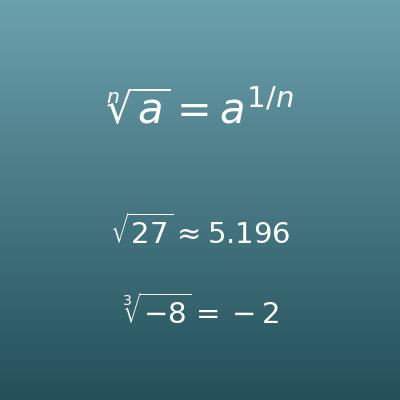
Nth Root Calculator (Square Root, Cube Root, nth Root)
Calculates square roots and more. Explains the "√" you use to find the radius from the area
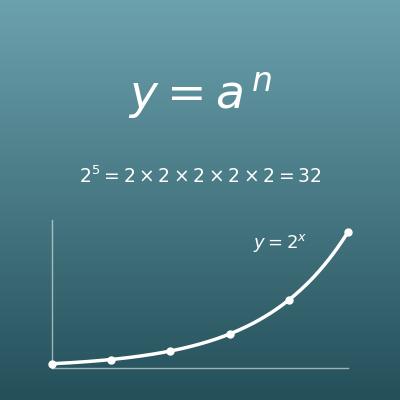
Exponent Calculator (Powers, a to the nth Power)
Calculates squares, cubes and other powers. Shows what "the radius squared" in the area formula is
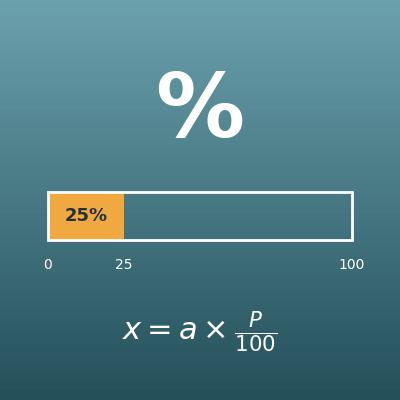
Percentage Calculator (Percent, Part and Whole)
Enter two of the whole, the part and the percentage to get the third
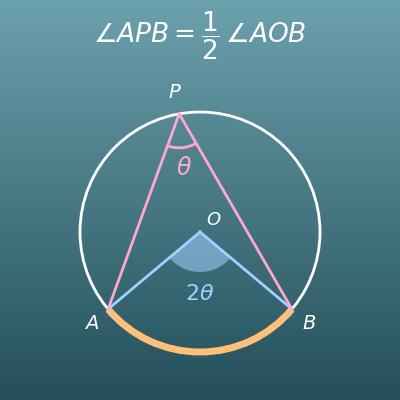
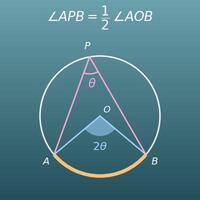
Inscribed Angle Theorem Calculator (Central Angle, Arc Ratio, Inscribed Quadrilateral)
Finds the central angle from an inscribed angle (twice) and back (half), angles from arc ratios and opposite angles of a cyclic quadrilateral, with a figure