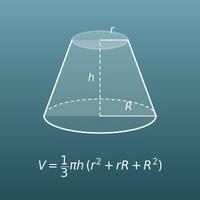

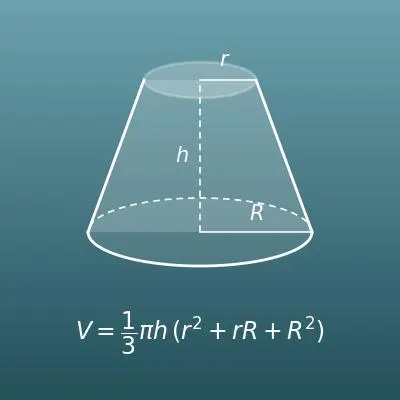
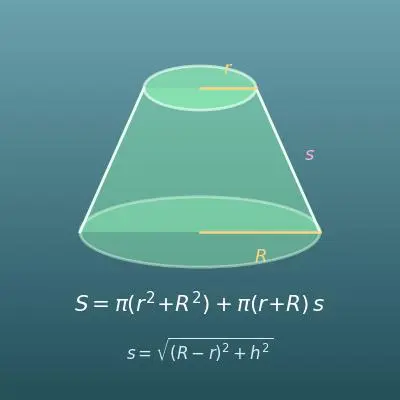











Enter the top radius, the bottom radius and the height of a frustum of a cone (a solid like a bucket, with parallel circles at the top and bottom and a tapered side). You get the surface area, the slant height and the breakdown of the area.
Table of Contents
-
What you can do on this page
-
What is this calculation used for?
-
How to Use
-
Formulas and figures
-
Symbols and terms
-
Good to know before you start
-
How to calculate it in Excel
-
How to calculate it in Google Sheets
-
How to calculate it in Python
-
How to write it in LaTeX and other math languages (copy and paste)
-
How to have ChatGPT do the calculation
-
DataChef Features
-
Related Features
-
NumberChef Calculators List
What you can do on this page
- Enter the top radius, the bottom radius and the height, and you get the surface area of a frustum of a cone (a shape like a bucket or a pudding cup) on the spot
- It also shows the breakdown (top circle, bottom circle and lateral area) and the slant height (the length of the slanted side)
- You can also see the frustum as a 3D shape that you can turn by dragging with your mouse
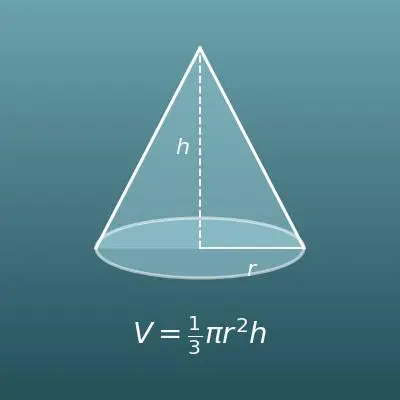
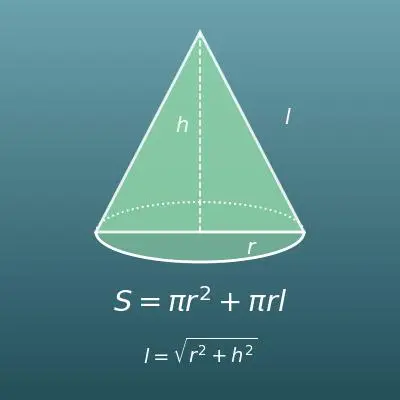
- Enter 0 for one radius to get the surface area of a cone, or the same radius for both to get the surface area of a cylinder
- A plain-language explanation of the formulas and copy-and-paste formulas for Excel, Google Sheets and Python are all on this page
What is this calculation used for?
A paint can lists how much area it covers (for example, "covers up to 400 ft² per gallon"), so once you know the area to paint, you can work out how much paint you need. For a bucket with a top radius of 6 in, a bottom radius of 5 in and a depth of 14 in, the surface area is about 677 in² (about 4.7 ft²).
If you paint only the outside of an open container, add the "lateral area, about 485 in²" and the "bottom circle, about 79 in²" from the breakdown: about 564 in² (about 3.9 ft²). Adding up only the surfaces you need from the breakdown is the basic way to use surface area in practice.
A paper cup is a frustum that is wider at the top, with no lid (no top circle). For a cup with a top radius of 1.5 in, a bottom radius of 1 in and a height of 3.5 in, the lateral area is about 27.8 in² and the bottom circle is about 3.1 in², so it needs at least about 30.9 in² of paper.
Real production uses a bit more paper for glue seams and die-cutting waste, but this "material area per product" calculation is the starting point for estimating material costs.
The frustum is the classic lampshade shape. For a shade with a top radius of 4 in, a bottom radius of 8 in and a height of 10 in, the slant height is about 10.77 in, and the fabric needed to recover it (the lateral area) is about 406 in² (about 2.8 ft²).
Fabric and paper are sold in rolls or sheets of a set width, so think about the shape of the net (a curved band) as well as the area, and buy a little extra.
The lower part of a hopper that stores powder or grain in a factory is an upside-down frustum. For a section with a top radius of 3 ft, a bottom radius of 0.5 ft and a height of 4 ft, the slant height is about 4.72 ft and the lateral area is about 52 ft².
The amount of rust-proof paint, or of insulation wrapped around it to keep it warm, is estimated from this lateral area. Tanks, silos and ducts: this calculation is essential for costing surface treatment of equipment.
A round cake is a frustum with equal top and bottom radii (a cylinder), so you can use this calculator by entering the same radius twice. For an 8-inch round cake (radius 4 in) that is 4 in tall, the top and side you frost add up to about 151 in² (the bottom sits on the plate, so it is not frosted).
Comparisons such as "how much more frosting does a 9-inch cake need than an 8-inch one?" are easier with surface area. At the same height, the 9-inch cake has about 177 in², about 1.17 times as much.
Formulas and figures
Symbols and terms
Symbols
| \(r\) | lowercase r | The radius of the top circle, from the first letter of "radius". On this page it is always the top radius, whether or not the top is the smaller circle. |
| \(R\) | capital R | The radius of the bottom circle (the base). It is written as a capital letter to tell it apart from the top radius \(r\). |
| \(h\) | aitch | The height of the frustum, from the first letter of "height". It is the straight-up distance from the bottom circle to the top circle, and is not the same as the length of the slanted side (the slant height \(l\)). |
| \(l\) | ell | The slant height (the length of the slanted side). Some textbooks use \(s\) or \(\ell\). On this page it is calculated automatically as \(l = \sqrt{(R - r)^2 + h^2}\). |
| \(\pi\) | pi | The number that tells how many times the circumference of a circle is its diameter. It is \(3.14159265\ldots\) and the decimals never end. In simple calculations, 3.14 is often used. |
| \(r^2\) | r squared | The number \(r\) multiplied by itself (\(r \times r\)). The small 2 at the upper right is an exponent that says "use it as a factor twice". |
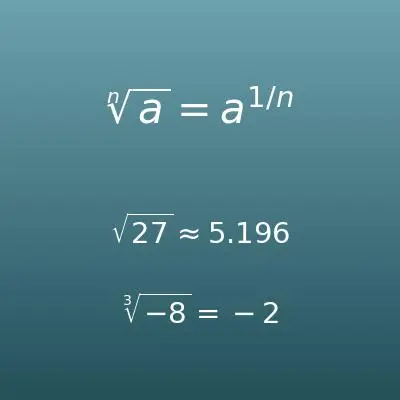
| \(\sqrt{\phantom{9}}\) | square root (radical sign) | The square root symbol. It stands for the number, 0 or greater, whose square is the number under the sign. For example, \(\sqrt{25} = 5\) (because \(5^2 = 25\)). |
| \(S\) | capital S | A common symbol for area, from "surface". On this page it is the surface area of the frustum (some textbooks write SA). |
| \(S_1,\ S_2,\ S_3\) | S sub one, S sub two, S sub three | Symbols for the parts of the surface area. The small number at the lower right (the subscript) just tells them apart. On this page, \(S_1\) is the area of the top circle, \(S_2\) is the area of the bottom circle and \(S_3\) is the lateral area. |
| \(\mathrm{in^2}\) | square inch | A unit of area. A square 1 in on each side has an area of 1 in². Be careful not to mix it up with in³ (cubic inch), the unit of volume. (1 ft² = 144 in².) |
Terms
| frustum | The solid you get when you cut a cone with a plane parallel to its base and remove the part with the apex (a frustum of a cone, also called a truncated cone). Its top and bottom are parallel circles of different sizes, and its side is tapered. Buckets, flower pots, paper cups and pudding cups all have this very common shape. |
| cone | A solid with a circular base that narrows to a single point, the apex, like an ice cream cone. A frustum is made from a cone. |
| surface area | The area of the whole outside of a solid. You use it for the amount needed to cover a surface, such as paint or wrapping paper. It is a different quantity from volume, which is how much fits inside. |
| lateral area | The area of the side of a solid only (also called the lateral surface area). For a frustum, it is the area of the tapered side, without the top and bottom circles. |
| slant height | The slanted line along the side of a cone or a frustum, or its length. For a frustum, it is the shortest line along the side from the edge of the top circle to the edge of the bottom circle, and the Pythagorean theorem gives \(l = \sqrt{(R - r)^2 + h^2}\). |
| net | The flat pattern you get by cutting the surface of a solid open and laying it flat. The net of a frustum is two circles plus a curved band for the side (a big sector with a smaller sector cut out). The surface area equals the total area of the net. |
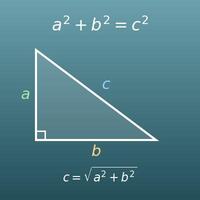
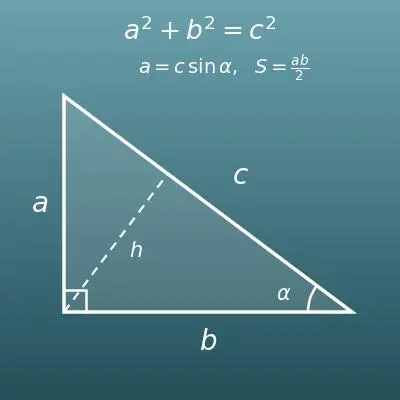
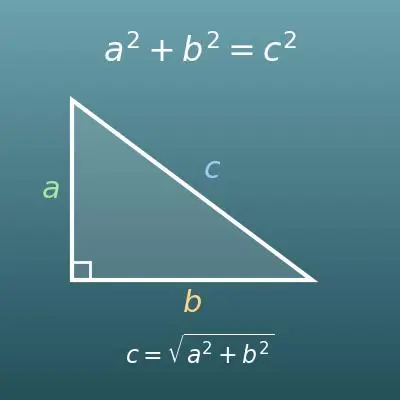
| Pythagorean theorem | The rule that in a right triangle, the square of the hypotenuse equals the sum of the squares of the other two sides. On this page it gives the slant height \(l\) as the hypotenuse of a right triangle with a horizontal side \(R - r\) and a vertical side \(h\). |
Good to know before you start
Here is what helps you use the calculation on this page with real understanding, not just by pressing the button.
| Area and circumference of a circle and pi (Grade 7) |
|
| Units of area (Grades 3–6) |
|
| Solids and nets (Grade 6) |
|
| Exponents (Grade 6) |
|
| Square roots (Grade 8) |
|
| The Pythagorean theorem (Grade 8) |
|
How to calculate it in Excel
| Top circle area (in²) | 3.14 |
| Bottom circle area (in²) | 50.27 |
| Lateral area (in²) | 78.54 |
| Frustum surface area (in²) | =B1+B2+B3 |
| Top radius r (in) | 1 |
| Bottom radius R (in) | 4 |
| Height h (in) | 4 |
| Slant height l (in) | =SQRT((B2-B1)^2+B3^2) |
| Lateral area (in²) | =PI()*(B1+B2)*B4 |
| Top radius r (in) | 6 |
| Bottom radius R (in) | 5 |
| Height h (in) | 14 |
| Frustum surface area (in²) | =PI()*(B1^2+B2^2)+PI()*(B1+B2)*SQRT((B2-B1)^2+B3^2) |
In a formula, "B1" and "B2" tell the formula to use the number in that cell. "*" is multiplication, "^2" squares a number, and "SQRT()" and "PI()" are the Excel functions for the square root and π (3.14159…).
In the first table, for example, B4 shows 131.95 (the same frustum as in the formula examples). The second table shows the slant height 5 in B4 and the lateral area, about 78.54, in B5. The third table is a 5-gallon bucket with a top radius of 6 in, a bottom radius of 5 in and a depth of 14 in, and B4 shows about 676.7 (in²). Just replace the input numbers with your own lengths.
How to calculate it in Google Sheets
| Top circle area (in²) | 3.14 |
| Bottom circle area (in²) | 50.27 |
| Lateral area (in²) | 78.54 |
| Frustum surface area (in²) | =B1+B2+B3 |
| Top radius r (in) | 1 |
| Bottom radius R (in) | 4 |
| Height h (in) | 4 |
| Slant height l (in) | =SQRT((B2-B1)^2+B3^2) |
| Lateral area (in²) | =PI()*(B1+B2)*B4 |
| Top radius r (in) | 6 |
| Bottom radius R (in) | 5 |
| Height h (in) | 14 |
| Frustum surface area (in²) | =PI()*(B1^2+B2^2)+PI()*(B1+B2)*SQRT((B2-B1)^2+B3^2) |
How to calculate it in Python
import math

radius_top = 6      # radius of the top circle
radius_bottom = 5   # radius of the bottom circle (the base)
height = 14         # height (same unit as the radii)

slant = math.sqrt((radius_bottom - radius_top)**2 + height**2)  # slant height (length of the slanted side)
top_area = math.pi * radius_top**2                              # area of the top circle
bottom_area = math.pi * radius_bottom**2                        # area of the bottom circle
lateral_area = math.pi * (radius_top + radius_bottom) * slant   # lateral area
total_area = top_area + bottom_area + lateral_area              # surface area

print(f"Slant height: {slant} in")
print(f"Top circle area: {top_area} in2")
print(f"Bottom circle area: {bottom_area} in2")
print(f"Lateral area: {lateral_area} in2")
print(f"Frustum surface area: {total_area} in2")
How to write it in LaTeX and other math languages (copy and paste)
S = S₁ + S₂ + S₃
S = S_{1} + S_{2} + S_{3}
<math xmlns="http://www.w3.org/1998/Math/MathML" display="block">
  <mrow>
    <mi>S</mi>
    <mo>=</mo>
    <msub><mi>S</mi><mn>1</mn></msub>
    <mo>+</mo>
    <msub><mi>S</mi><mn>2</mn></msub>
    <mo>+</mo>
    <msub><mi>S</mi><mn>3</mn></msub>
  </mrow>
</math>
S = S_1 + S_2 + S_3
s1 + s2 + s3
S := S1 + S2 + S3;
S = S1 + S2 + S3;
S = S_1 + S_2 + S_3
S₃ = π(r + R)√((R − r)² + h²)
S_{3} = \pi (r + R) \sqrt{(R - r)^{2} + h^{2}}
<math xmlns="http://www.w3.org/1998/Math/MathML" display="block">
<mrow>
<msub><mi>S</mi><mn>3</mn></msub>
<mo>=</mo>
<mi>π</mi>
<mo>(</mo>
<mi>r</mi>
<mo>+</mo>
<mi>R</mi>
<mo>)</mo>
<msqrt>
<msup><mrow><mo>(</mo><mi>R</mi><mo>−</mo><mi>r</mi><mo>)</mo></mrow><mn>2</mn></msup>
<mo>+</mo>
<msup><mi>h</mi><mn>2</mn></msup>
</msqrt>
</mrow>
</math>
S_3 = pi (r + R) sqrt((R - r)^2 + h^2)
Pi*(r + R)*Sqrt[(R - r)^2 + h^2]
S3 := Pi*(r + R)*sqrt((R - r)^2 + h^2);
S3 = pi*(r + R)*sqrt((R - r)^2 + h^2);
S_3 = π(r + R)√((R − r)^2 + h^2)
S = π(r² + R²) + π(r + R)√((R − r)² + h²)
S = \pi \left( r^{2} + R^{2} \right) + \pi (r + R) \sqrt{(R - r)^{2} + h^{2}}
<math xmlns="http://www.w3.org/1998/Math/MathML" display="block">
<mrow>
<mi>S</mi>
<mo>=</mo>
<mi>π</mi>
<mo>(</mo>
<msup><mi>r</mi><mn>2</mn></msup>
<mo>+</mo>
<msup><mi>R</mi><mn>2</mn></msup>
<mo>)</mo>
<mo>+</mo>
<mi>π</mi>
<mo>(</mo>
<mi>r</mi>
<mo>+</mo>
<mi>R</mi>
<mo>)</mo>
<msqrt>
<msup><mrow><mo>(</mo><mi>R</mi><mo>−</mo><mi>r</mi><mo>)</mo></mrow><mn>2</mn></msup>
<mo>+</mo>
<msup><mi>h</mi><mn>2</mn></msup>
</msqrt>
</mrow>
</math>
S = pi (r^2 + R^2) + pi (r + R) sqrt((R - r)^2 + h^2)
Pi*(r^2 + R^2) + Pi*(r + R)*Sqrt[(R - r)^2 + h^2]
S := Pi*(r^2 + R^2) + Pi*(r + R)*sqrt((R - r)^2 + h^2);
S = pi*(r^2 + R^2) + pi*(r + R)*sqrt((R - r)^2 + h^2);
S = π(r^2 + R^2) + π(r + R)√((R − r)^2 + h^2)
How to have ChatGPT do the calculation
You are a math calculation assistant. Do the following calculation by actually running Python code, and base your answer only on the numbers from the execution result (do not answer by mental math or guessing).

A frustum of a cone (shaped like a bucket) has a top radius of 6 in, a bottom radius of 5 in and a height of 14 in.
Find each of the following:
1. The slant height (the length of the slanted side), l = √((R − r)² + h²)
2. The surface area of this frustum in in² (use the formula S = π(r² + R²) + π(r + R)l)
3. The breakdown of the surface area (top circle area, bottom circle area and lateral area)

Show the formulas you used and the numbers from the execution result.
How to Use
-
1Enter your numbersType the numbers you want to calculate with into the input fields
-
2CalculatePress the "Calculate" button
-
3Check the resultThe result appears on the spot. The same page also explains the idea behind the calculation and the formula
DataChef Features

No technical knowledge required.
Intuitive and user-friendly operation.

Can be used without registering personal information.

Automatic file deletion by clicking "download".

and rapid file conversion.
No attribution required.

No need to contact us for commercial use permission.
Related Features
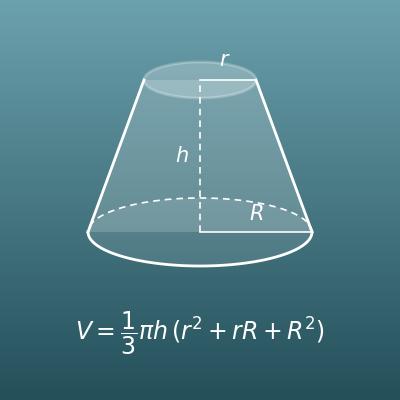
Volume of a Frustum Calculator (Truncated Cone, from Top and Bottom Radii and Height)
Calculates the volume of the same frustum (how much it holds) from the same three lengths
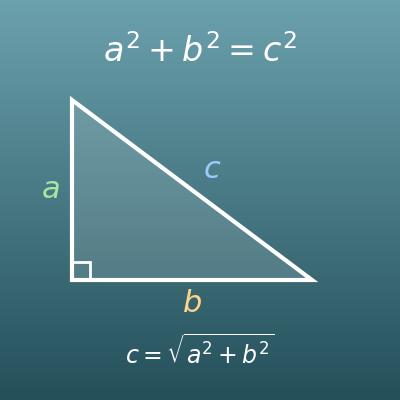
Pythagorean Theorem Calculator (Hypotenuse and Legs of a Right Triangle)
The right triangle theorem you use to find the slant height (the length of the slanted side)