








Bookmarks    
nPr and nCr    
Random Number    
SD Calculator    
Sample Size    
Percent Error    
Density    
Molarity    
Molar Mass    
Ohm's Law    
Watts to Amps    
Voltage Drop    
Long Division    
Mixed Numbers    
Rounding    
Nth Root    
Exponents    
Half-Life    
Polar Form    
De Moivre    
3D Distance    
Point to Line    
Cross Product    
Determinant    
Sin Cos Tan    
Triangle Area    
Scale Factor    
Sector Area    
Ellipse Area    
Cube Volume    
Box Volume    
Sphere Volume    
Cone Volume    
Pipe Volume    
Time Duration    
Time Card    
Present Value    
Future Value    
Churn Rate    
A/B Test Calc    
SEO Traffic    
Ideal Weight    
Fat Intake    
Child Height    
Golf Handicap    
Heat Index    
Wind Chill    
Dew Point    
Download Time    
kWh to Cost    
AC Size (BTU)    
Heating Costs    
LED Savings    
Trip Gas Cost    
Tire Size    
Solar Output    
Solar Payback    
Battery Size    
Wall Area    
Gravel Needed    
Mortar Mix    
Slope Grade    
Curtain Size    
Soil Needed    
Sod Needed    
Ramp Length    
Blind Size    
Drain Slope    
Board Feet    
Heat Loss    
Furniture Fit    
Moving Boxes    
Plywood Cuts    
Shelf Sag    
   Add
Probability and random number calculators
Independent Events
Independent Events
Two Events Solver
Two Events Solver
Repeated Trials
Repeated Trials
Bayes' Theorem
Bayes' Theorem
Expected Value
Expected Value
Binomial Distribution
nPr and nCr
nPr and nCr
Circular Permutation
With Repetition
With Repetition
Random Number
Random Number
Averages and statistics calculators
Average Calculator
Average Calculator
Mean Median Mode
Mean Median Mode
SD Calculator
SD Calculator
Quartiles & IQR
Quartiles & IQR
Frequency Table
Frequency Table
Correlation (r)
Correlation (r)
Normal Probability
Normal Probability
Z-Score Calculator
Z-Score Calculator
Confidence Interval
Confidence Interval
Sample Size
Sample Size
Mark & Recapture
Mark & Recapture
P-Value Calculator
P-Value Calculator
Percentage and ratio calculators
Percentage Calc
Percentage Calc
Percent Change
Percent Change
Percent Difference
Percent Difference
Percent Error
Percent Error
Ratio Calculator
Ratio Calculator
Discount Calculator
Discount Calculator
Sales Tax Calculator
Margin Calculator
Margin Calculator
Speed calculators
Speed Calculator
Speed Calculator
Density and concentration calculators
Density
Density
Molarity
Molarity
Molar Mass
Molar Mass
Physics and electricity calculators
Ohm's Law
Ohm's Law
Watts to Amps
Watts to Amps
Resistor Colors
Resistor Colors
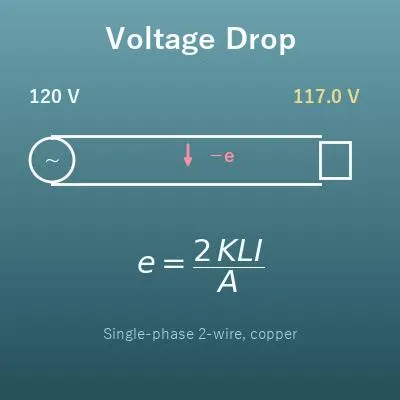
Voltage Drop
Voltage Drop
Unit conversion calculators
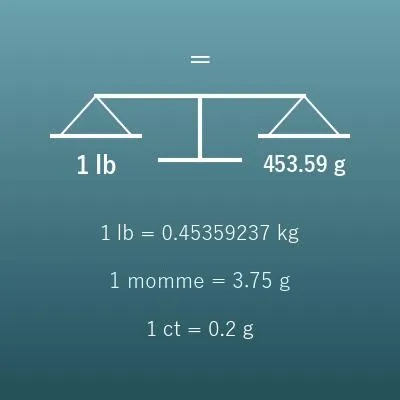
Weight Converter
Weight Converter
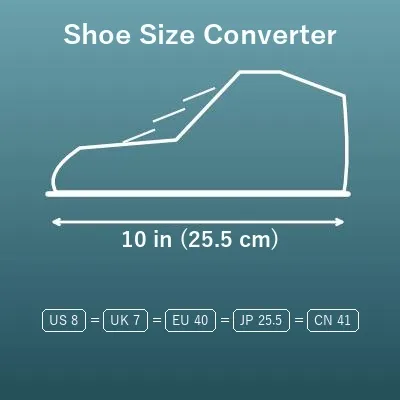
Shoe Size Converter
Shoe Size Converter
Integer and signed number calculators
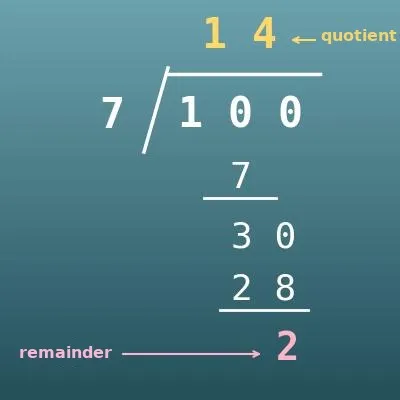
Long Division
Long Division
LCM Calculator
LCM Calculator
GCF Calculator
GCF Calculator
Integer Calculator
Integer Calculator
Prime Factorization
Prime Factorization
Diophantine Solver
Diophantine Solver
Modulo Calculator
Modulo Calculator
Factor Calculator
Factor Calculator
Roman Numerals
Roman Numerals
Fraction, decimal and rounding calculators
Fraction Calculator
Fraction Calculator
Mixed Numbers
Mixed Numbers
Simplify Fractions
Simplify Fractions
Fraction to Decimal
Fraction to Decimal
Decimal to Fraction
Decimal to Fraction
Rounding
Rounding
Equation and inequality calculators
Linear Equation
Linear Equation
Linear Systems
Linear Systems
Quadratic Formula
Quadratic Formula
Absolute Value
Absolute Value
Quadratic Inequality
Polynomial calculators
Binomial Theorem
Binomial Theorem
Square root and nth root calculators
Simplify Radicals
Simplify Radicals
Nth Root
Nth Root
Exponent and logarithm calculators
Exponents
Exponents
Log Calculator
Log Calculator
Number of Digits
Number of Digits
Scientific Notation
Scientific Notation
Sci. Notation Math
Sci. Notation Math
Half-Life
Half-Life
Complex number calculators
Complex Numbers
Complex Numbers
Polar Form
Polar Form
De Moivre
De Moivre
Function and graph calculators
Slope Calculator
Slope Calculator
Linear Function
Linear Function
Direct & Inverse Variation
y = ax² Calculator
y = ax² Calculator
Distance Formula
Distance Formula
3D Distance
3D Distance
Section Formula
Section Formula
Point to Line
Point to Line
Lat/Long Distance
Lat/Long Distance
Complete the Square
Complete the Square
Circle Equation
Circle Equation
Conic Sections
Conic Sections
Polar Coordinates
Polar Coordinates
Sequence calculators
Arithmetic Sequence
Arithmetic Sequence
Geometric Sequence
Geometric Sequence
Fibonacci Sequence
Fibonacci Sequence
Recurrence Relation
Recurrence Relation
Vector calculators
Vector Calculator
Vector Calculator
Cross Product
Cross Product
Matrix calculators
Matrix Calculator
Matrix Calculator
Determinant
Determinant
Inverse Matrix
Inverse Matrix
Plane geometry calculators
Sin Cos Tan
Sin Cos Tan
Degrees ⇔ Radians
Degrees ⇔ Radians
a sin θ + b cos θ
a sin θ + b cos θ
Triangle Solver
Triangle Solver
Triangle Area
Triangle Area
Right Triangle
Right Triangle
Pythagorean Theorem
Pythagorean Theorem
Polygon Angles
Polygon Angles
Scale Factor
Scale Factor
Parallel Lines
Parallel Lines
Rectangle Area
Rectangle Area
Parallelogram Area
Parallelogram Area
Trapezoid Area
Trapezoid Area
Circle Calculator
Circle Calculator
Sector Area
Sector Area
Inscribed Angle
Inscribed Angle
Ellipse Area
Ellipse Area
Solid geometry calculators
Cube Volume
Cube Volume
Cube Surface Area
Cube Surface Area
Box Volume
Box Volume
Box Surface Area
Box Surface Area
Cylinder Volume
Cylinder Volume
Cylinder Surface
Cylinder Surface
Sphere Volume
Sphere Volume
Sphere Surface
Sphere Surface
Spherical Cap Volume
Cap Surface Area
Cap Surface Area
Ellipsoid Volume
Ellipsoid Volume
Ellipsoid Surface
Ellipsoid Surface
Pyramid Volume
Pyramid Volume
Pyramid Surface
Pyramid Surface
Cone Volume
Cone Volume
Cone Surface Area
Cone Surface Area
Frustum Volume
Frustum Volume
Frustum Surface Area
Pipe Volume
Pipe Volume
Capsule Volume
Capsule Volume
Capsule Surface Area
Date and time calculators
Age Calculator
Age Calculator
Days Between Dates
Days Between Dates
Date Calculator
Date Calculator
Hours From Now
Hours From Now
Day of the Week
Day of the Week
Time Calculator
Time Calculator
Time Zone Converter
Time Zone Converter
Hours Calculator
Hours Calculator
Time Duration
Time Duration
Time Card
Time Card
Finance and economics calculators
Compound Interest
Compound Interest
Simple Interest
Simple Interest
Interest Calculator
Interest Calculator
TVM Calculator
TVM Calculator
Present Value
Present Value
Future Value
Future Value
ROI Calculator
ROI Calculator
IRR Calculator
IRR Calculator
Payback Period
Payback Period
Average Return
Average Return
GDP Calculator
GDP Calculator
Web marketing and ad metric calculators
CTR Calculator
CTR Calculator
Conversion Rate
Conversion Rate
CPC, CPM & CPA
CPC, CPM & CPA
ROAS Calculator
ROAS Calculator
Break-Even CPA
Break-Even CPA
LTV Calculator
LTV Calculator
CAC Calculator
CAC Calculator
Churn Rate
Churn Rate
A/B Test Calc
A/B Test Calc
A/B Sample Size
A/B Sample Size
SEO Traffic
SEO Traffic
Break-Even Point
Break-Even Point
Markup vs. Margin
Markup vs. Margin
CAGR Calculator
CAGR Calculator
Health and fitness calculators
BMI Calculator
BMI Calculator
Sleep Calculator
Sleep Calculator
Calorie Calculator
Calorie Calculator
BMR Calculator
BMR Calculator
TDEE Calculator
TDEE Calculator
Ideal Weight
Ideal Weight
Body Fat Calculator
Body Fat Calculator
Lean Body Mass
Lean Body Mass
Calories Burned
Calories Burned
Protein Intake
Protein Intake
Macro Calculator
Macro Calculator
Carb Calculator
Carb Calculator
Fat Intake
Fat Intake
Child Height
Child Height
Sports calculators
Golf Handicap
Golf Handicap
Pace Calculator
Pace Calculator
1RM Calculator
1RM Calculator
Target Heart Rate
Target Heart Rate
Weather calculators
Heat Index
Heat Index
Wind Chill
Wind Chill
Dew Point
Dew Point
Computer calculators
Base Converter
Base Converter
Subnet Calculator
Subnet Calculator
Download Time
Download Time
Household energy and budget calculators
Electricity Cost
Electricity Cost
kWh to Cost
kWh to Cost
Yearly kWh to Cost
Yearly kWh to Cost
AC Size (BTU)
AC Size (BTU)
AC Running Cost
AC Running Cost
Heating Costs
Heating Costs
Gas vs Electric
Gas vs Electric
LED Savings
LED Savings
Salary Calculator
Salary Calculator
Budget Calculator
Budget Calculator
Car calculators
Trip Gas Cost
Trip Gas Cost
EV Charging Cost
EV Charging Cost
EV vs Gas Cost
EV vs Gas Cost
MPG Calculator
MPG Calculator
Tire Size
Tire Size
Solar power and battery calculators
Solar Output
Solar Output
Solar Panel Count
Solar Panel Count
Solar Payback
Solar Payback
Battery Size
Battery Size
Home and DIY calculators
Tile Calculator
Tile Calculator
Stair Calculator
Stair Calculator
Concrete Volume
Concrete Volume
Wall Area
Wall Area
Wallpaper Rolls
Wallpaper Rolls
Paint Calculator
Paint Calculator
Flooring Needed
Flooring Needed
Exterior Walls
Exterior Walls
Gravel Needed
Gravel Needed
Mortar Mix
Mortar Mix
Slope Grade
Slope Grade
Lumber Cut List
Lumber Cut List
Lot Coverage/FAR
Lot Coverage/FAR
Sheet Vinyl Roll
Sheet Vinyl Roll
Insulation Needed
Insulation Needed
Curtain Size
Curtain Size
TV Size & Distance
TV Size & Distance
Soil Needed
Soil Needed
Sod Needed
Sod Needed
Block Calculator
Block Calculator
Brick Calculator
Brick Calculator
Deck Materials
Deck Materials
Ramp Length
Ramp Length
Pilot Hole Size
Pilot Hole Size
Room Ventilation
Room Ventilation
Paint Thinning
Paint Thinning
Baseboard & Trim
Baseboard & Trim
Blind Size
Blind Size
Picture Hanging
Picture Hanging
Drain Slope
Drain Slope
Screw Calculator
Screw Calculator
Board Feet
Board Feet
Fence Calculator
Fence Calculator
Wood Shrinkage
Wood Shrinkage
Caulk Calculator
Caulk Calculator
Heat Loss
Heat Loss
Furniture Fit
Furniture Fit
Moving Boxes
Moving Boxes
Storage Capacity
Storage Capacity
Plywood Cuts
Plywood Cuts
Shelf Sag
Shelf Sag

EV Charging Cost Calculator (Home and DC Fast Charging, Cost per Mile)

Enter the battery size, the charge levels, the charging loss and the electricity rate of your plan. Efficiency and distance per month are optional; enter them to also get the cost per km and per month.

A blank current charge level counts as 0%, a blank target as 100% (full charge) and a blank charging loss as 10%. If a fast charger bills by the minute, divide what you actually paid by the energy that went into the battery (kWh), enter that as the rate and set the loss to 0%; the same formulas then work.
Result and graph
Enter the battery size, the charge levels, the electricity rate and so on in the fields on the left and press "Calculate". The result and a graph will appear here.

What you can do on this page

  • Enter the battery size (kWh), the charge levels (for example, 20% → 80%), the charging loss and your electricity rate, and you get the energy that goes into the battery, the energy you buy from the grid and the cost of that charge on the spot
  • Enter your efficiency (mi/kWh) to get the cost per mile and an estimate of the driving range on a full charge. Add your miles per month to also get the monthly and yearly charging cost and a graph of monthly cost by miles driven
  • Level 2 charging at home and DC fast charging billed per kWh use the same formulas; just change the rate ($ per kWh) and the loss
  • A plain-language explanation of the formulas and copy-and-paste formulas for Excel, Google Sheets and Python are all on this page
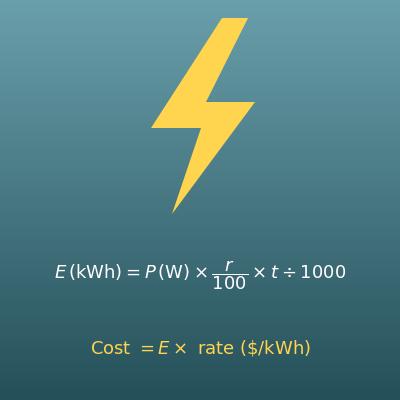
To find the electricity cost of a household appliance from its wattage and hours of use, use the Electricity Cost Calculator. EV and plug-in hybrid (PHEV) charging is calculated from the battery size and charge levels, so use this page. For the electricity rate, enter the rate of your plan (you can find it on your electric bill or your utility's website). Charging loss depends on the car, the charger and the temperature, so the result is an estimate for the conditions you enter.

What is this calculation used for?

Estimating your monthly electricity cost after switching to an EV for commuting

If you commute 1,000 miles a month in an EV that gets 3.5 mi/kWh and charge on Level 2 at home (10% loss) at $0.17 per kWh, the cost per mile is about $0.054, and the monthly charging cost is about $54 (both are estimates for these conditions).
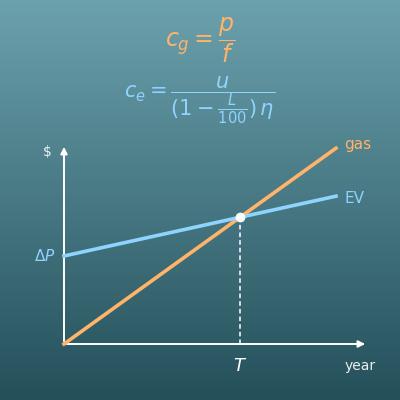
With just two numbers, "how many miles a month" and "your home electricity rate", you can estimate your monthly charging cost, which helps when you are thinking about buying a car or how to commute. To compare with a gas car, put the gas cost for the same miles next to it (gas price ÷ mpg × miles; at $3.20 a gallon and 25 mpg, that is $128 for 1,000 miles).

Comparing the effective rate of home charging and DC fast charging

If a per-minute fast charger costs you $15 and puts 30 kWh into the battery, the effective rate is \(15 \div 30 = 0.50\) dollars per kWh. If your home rate is $0.17 per kWh with 10% loss, the effective price per kWh in the battery is \(0.17 \div 0.9 \approx 0.189\) dollars (the numbers are examples).
Fast charging is paying for speed. You can check with numbers that doing everyday charging at home and using fast chargers only on long trips saves money. The calculation also shows that with per-minute billing, the effective rate tends to rise as the battery gets fuller and charging slows down.

Finding the effect of overnight charging on a time-of-use plan

Many utilities offer time-of-use or EV plans with cheaper rates at night. For example, with $0.10 per kWh off-peak and $0.30 per kWh on-peak, 1,000 miles a month at 3.5 mi/kWh with 10% loss costs about $31.75 a month charged off-peak and about $95.24 charged on-peak (the rates are examples; check your own plan).
An EV lets you choose when to charge, so simply charging when the rate is low greatly changes the cost of driving the same distance. It is useful when you set up scheduled charging in the car or its app.

Knowing the cost of the electric-only miles of a plug-in hybrid

Charging a plug-in hybrid with a 13.6 kWh battery from 30% to full puts about 9.5 kWh into the battery. With a 15% loss and $0.17 per kWh, one charge costs about $1.90, and at 3 mi/kWh it is enough for about 29 miles on electricity alone (estimates for these conditions).
A plug-in hybrid switches to gas when the battery runs out, so whether your daily miles fit within the electric-only range decides whether you get the benefit of cheap electricity.

Budgeting for electricity and planning solar charging with the loss in mind

Putting 45 kWh into the battery costs $7.65 at $0.17 per kWh with 0% loss, but about $8.50 with 10% loss and about $9.00 with 15% loss. You pay more by the amount lost.
When you set a monthly electricity budget, or plan how much extra solar power to send to your EV, estimate with "the energy bought (or used) including the loss", not "the energy into the battery", for a more realistic number. In cold weather the car uses energy to warm the battery, so the loss tends to grow; allowing a little extra is a safe choice.

Formula

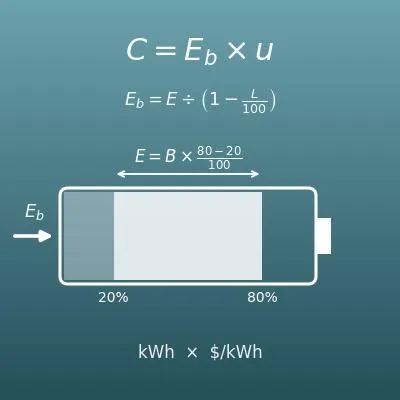
Energy into the battery (kWh)
Standard notation (the usual math form)
\(E\) \(=\) \(B\) \(\times\) \(\dfrac{s_2 - s_1}{100}\)
In words (symbols replaced with words)
③ \(E\): energy into the battery (kWh) \(=\) ① \(B\): battery size (kWh) \(\times\) ② (target charge \(s_2\) − current charge \(s_1\)) ÷ 100
The formula in words
① Take the \(B\): battery size (kWh)
② multiply it by the increase in charge (target \(s_2\) − current \(s_1\), in %) divided by 100
③ and you get the \(E\): energy into the battery (kWh)
Quick example
When an EV with a 75 kWh battery is charged from 20% to 80%, the energy that goes into the battery is
\(E\): energy into the battery (kWh) \(=\) battery size (75 kWh) \(\times\) (80% − 20%) ÷ 100
\(75 \times \dfrac{80 - 20}{100} = 75 \times 0.6 = 45\)
Key idea
The battery level is shown in percent, but what you pay for is how many kWh you put in. The percent is a share of the battery size, so divide the increase in percent by 100 to make it a decimal, then multiply by the battery size to get kWh. A full charge from 0% to 100% is an increase of 100%, or 1 times, so the energy that goes in equals the battery size itself. Note that the gross battery capacity in the specs and the usable capacity (with a buffer kept at the top and bottom to protect the battery) are different numbers, and many cars show the charge level with the usable capacity as 100%. Entering the gross capacity gives a slightly higher result, so if you know your car's usable capacity, use it for a more realistic estimate.
Energy bought from the grid (kWh, with loss)
Standard notation (the usual math form)
\(E_b\) \(=\) \(E\) \(\div\) \(\left(1 - \dfrac{L}{100}\right)\)
In words (symbols replaced with words)
③ \(E_b\): energy bought from the grid (kWh) \(=\) ① \(E\): energy into the battery (kWh) \(\div\) ② (1 − charging loss \(L\) (%) ÷ 100)
The formula in words
① Take the \(E\): energy into the battery (kWh)
② divide it by "1 − charging loss \(L\) (%) ÷ 100", the share that reaches the battery
③ and you get the \(E_b\): energy bought from the grid (kWh)
Quick example
To put 45 kWh into the battery with a charging loss of 10%, the energy you buy from the grid is
\(E_b\): energy bought from the grid (kWh) \(=\) energy into the battery (45 kWh) \(\div\) (1 − 10% ÷ 100)
\(45 \div \left(1 - \dfrac{10}{100}\right) = 45 \div 0.9 = 50\)
Key idea
It is tempting to think "10% loss means 10% more", but the correct step is "÷ 0.9". Only 90% of the electricity you buy reaches the battery, so to deliver 45 kWh you must buy \(45 \div 0.9 = 50\) kWh. The extra is 5 kWh, not the 4.5 kWh you would get from "10% more". It is a division, not a multiplication, because you are working backward from the energy that goes into the battery to the energy you buy. The loss comes from the onboard charger, which turns the AC from your outlet into DC for the battery, and from the cooling and control systems that run while charging. For Level 2 charging at home (240 V), about 10% is typical; Level 1 (120 V) charging is often less efficient. It depends on the car, the charger and the temperature. A DC fast charger turns AC into DC inside the charger and sends it straight to the battery, so if the kWh you pay for are counted at the charger's output, the loss that affects your bill is only in the cable and the car's controls and cooling, likely a few percent. Where the energy is measured depends on the charger and the network, so check the charger's information.
Cost of this charge ($)
Standard notation (the usual math form)
\(C\) \(=\) \(E_b\) \(\times\) \(u\)
In words (symbols replaced with words)
③ \(C\): cost of the charge ($) \(=\) ① \(E_b\): energy bought from the grid (kWh) \(\times\) ② \(u\): electricity rate ($/kWh)
The formula in words
① Take the \(E_b\): energy bought from the grid (kWh)
② multiply it by the \(u\): electricity rate ($/kWh)
③ and you get the \(C\): cost of the charge ($)
Quick example
With 50 kWh bought from the grid (the example for formula 2) and an electricity rate of $0.16 per kWh, the cost of the charge is
\(C\): cost of the charge ($) \(=\) energy bought (50 kWh) \(\times\) rate ($0.16/kWh)
\(50 \times 0.16 = 8\)
Key idea
Your electricity bill is "energy bought (kWh) × rate ($ per kWh)", so the rate is multiplied by the energy you bought including the loss, not by the energy that went into the battery. Putting formulas 2 and 3 together gives "cost = energy into the battery × rate ÷ (1 − loss ÷ 100)", and the part "rate ÷ (1 − loss ÷ 100)" is the effective price per kWh in the battery (for example, at $0.16 per kWh and 10% loss, \(0.16 \div 0.9 \approx 0.178\) dollars per kWh). DC fast chargers bill either per kWh delivered or per minute connected, depending on the network and the state. With per-minute billing, divide what you paid by the energy that went into the battery (kWh) to get an effective rate you can use in this formula (the loss is already included because you divided by the energy in the battery, so set the loss to 0% on the calculator). With per-minute billing, the effective rate changes from charge to charge: the fuller the battery, the slower it charges, and the less energy you get in the same time.
Cost per mile ($/mi)
Standard notation (the usual math form)
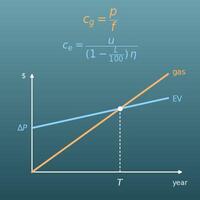
\(c\) \(=\) \(u\) \(\div\) \(\left(1 - \dfrac{L}{100}\right)\) \(\div\) \(\eta\)
In words (symbols replaced with words)
④ \(c\): cost per mile ($/mi) \(=\) ① \(u\): electricity rate ($/kWh) \(\div\) ② (1 − charging loss \(L\) (%) ÷ 100) \(\div\) ③ \(\eta\): efficiency (mi/kWh)
The formula in words
① Take the \(u\): electricity rate ($/kWh)
② divide it by "1 − charging loss \(L\) (%) ÷ 100" to get the effective price per kWh in the battery,
③ divide that by the \(\eta\): efficiency (mi/kWh)
④ and you get the \(c\): cost per mile ($/mi)
Quick example
With an electricity rate of $0.17 per kWh, a charging loss of 10% and an efficiency of 3.5 mi/kWh, the cost per mile is
\(c\): cost per mile ($/mi) \(=\) rate ($0.17/kWh) \(\div\) (1 − 10% ÷ 100) \(\div\) efficiency (3.5 mi/kWh)
\(0.17 \div 0.9 \div 3.5 = 0.05396\cdots \approx 0.054\)
Key idea
Efficiency in mi/kWh is how many miles the car goes on 1 kWh from the battery; it is the EV version of a gas car's mpg. One kWh in the battery costs "rate ÷ (1 − loss ÷ 100)", so dividing that by the efficiency gives the cost of one mile. It has the same shape as "gas price ($ per gallon) ÷ fuel economy (mpg) = gas cost per mile" for a gas car. Here it is about 5.4 cents per mile. The EPA label shows EV efficiency as kWh per 100 miles (and as MPGe). To turn kWh/100 mi into mi/kWh, divide 100 by it (29 kWh/100 mi is about 3.4 mi/kWh). Real efficiency depends more on how you drive than on the rating, and it tends to drop with heating in winter and at highway speeds, so the average shown in your car gives a more realistic result.
Monthly charging cost ($)
Standard notation (the usual math form)
\(C_m\) \(=\) \(c\) \(\times\) \(d\)
In words (symbols replaced with words)
③ \(C_m\): monthly charging cost ($) \(=\) ① \(c\): cost per mile ($/mi) \(\times\) ② \(d\): miles per month (mi)
The formula in words
① Take the \(c\): cost per mile ($/mi)
② multiply it by the \(d\): miles per month (mi)
③ and you get the \(C_m\): monthly charging cost ($)
Quick example
With a cost per mile of about $0.054 (the example for formula 4) and 1,000 miles a month, the monthly charging cost is
\(C_m\): monthly charging cost ($) \(=\) per mile ($0.054/mi) \(\times\) miles per month (1,000 mi)
\(0.054 \times 1000 = 54\)
\(0.17 \div 0.9 \div 3.5 \times 1000 = 53.968\cdots \approx 53.97\)
Key idea
Once the cost per mile is known, the rest is simply proportional to the miles you drive. The yearly charging cost is 12 times the monthly cost. The first line of the example uses the cost per mile rounded to $0.054 ($54), and the second line uses the unrounded value, $0.05396… (about $53.97). Rounding partway through shifts the answer a little, so the calculator uses the unrounded value. On a graph, this is a straight line through the origin that rises to the right, and its slope is the cost per mile \(c\). A cheaper electricity plan or a more efficient car makes the slope gentler, which lowers the cost of driving the same distance.
Estimated driving range on a full charge (mi)
Standard notation (the usual math form)
\(R\) \(=\) \(B\) \(\times\) \(\eta\)
In words (symbols replaced with words)
③ \(R\): driving range on a full charge (mi) \(=\) ① \(B\): battery size (kWh) \(\times\) ② \(\eta\): efficiency (mi/kWh)
The formula in words
① Take the \(B\): battery size (kWh)
② multiply it by the \(\eta\): efficiency (mi/kWh)
③ and you get the \(R\): driving range on a full charge (mi)
Quick example
The estimated driving range on a full charge of an EV with a 75 kWh battery and an efficiency of 3.5 mi/kWh is
\(R\): driving range on a full charge (mi) \(=\) battery size (75 kWh) \(\times\) efficiency (3.5 mi/kWh)
\(75 \times 3.5 = 262.5\)
Key idea
The range from this charge uses the same formula with the energy into the battery, \(E\), in place of the battery size (for the 45 kWh in the example for formula 1, \(45 \times 3.5 = 157.5\) miles). The charging loss does not appear in this formula. The loss happens between the outlet and the battery, and it has nothing to do with how far the electricity already in the battery takes you. Like efficiency, real range changes with heating, speed and load.
The basic steps are to find the energy into the battery (kWh) with "battery size × increase in charge ÷ 100", correct for the extra energy you buy because of the loss with "÷ (1 − loss ÷ 100)", and then multiply by the electricity rate ($ per kWh). The cost per mile is "effective price per kWh ÷ efficiency", and the monthly cost is that times the miles you drive.

Symbols and terms

Symbols

\(B\) Battery size (kWh). How much electricity the battery can store. It is the first letter of "battery".
\(s_1,\ s_2\) The charge level when you start charging, \(s_1\), and when you stop, \(s_2\) (%). The \(s\) comes from "state of charge". The small 1 and 2 are subscripts that tell "before" and "after" apart.
\(E\) Energy into the battery (kWh). It is the first letter of "energy".
\(E_b\) Energy bought from the grid (kWh). It is larger than \(E\) by the amount lost. The small \(b\) stands for "bought".
\(L\) Charging loss (%). The share of the electricity you buy that does not reach the battery. It is the first letter of "loss".
\(u\) Electricity rate. The price of 1 kWh ($ per kWh). It is the first letter of "unit price".
\(C\) Cost of the charge ($). It is the first letter of "cost".
\(\eta\) Efficiency (mi/kWh), how far the car goes on 1 kWh. The Greek letter eta is often used for efficiency; here it shows how well the car turns electricity into distance.
\(c\) Cost per mile ($ per mile). It is lowercase to tell it apart from \(C\), the cost of one charge.
\(d\) Miles per month. It is the first letter of "distance".
\(C_m\) Monthly charging cost ($). The small \(m\) stands for "month".
\(R\) Estimated driving range on a full charge (miles). It is the first letter of "range".

Terms

kWh (kilowatt-hour) A unit of electrical energy. Using 1 kW of power for 1 hour uses 1 kWh. Both EV battery sizes and electric bills are counted in this unit.
battery capacity How much electricity the battery can store (kWh). Many EVs sold in the US have about 60 to 100 kWh, and plug-in hybrids about 10 to 25 kWh. To protect the battery, not all of it is used, so the usable capacity is a little smaller than the gross capacity, and many cars show the charge level with the usable capacity as 100%.
state of charge (SOC) How much electricity is left in the battery, shown as a percentage of its capacity. It is the same idea as the battery percentage on a phone. Most cars show it with the usable capacity, not the gross capacity, as 100%.
charging loss The part of the electricity you buy that is lost, mostly as heat, before it reaches the battery. The main causes are the onboard charger, which turns AC into DC, and the cooling and control systems that run while charging. About 10% is typical for Level 2 charging at home.
efficiency How far an EV goes on 1 kWh (mi/kWh), the EV version of mpg. The larger the number, the better the car uses electricity. The EPA label shows it as kWh per 100 miles instead (a smaller number is better there). It changes with the car, speed, heating and temperature.
Level 2 charging Charging with AC from a 240 V home charger or a public charger over several hours. Level 1 charging uses a regular 120 V outlet and is much slower. In both cases the onboard charger turns AC into DC, and that step causes the loss. At home, the cost depends on your electricity rate ($ per kWh).
DC fast charging Charging with DC in a short time at a fast charger along highways or at shopping centers. Depending on the network and the state, you pay per kWh delivered or per minute connected. With per-minute billing, divide what you paid by the energy that went into the battery to find the effective rate.
driving range How far the car can go on one full charge. This calculator estimates it as "battery size × efficiency". The EPA range on the window sticker comes from standard tests, and real range can be shorter with heating, high speed or a heavy load.
electricity rate The price of 1 kWh of electricity ($ per kWh). It depends on your utility, your plan, how much you use and, on time-of-use plans, the time of day. Divide your bill by the kWh used to find your home's rough average rate.

Good to know before you start

Here is what helps you use the calculation on this page with real understanding, not just by pressing the button.
If you get stuck, going back to these topics is the quickest way forward.

Percents (Grades 6–7)
  • Being able to change a percent into a decimal, as in "60% is 0.6 of the whole"
  • Understanding that whole × percent = part (battery size × increase in charge = energy that goes in)
Multiplying and dividing decimals (Grades 5–6)
  • Being able to divide by a decimal less than 1, such as \(45 \div 0.9\), and knowing that the answer gets larger
  • Understanding how to work backward from a percent: to undo a 10% decrease, divide by 0.9 (not multiply by 1.1)
Unit rates (Grade 6)
  • Understanding how to compare amounts "per 1 unit", such as dollars per kWh or miles per kWh
  • Being able to build a formula by following the units, as in rate ($/kWh) ÷ efficiency (mi/kWh) = dollars per mile
Proportional relationships (Grades 6–7)
  • Understanding the proportional relationship that driving twice as far doubles the charging cost
  • Knowing that the graph of a proportional relationship is a straight line through the origin, and that its slope is the cost per mile
Power and energy (middle school science)
  • Being able to tell power (W, kW), how fast electricity is used, from energy (Wh, kWh), the total amount of electricity used
  • Knowing that battery size is given as the energy it can store (kWh)

How to calculate it in Excel

Copy the whole table below and paste it into cell A1 in Excel. It works as is.
Table to find the energy into the battery
Battery size (kWh) 75
Current charge (%) 20
Target charge (%) 80
Energy into the battery (kWh) =B1*(B3-B2)/100
Table to find the energy bought from the grid
Energy into the battery (kWh) 45
Charging loss (%) 10
Energy bought from the grid (kWh) =B1/(1-B2/100)
Table to find the cost of this charge
Energy bought from the grid (kWh) 50
Electricity rate ($/kWh) 0.16
Cost of this charge ($) =B1*B2
Table to find the cost per mile
Electricity rate ($/kWh) 0.17
Charging loss (%) 10
Efficiency (mi/kWh) 3.5
Cost per mile ($/mi) =B1/(1-B2/100)/B3
Table to find the monthly charging cost
Cost per mile ($/mi) 0.054
Miles per month (mi) 1000
Monthly charging cost ($) =B1*B2
Yearly charging cost ($) =B3*12
Table to find the estimated range on a full charge
Battery size (kWh) 75
Efficiency (mi/kWh) 3.5
Estimated range on a full charge (mi) =B1*B2
After pasting, the upper cells in column B are your inputs and the formula cells are calculated automatically.
The first table is the example of a 75 kWh battery charged from 20% to 80%, and B4 shows 45 (kWh). The second table corrects those 45 kWh for a 10% loss, and B3 shows 50 (kWh). The third table multiplies by the $0.16 rate, and B3 shows 8 ($8.00).
The fourth table is the cost per mile, and B4 shows about 0.054 ($ per mile). The fifth table multiplies that by 1,000 miles a month, for $54 a month and $648 a year (because the cost per mile is rounded to 0.054, this differs slightly from the calculator's $53.97). The sixth table is the estimated range, and B3 shows 262.5 (miles). Just replace the numbers in column B with the values for your car.

How to calculate it in Google Sheets

Copy the whole table below and paste it into cell A1 in Google Sheets. It works as is.
Table to find the energy into the battery
Battery size (kWh) 75
Current charge (%) 20
Target charge (%) 80
Energy into the battery (kWh) =B1*(B3-B2)/100
Table to find the energy bought from the grid
Energy into the battery (kWh) 45
Charging loss (%) 10
Energy bought from the grid (kWh) =B1/(1-B2/100)
Table to find the cost of this charge
Energy bought from the grid (kWh) 50
Electricity rate ($/kWh) 0.16
Cost of this charge ($) =B1*B2
Table to find the cost per mile
Electricity rate ($/kWh) 0.17
Charging loss (%) 10
Efficiency (mi/kWh) 3.5
Cost per mile ($/mi) =B1/(1-B2/100)/B3
Table to find the monthly charging cost
Cost per mile ($/mi) 0.054
Miles per month (mi) 1000
Monthly charging cost ($) =B1*B2
Yearly charging cost ($) =B3*12
Table to find the estimated range on a full charge
Battery size (kWh) 75
Efficiency (mi/kWh) 3.5
Estimated range on a full charge (mi) =B1*B2
These formulas use only multiplication and division, so the same formulas as in Excel work as is. Copy the whole table, paste it into cell A1, and replace column B with your own numbers.

How to calculate it in Python

battery_kwh = 75             # battery size (kWh)
soc_from_percent = 20        # current charge (%)
soc_to_percent = 80          # target charge (%)
loss_percent = 10            # charging loss (%)
price_per_kwh = 0.17         # electricity rate ($ per kWh)
efficiency_mi_per_kwh = 3.5  # efficiency (mi/kWh)
monthly_mi = 1000            # miles per month

# energy into the battery (kWh) = battery size × increase in charge ÷ 100
charged_kwh = battery_kwh * (soc_to_percent - soc_from_percent) / 100
# energy bought from the grid (kWh) = energy into the battery ÷ (1 − loss ÷ 100)
bought_kwh = charged_kwh / (1 - loss_percent / 100)
# cost of this charge ($) = energy bought × rate
charge_cost = bought_kwh * price_per_kwh
# cost per mile ($/mi) = rate ÷ (1 − loss ÷ 100) ÷ efficiency
cost_per_mile = price_per_kwh / (1 - loss_percent / 100) / efficiency_mi_per_kwh
# monthly and yearly charging cost ($) and estimated range on a full charge (mi)
monthly_cost = cost_per_mile * monthly_mi
range_mi = battery_kwh * efficiency_mi_per_kwh

print(f"Energy into the battery: {charged_kwh:.2f} kWh")
print(f"Energy bought from the grid: {bought_kwh:.2f} kWh")
print(f"Cost of this charge: ${charge_cost:.2f}")
print(f"Cost per mile: ${cost_per_mile:.3f}/mi")
print(f"Monthly charging cost: ${monthly_cost:.2f} / yearly: ${monthly_cost * 12:.2f}")
print(f"Estimated range on a full charge: {range_mi:.1f} mi")
Runs with the standard library only. Replace the first seven values (battery size, charge levels, loss, rate, efficiency and miles) with the values for your car and your electricity plan and run it.

How to write it in LaTeX and other math languages (copy and paste)

Energy into the battery (kWh)
E = B × (s₂ − s₁) ÷ 100
E = B \times \frac{s_2 - s_1}{100}
<math xmlns="http://www.w3.org/1998/Math/MathML" display="block">
  <mrow>
    <mi>E</mi>
    <mo>=</mo>
    <mi>B</mi>
    <mo>&#xD7;</mo>
    <mfrac>
      <mrow><msub><mi>s</mi><mn>2</mn></msub><mo>&#x2212;</mo><msub><mi>s</mi><mn>1</mn></msub></mrow>
      <mn>100</mn>
    </mfrac>
  </mrow>
</math>
E = B * (s_2 - s_1) / 100
energy = capacity*(socTo - socFrom)/100
E := B*(s2 - s1)/100;
E = B*(s2 - s1)/100;
E = B×(s_2−s_1)/100
Energy bought from the grid (kWh, with loss)
E_b = E ÷ (1 − L ÷ 100)
E_b = \frac{E}{1 - \frac{L}{100}}
<math xmlns="http://www.w3.org/1998/Math/MathML" display="block">
  <mrow>
    <msub><mi>E</mi><mi>b</mi></msub>
    <mo>=</mo>
    <mfrac>
      <mi>E</mi>
      <mrow><mn>1</mn><mo>&#x2212;</mo><mfrac><mi>L</mi><mn>100</mn></mfrac></mrow>
    </mfrac>
  </mrow>
</math>
E_b = E / (1 - L/100)
energyBought = energy/(1 - loss/100)
E_b := E/(1 - L/100);
E_b = E/(1 - L/100);
E_b = E/(1−L/100)
Cost of this charge ($)
C = E_b × u
C = E_b \times u
<math xmlns="http://www.w3.org/1998/Math/MathML" display="block">
  <mrow>
    <mi>C</mi>
    <mo>=</mo>
    <msub><mi>E</mi><mi>b</mi></msub>
    <mo>&#xD7;</mo>
    <mi>u</mi>
  </mrow>
</math>
C = E_b * u
cost = energyBought*price
C := E_b*u;
C = E_b*u;
C = E_b×u
Cost per mile ($/mi)
c = u ÷ (1 − L ÷ 100) ÷ η
c = \frac{u}{\left(1 - \frac{L}{100}\right)\eta}
<math xmlns="http://www.w3.org/1998/Math/MathML" display="block">
  <mrow>
    <mi>c</mi>
    <mo>=</mo>
    <mfrac>
      <mi>u</mi>
      <mrow>
        <mo>(</mo><mn>1</mn><mo>&#x2212;</mo><mfrac><mi>L</mi><mn>100</mn></mfrac><mo>)</mo>
        <mi>&#x3B7;</mi>
      </mrow>
    </mfrac>
  </mrow>
</math>
c = u / ((1 - L/100) * eta)
costPerKm = price/((1 - loss/100)*efficiency)
c := u/((1 - L/100)*eta);
c = u/((1 - L/100)*eta);
c = u/((1−L/100)η)
Monthly charging cost ($)
Cₘ = c × d
C_m = c \times d
<math xmlns="http://www.w3.org/1998/Math/MathML" display="block">
  <mrow>
    <msub><mi>C</mi><mi>m</mi></msub>
    <mo>=</mo>
    <mi>c</mi>
    <mo>&#xD7;</mo>
    <mi>d</mi>
  </mrow>
</math>
C_m = c * d
monthlyCost = costPerKm*monthlyDistance
C_m := c*d;
C_m = c*d;
C_m = c×d
Estimated driving range on a full charge (mi)
R = B × η
R = B \times \eta
<math xmlns="http://www.w3.org/1998/Math/MathML" display="block">
  <mrow>
    <mi>R</mi>
    <mo>=</mo>
    <mi>B</mi>
    <mo>&#xD7;</mo>
    <mi>&#x3B7;</mi>
  </mrow>
</math>
R = B * eta
range = capacity*efficiency
R := B*eta;
R = B*eta;
R = B×η

How to have ChatGPT  do the calculation

You are an EV charging cost calculation assistant. Do the following calculation by actually running Python code, and base your answer only on the numbers from the execution result (do not answer by mental math or guessing).

An EV with a 75 kWh battery is charged at home from 20% to 80%. The charging loss is 10%, the electricity rate is $0.17 per kWh, the efficiency is 3.5 mi/kWh, and the car is driven 1,000 miles a month.
Find the energy into the battery with "battery size × (target % − current %) ÷ 100", the energy bought from the grid with "energy into the battery ÷ (1 − loss ÷ 100)", and the cost with "energy bought × rate".
Find each of the following:
1. The energy into the battery (kWh) and the energy bought from the grid (kWh)
2. The cost of this charge ($)
3. The cost per mile ($ per mile) = rate ÷ (1 − loss ÷ 100) ÷ efficiency
4. The monthly and yearly charging cost ($)
5. The estimated range on a full charge (miles) = battery size × efficiency

Show the formulas you used and the numbers from the execution result.

How to Use
  1. 1
    Enter your numbers
    Type the numbers you want to calculate with into the input fields
  2. 2
    Calculate
    Press the "Calculate" button
  3. 3
    Check the result
    The result appears on the spot. The same page also explains the idea behind the calculation and the formula
  DataChef Features
Easy and Free
Unlimited conversions for free.
No technical knowledge required.
Intuitive and user-friendly operation.

No Registration Required
Available immediately after access.
Can be used without registering personal information.

Safe and Secure
Fully SSL encrypted communication.
Automatic file deletion by clicking "download".

Fast
High-speed site access
and rapid file conversion.
No Watermark
No watermark.
No attribution required.
Commercial Use Available
Free for commercial use.
No need to contact us for commercial use permission.