Enter the wattage of the old light and the LED (per bulb), the number of bulbs, the hours on per day and your electricity rate. A preset fills in typical wattages. The LED price and rated life are optional; enter them to also see the payback period and the savings over its life.
Table of Contents
-
What you can do on this page
-
What is this calculation used for?
-
How to Use
-
Formulas and graph
-
Symbols and terms
-
Good to know before you start
-
How to calculate it in Excel
-
How to calculate it in Google Sheets
-
How to calculate it in Python
-
How to write it in LaTeX and other math languages (copy and paste)
-
How to have ChatGPT do the calculation
-
DataChef Features
-
Related Features
-
NumberChef Calculators List
What you can do on this page
- Enter the wattage of your old lights (incandescent, halogen, fluorescent and so on) and of the LEDs, the number of bulbs, the hours on per day and your electricity rate, and you get the yearly difference in energy (kWh) and the savings per year, month and day on the spot
- Pick a common light, such as a 60 W incandescent bulb, a halogen bulb, a CFL, a BR30 flood light or a 4-foot fluorescent tube, and typical wattages before and after are filled in (you can change them to the values on the package)
- Enter the price of the LED to see how many years the savings take to pay for it (the simple payback period)
- Enter the rated life of the LED (hours) to see how many years it lasts, the total energy savings over that time, and the net savings after the price
- A graph of cumulative savings over the years shows at a glance when the savings pass the total price (the payback point)
- A plain-language explanation of the formulas and copy-and-paste formulas for Excel, Google Sheets and Python are all on this page
What is this calculation used for?
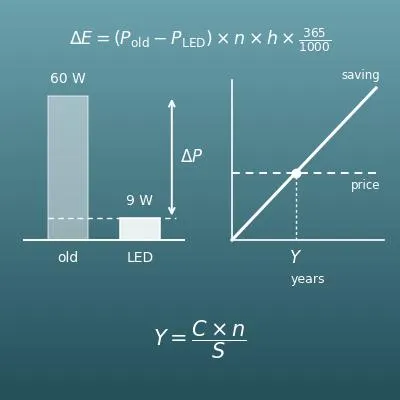
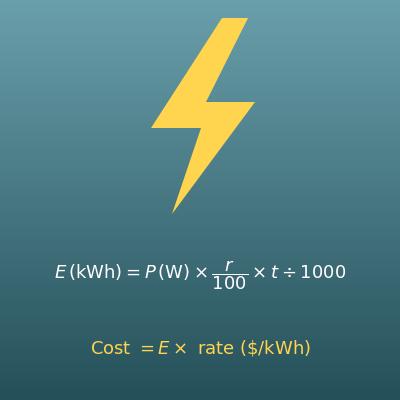
An incandescent bulb turns most of its electricity into heat, so it uses 6 to 7 times the power of an LED bulb with the same brightness. For example, if you replace a 60 W incandescent bulb with a 9 W LED bulb and keep it on 5 hours a day, the difference is 51 W, about 93.1 kWh a year, or savings of about $15.82 a year and $1.32 a month at $0.17 per kWh (results for the values entered).
A $5.95 LED bulb pays for itself in about 0.4 years (about 5 months). Knowing that "even one bulb saves over a dollar a month" lets you count the old bulbs in your home and decide which to change first.
Many US homes have recessed ceiling lights with BR30 flood bulbs. If you replace six 65 W flood bulbs with 9 W LED BR30 bulbs and use them 4 hours a day, the difference is 336 W, about 490.6 kWh a year, or savings of about $83.40 a year at $0.17 per kWh. If each LED costs $8, the total of $48 pays for itself in about 0.6 years.
Putting "how many years until it pays for itself" next to "how many more years you will use these lights (for example, if you plan to move)" is the basic way to decide. The same method works for LED retrofit kits and new fixtures, which cost more and take longer to pay back.
Shops and offices have many fluorescent tubes, often on 8 to 12 hours a day, so the savings are much larger than at home. For example, if you replace 20 four-foot T8 tubes (about 30 W each with the ballast) with 15 W LED tubes and keep them on 10 hours a day, the difference is 300 W, 1,095 kWh a year, or $142.35 a year at a commercial rate of $0.13 per kWh (about the US commercial average, EIA, 2025). If each LED tube costs $10, the total of $200 pays for itself in about 1.4 years (results for the values entered).
Some LED tubes need the ballast removed or bypassed, and sometimes the whole fixture is replaced. To prevent electric shock and fire, check with a licensed electrician or the seller. If there is an installation cost, add it to the price when you look at the payback period.
The savings are in proportion to "wattage difference × hours on", so the same bulb saves very different amounts depending on the hours. Replacing a 60 W incandescent bulb with a 9 W LED saves about $15.82 a year in a living room used 5 hours a day, but only about $3.16 a year in a bathroom used 1 hour a day, one-fifth as much.
The payback period is also 5 times longer (from about 0.4 years to about 1.9 years), so on a limited budget, "rooms with long hours first" is the most effective order. For a storage room or a guest room that is rarely used, changing the bulb when it burns out is enough, and you can explain that choice with numbers.
When you switch the lights in a rental to LED, you may wonder whether it will pay off before you move out. If the payback period is shorter than how long you plan to stay, you earn back the price while you live there, and since you can take LED bulbs with you, the savings continue at your next home.
An LED bulb rated for 25,000 hours lasts about 13.7 years even at 5 hours a day (a guide if it lasts as rated). Even if you move after 2 years, most of its life is still left.
Energy programs at schools, businesses and local governments often report not only the money saved but also how many kWh a year were cut. Multiply the yearly energy difference from this formula by a CO2 emission rate (pounds of CO2 per kWh) to turn it into a CO2 reduction.
For example, if replacing the tubes in a classroom cuts 1,095 kWh a year, using about 0.8 lb of CO2 per kWh (roughly the US average in the EPA's eGRID data), the reduction is about 876 lb of CO2. Emission rates differ by region and year, so check the current published value. Showing the result in dollars, kWh and CO2 lets you explain both the cost and the environmental benefit.
Formulas and graph
Symbols and terms
Symbols
| \(P_{\text{old}},\ P_{\text{LED}}\) | The wattage (W) of the old light and of the LED, per bulb. \(P\) is from "power", and the small "old" and "LED" at the lower right are subscripts that show which light the value belongs to. | |
| \(n\) | The number of bulbs or fixtures you replace. From the word "number". | |
| \(h\) | Hours on per day. From the word "hour". | |
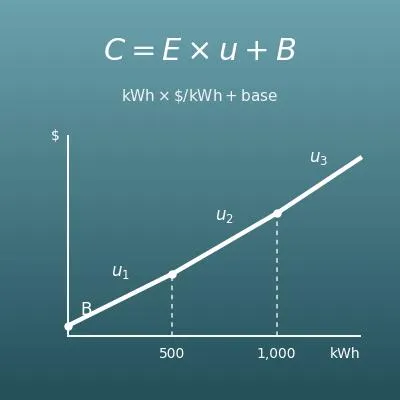
| \(u\) | Electricity rate. The price of 1 kWh ($/kWh). From "unit price". It depends on your utility and plan. | |
| \(\Delta\) | delta | The Greek capital letter delta, used for "difference" or "change". It is said to come from D, as in "difference". \(\Delta E\) is read "the difference in energy \(E\)". |
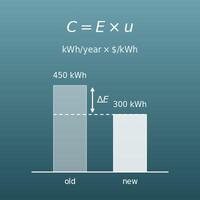
| \(\Delta E\) | delta E | The yearly energy difference (kWh) between the old light and the LED. \(E\) is from "energy". |
| \(S\) | Savings per year ($). From the word "savings". Divide by 12 for a month and by 365 for a day. | |
| \(C\) | LED price ($ per bulb). From the word "cost". Multiply by the number of bulbs \(n\) to get the total price. | |
| \(Y\) | Simple payback period (years). From the word "year". A guide to how many years the savings take to pay for the total price. | |
| \(H\) | The LED's rated life (hours). It is a capital letter to tell it apart from the small \(h\) (hours on per day). It is the value on the package, such as "25,000 hours". | |
| \(L\) | Years of use until the rated life. From the word "life". The rated life divided by the hours per day and by 365. | |
| \(T\) | Net savings over its life ($). From the word "total". The total energy savings over the life minus the total price. | |
| \(\approx\) | approximately equal to | The symbol for "approximately equal to". It is used to show a rounded value when a division does not come out even (for example, \(5.95 \div 15.82275 \approx 0.376\)). |
Terms
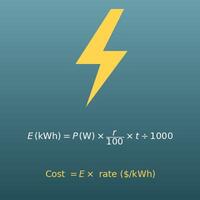
| Wattage | The power (W, watts) a light uses at any moment while it is on. It is printed on the bulb or the package ("Energy Used" on the Lighting Facts label). It is a rate, not an amount, so to get a cost you multiply it by the hours on to get energy (kWh). |
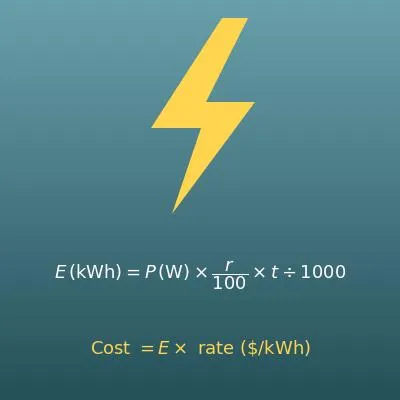
| Energy | The total amount of electricity used, found by wattage (W) × time (h). Your electric bill is based on this energy in kWh. |
| kWh (kilowatt-hour) | The unit of energy. Using 1 kW (1000 W) for 1 hour uses 1 kWh, and it is found by wattage (W) × hours ÷ 1000. |
| Incandescent bulb wattage | In the US, incandescent bulbs were sold by their wattage, which is also their real power use. A 60 W incandescent bulb uses 60 W and gives about 800 lumens of light. |
| W equivalent | A label such as "60 W equivalent" or "60 W replacement" that stands for "about as bright as a 60 W incandescent bulb". A 60 W equivalent LED bulb gives about 800 lumens but uses only about 9 W. In the wattage field, enter the "Energy Used" value from the package, not 60. |
| Light output | The amount of light a bulb gives off (its brightness). LEDs give the same brightness with much less power, so compare brightness in lumens, not in watts. |
| Lumen | The unit of light output, written lm. As a guide, a 40 W incandescent bulb gives about 450 lm, a 60 W bulb about 800 lm and a 100 W bulb about 1,600 lm. The Lighting Facts label shows it as "Brightness". |
| Incandescent bulb | The traditional bulb that makes light by heating a thin metal wire (filament) with electricity. Most of the electricity turns into heat, so it uses a lot of power and lasts only about 750 to 2,000 hours. Since 2023, most general-purpose incandescent bulbs can no longer be sold in the US under federal efficiency standards, but many are still in use. |
| Fluorescent lamp | A light that makes ultraviolet light with an electric discharge inside a tube and turns it into visible light with a coating. It uses less power than an incandescent bulb. Common types are the compact fluorescent lamp (CFL, about 13 W for 60 W equivalent) and long tubes such as the 4-foot T8 used in offices, garages and kitchens. Tubes also have a ballast that uses power, so think in terms of the whole fixture's wattage. |
| Ballast | A part in a fluorescent fixture that controls the current. It adds its own power use on top of the tube's, so a 4-foot T8 fixture uses a little more or less than the tube's 32 W depending on the ballast. Some LED tubes work with the existing ballast and others need it removed or bypassed; have a licensed electrician do the rewiring. |
| LED (light-emitting diode) | A light that shines when electricity flows through a semiconductor. Little electricity is lost as heat, so for the same brightness it uses about 15% of the power of an incandescent bulb and much less than a fluorescent lamp, and it lasts a long time, often 15,000 to 25,000 hours. |
| Rated life | A guide to an LED's life, usually defined as the time until its light output drops to 70% of the original under the maker's test conditions. It is not the time until it stops working. Real life varies with how often it is switched on and off and with the temperature around it. |
| Hours on | The time a light is on. This page uses the average hours on per day. It differs a lot by room (about 5 hours in a living room and about 1 hour in an entryway or a bathroom), and the longer a light is on, the more you save by switching it. |
| Electricity rate | The price of 1 kWh ($/kWh). It depends on your utility, plan and usage, and other per-kWh charges such as delivery charges may be added. You can check it on your electric bill or your utility's website. |
| Simple payback period | The upfront cost (here, the total LED price) divided by the yearly savings. It is the simplest guide to "how many years until it pays for itself", and it ignores discounts, rate changes and the time value of money. The general form of this calculation is on the related page "Payback Period Calculator". |
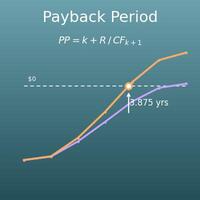
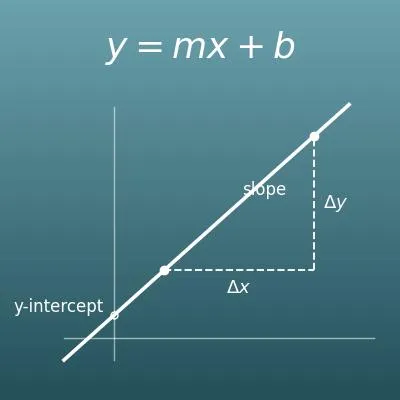
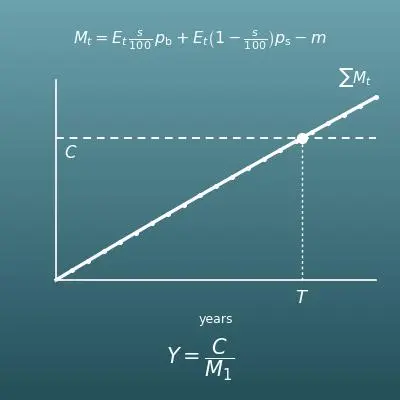
| Cumulative savings | The savings since switching, added up year by year. It grows by the same amount each year, so on a graph it is a straight line rising from the origin, and the year where it crosses the total price (a horizontal line) is the simple payback period. |
| Distributive property | The rule that when you multiply a difference in parentheses by a number, you can multiply each number inside first and then subtract, and get the same result, as in \((a - b) \times h = a \times h - b \times h\). It is why "wattage difference × time" and "difference of the two energy amounts" give the same answer. |
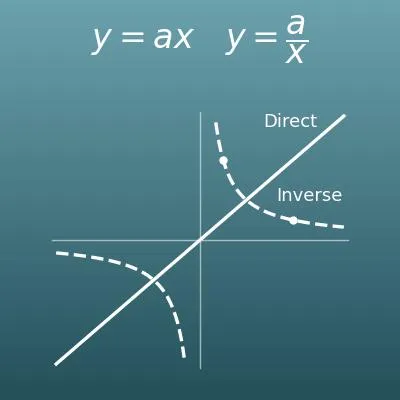
| Direct proportion | A relation where one quantity doubles or triples when the other doubles or triples. The savings per year are in direct proportion to the hours on. |
| Inverse proportion | A relation where one quantity becomes 1/2 or 1/3 when the other doubles or triples. The years of use are in inverse proportion to the hours on, so when you multiply them by the yearly savings (in direct proportion), the savings over the life do not depend on the hours on. |
Good to know before you start
Here is what helps you understand the calculations on this page, not just use them.
If you get stuck, going back over the topics in this table is the quickest way forward.
| Multiplying and dividing decimals (Grade 5) |
|
| Converting units (Grades 4 to 7) |
|
| Power and energy (middle school physical science) |
|
| Direct and inverse proportion (Grades 6 to 7) |
|
| The distributive property (Grades 6 to 7) |
|
How to calculate it in Excel
| Old light wattage (W per bulb) | 60 |
| LED wattage (W per bulb) | 9 |
| Number of bulbs | 1 |
| Hours on per day | 5 |
| Yearly energy difference (kWh) | =(B1-B2)*B3*B4*365/1000 |
| Yearly energy difference (kWh) | 93.075 |
| Electricity rate ($/kWh) | 0.17 |
| Savings per year ($) | =B1*B2 |
| Savings per month ($) | =B3/12 |
| Savings per day ($) | =B3/365 |
| LED price ($ per bulb) | 5.95 |
| Number of bulbs | 1 |
| Savings per year ($) | 15.82275 |
| Total price ($) | =B1*B2 |
| Simple payback period (years) | =B4/B3 |
| LED rated life (hours) | 25000 |
| Hours on per day | 5 |
| Years of use | =B1/B2/365 |
| Savings per year ($) | 15.82275 |
| Years of use | 13.69863014 |
| LED price ($ per bulb) | 5.95 |
| Number of bulbs | 1 |
| Energy savings over its life ($) | =B1*B2 |
| Net savings over its life ($) | =B5-B3*B4 |
The first table is the example of replacing one 60 W incandescent bulb with a 9 W LED on 5 hours a day, and B5 shows 93.075 (kWh). The second table multiplies that energy difference by a rate of $0.17/kWh: the savings per year (B3) are $15.82275, per month (B4) about $1.32 and per day (B5) about $0.04.
The third table is the payback period for one $5.95 LED bulb, and B5 shows about 0.376 (years). The fourth table is the years of use for a rated life of 25,000 hours at 5 hours a day, and B3 shows about 13.70 (years). The fifth table uses those years and the yearly savings to find the energy savings over the life (B5, about $216.75) and the net savings after the price (B6, about $210.80). Just change the numbers in column B to your own lights' values.
How to calculate it in Google Sheets
| Old light wattage (W per bulb) | 60 |
| LED wattage (W per bulb) | 9 |
| Number of bulbs | 1 |
| Hours on per day | 5 |
| Yearly energy difference (kWh) | =(B1-B2)*B3*B4*365/1000 |
| Yearly energy difference (kWh) | 93.075 |
| Electricity rate ($/kWh) | 0.17 |
| Savings per year ($) | =B1*B2 |
| Savings per month ($) | =B3/12 |
| Savings per day ($) | =B3/365 |
| LED price ($ per bulb) | 5.95 |
| Number of bulbs | 1 |
| Savings per year ($) | 15.82275 |
| Total price ($) | =B1*B2 |
| Simple payback period (years) | =B4/B3 |
| LED rated life (hours) | 25000 |
| Hours on per day | 5 |
| Years of use | =B1/B2/365 |
| Savings per year ($) | 15.82275 |
| Years of use | 13.69863014 |
| LED price ($ per bulb) | 5.95 |
| Number of bulbs | 1 |
| Energy savings over its life ($) | =B1*B2 |
| Net savings over its life ($) | =B5-B3*B4 |
How to calculate it in Python
watt_old = 60          # Old light wattage (W per bulb)
watt_led = 9           # LED wattage (W per bulb)
count = 1              # Number of bulbs
hours_per_day = 5      # Hours on per day
price_per_kwh = 0.17   # Electricity rate ($/kWh)
led_price = 5.95       # LED price ($ per bulb). None if you do not need the payback period
life_hours = 25000     # LED rated life (hours). None if you do not need the savings over its life

# Yearly energy difference = wattage difference x bulbs x hours x 365 / 1000
kwh_diff_per_year = (watt_old - watt_led) * count * hours_per_day * 365 / 1000
# Savings per year = energy difference x rate. Divide by 12 for a month and by 365 for a day
saving_per_year = kwh_diff_per_year * price_per_kwh
print(f"Yearly energy difference: {kwh_diff_per_year:.2f} kWh")
print(f"Savings per year: ${saving_per_year:.2f} (per month ${saving_per_year / 12:.2f}, per day ${saving_per_year / 365:.2f})")

if led_price is not None:
    # Simple payback period = total price / savings per year
    total_price = led_price * count
    payback_years = total_price / saving_per_year
    print(f"Simple payback period: {payback_years:.1f} years (about {payback_years * 12:.0f} months)")

if life_hours is not None:
    # Years of use = rated life / hours per day / 365
    life_years = life_hours / hours_per_day / 365
    life_saving = saving_per_year * life_years
    print(f"Years until rated life: {life_years:.1f} years")
    print(f"Energy savings over its life: ${life_saving:.2f}")
    if led_price is not None:
        # Net savings = savings over its life - total price
        print(f"Net savings after the price: ${life_saving - led_price * count:.2f}")
How to write it in LaTeX and other math languages (copy and paste)
ΔE = (P_old − P_LED) × n × h × 365 ÷ 1000
\Delta E = \frac{(P_{\text{old}} - P_{\text{LED}}) \times n \times h \times 365}{1000}
<math xmlns="http://www.w3.org/1998/Math/MathML" display="block">
<mrow>
<mi>Δ</mi><mi>E</mi>
<mo>=</mo>
<mfrac>
<mrow>
<mo>(</mo>
<msub><mi>P</mi><mtext>old</mtext></msub>
<mo>−</mo>
<msub><mi>P</mi><mtext>LED</mtext></msub>
<mo>)</mo>
<mo>×</mo><mi>n</mi>
<mo>×</mo><mi>h</mi>
<mo>×</mo><mn>365</mn>
</mrow>
<mn>1000</mn>
</mfrac>
</mrow>
</math>
Delta E = ((P_"old" - P_"LED") * n * h * 365) / 1000
kwhDiff = (wattOld - wattLed)*count*hours*365/1000
kwhDiff := (wattOld - wattLed)*n*h*365/1000;
dE = (P_old - P_led)*n*h*365/1000;
ΔE = ((P_old − P_LED)×n×h×365)/1000
S = ΔE × u, S_month = S ÷ 12, S_day = S ÷ 365
S = \Delta E \times u, \quad S_{\text{month}} = \frac{S}{12}, \quad S_{\text{day}} = \frac{S}{365}
<math xmlns="http://www.w3.org/1998/Math/MathML" display="block">
<mrow>
<mi>S</mi>
<mo>=</mo>
<mi>Δ</mi><mi>E</mi>
<mo>×</mo>
<mi>u</mi>
<mo>,</mo>
<msub><mi>S</mi><mtext>month</mtext></msub>
<mo>=</mo>
<mfrac><mi>S</mi><mn>12</mn></mfrac>
<mo>,</mo>
<msub><mi>S</mi><mtext>day</mtext></msub>
<mo>=</mo>
<mfrac><mi>S</mi><mn>365</mn></mfrac>
</mrow>
</math>
S = Delta E * u, S_"month" = S / 12, S_"day" = S / 365
yearSaving = kwhDiff*unitPrice; monthSaving = yearSaving/12; daySaving = yearSaving/365
yearSaving := kwhDiff*u; monthSaving := yearSaving/12; daySaving := yearSaving/365;
S = dE*u; S_month = S/12; S_day = S/365;
S = ΔE×u, S_month = S/12, S_day = S/365
Y = C × n ÷ S
Y = \frac{C \times n}{S}
<math xmlns="http://www.w3.org/1998/Math/MathML" display="block">
<mrow>
<mi>Y</mi>
<mo>=</mo>
<mfrac>
<mrow><mi>C</mi><mo>×</mo><mi>n</mi></mrow>
<mi>S</mi>
</mfrac>
</mrow>
</math>
Y = (C * n) / S
paybackYears = ledPrice*count/yearSaving
paybackYears := ledPrice*n/yearSaving;
Y = C_led*n/S;
Y = (C×n)/S
L = H ÷ h ÷ 365
L = \frac{H}{h \times 365}
<math xmlns="http://www.w3.org/1998/Math/MathML" display="block">
<mrow>
<mi>L</mi>
<mo>=</mo>
<mfrac>
<mi>H</mi>
<mrow><mi>h</mi><mo>×</mo><mn>365</mn></mrow>
</mfrac>
</mrow>
</math>
L = H / (h * 365)
lifeYears = lifeHours/(hours*365)
lifeYears := H/(h*365);
L = H/(h*365);
L = H/(h×365)
T = S × (H ÷ h ÷ 365) − C × n
T = S \times \frac{H}{h \times 365} - C \times n
<math xmlns="http://www.w3.org/1998/Math/MathML" display="block">
<mrow>
<mi>T</mi>
<mo>=</mo>
<mi>S</mi>
<mo>×</mo>
<mfrac>
<mi>H</mi>
<mrow><mi>h</mi><mo>×</mo><mn>365</mn></mrow>
</mfrac>
<mo>−</mo>
<mi>C</mi>
<mo>×</mo>
<mi>n</mi>
</mrow>
</math>
T = S * H / (h * 365) - C * n
lifeNet = yearSaving*lifeHours/(hours*365) - ledPrice*count
lifeNet := yearSaving*H/(h*365) - ledPrice*n;
T = S*H/(h*365) - C_led*n;
T = S×H/(h×365) − C×n
How to have ChatGPT do the calculation
You are an electricity cost assistant. Do the calculation below by actually running Python code, and base your answer only on the numbers from the output (do not calculate in your head or guess).

I am replacing one 60 W incandescent bulb with a 9 W LED bulb (price $5.95, rated life 25,000 hours) and keeping it on 5 hours a day. The electricity rate is $0.17 per kWh.
Find the yearly energy difference with "(old wattage − LED wattage) (W) × number of bulbs × hours on per day × 365 ÷ 1000", and the savings per year with "energy difference (kWh) × rate ($/kWh)".
Find each of the following.
1. The yearly energy difference (kWh) and the savings ($) per year, per month (÷ 12) and per day (÷ 365)
2. The simple payback period (years): the total price divided by the savings per year
3. The years of use (rated life ÷ hours per day ÷ 365) and the net savings ($): the total savings over those years minus the price

Show the formulas you used and the numbers from the output.
How to Use
-
1Enter your numbersType the numbers you want to calculate with into the input fields
-
2CalculatePress the "Calculate" button
-
3Check the resultThe result appears on the spot. The same page also explains the idea behind the calculation and the formula
DataChef Features

No technical knowledge required.
Intuitive and user-friendly operation.

Can be used without registering personal information.

Automatic file deletion by clicking "download".

and rapid file conversion.

No attribution required.
No need to contact us for commercial use permission.
Related Features
Electricity Cost Calculator (Appliance Energy Use and Cost)
Finds the energy use and cost per day, week, month and year from an appliance's wattage, duty cycle and hours of use. Use it to find what one light costs to run
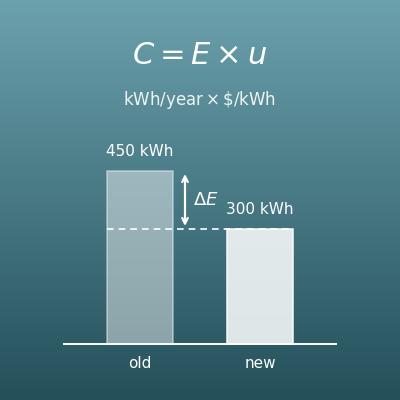
Annual kWh to Cost Calculator (EnergyGuide Label)
Turns the yearly kWh on a label into the yearly, monthly and daily cost, and compares two models with a payback period
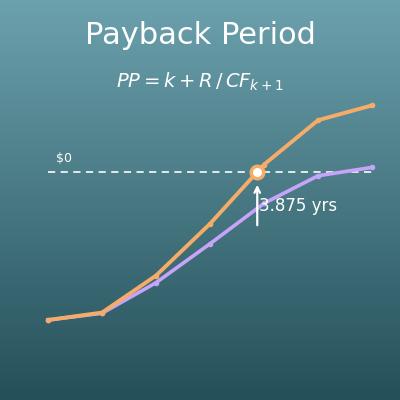
Payback Period Calculator (Simple and Discounted Payback)
Finds how many years it takes to earn back an investment from the yearly cash flow. It is the general form of the simple payback period on this page