















































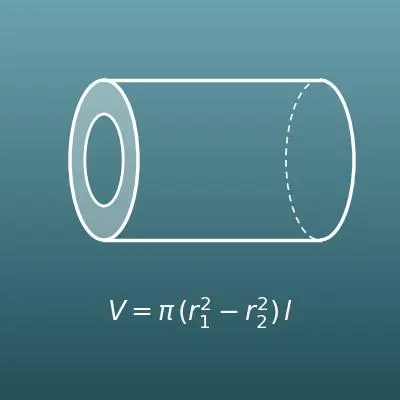
































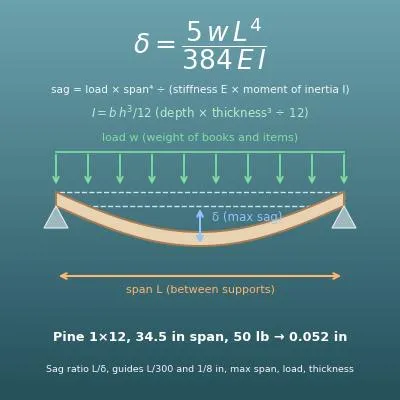
Enter the outside diameter, the inside diameter and the length of the pipe. Besides the volume of the pipe wall (the material), you get the volume of the outer cylinder, the volume of the hollow and unit conversions.
Table of Contents
-
What you can do on this page
-
What is this calculation used for?
-
How to Use
-
Formulas and figures
-
Symbols and terms
-
Good to know before you start
-
How to calculate it in Excel
-
How to calculate it in Google Sheets
-
How to calculate it in Python
-
How to write it in LaTeX and other math languages (copy and paste)
-
How to have ChatGPT do the calculation
-
DataChef Features
-
Related Features
-
NumberChef Calculators List
What you can do on this page
- Enter the outside diameter, the inside diameter and the length, and you get the volume of the pipe itself (the pipe wall, which is the material) on the spot
- It also shows the volume of the outer cylinder and the volume of the hollow inside (how much water or other liquid fits in the pipe)
- It shows the exact value with \(\pi\) left in (for example, \(900\pi\)) and converts the volume to gallons and ft³. Switch "Units" to Metric to get liters and m³ instead
- The result is also shown as a 3D shape that you can turn by dragging to check the shape
- A plain-language explanation of the formulas and copy-and-paste formulas for Excel, Google Sheets and Python are all on this page
What is this calculation used for?
1-1/2 inch Schedule 40 steel pipe, the same size as standard scaffold tube, has an outside diameter of 1.900 in and a wall of 0.145 in (an inside diameter of 1.610 in). For 1 ft (12 in) of it, the wall volume is \(\pi \times (0.95^2 - 0.805^2) \times 12 \approx 9.59\,\mathrm{in^3}\). Steel weighs about 0.2836 lb per in³, so it comes to about 2.72 lb per foot (the same as the value in pipe charts).
You can check "how many can we carry?" or "will it fit in the truck?" with numbers before you lift anything.
The volume of the hollow in the pipe from the water heater to the faucet is how much cold water flows out before the hot water arrives. For 30 ft (360 in) of 1/2 inch Type L copper pipe (inside diameter 0.545 in, radius 0.2725 in), the hollow is \(\pi \times 0.2725^2 \times 360 \approx 84\,\mathrm{in^3}\), or about 0.36 gallons.
The longer the pipe run in a house, the more water you waste waiting. This formula puts a number on that everyday experience.
When you buy pipe at a home center or online, you can estimate its weight as "wall volume × density of the material". For example, a 10 ft (120 in) length of 1 inch Schedule 40 PVC pipe (outside diameter 1.315 in, inside diameter 1.049 in) has a wall volume of \(\pi \times (0.6575^2 - 0.5245^2) \times 120 \approx 59.3\,\mathrm{in^3}\). Rigid PVC weighs about 0.05 lb per in³, so that is about 3 lb.
You can check whether you can carry it home, or which shipping rate applies, before you order.
Concrete pipes buried under roads for sewers and storm drains are designed and made by working out the amount of concrete with this formula. For example, a 36 inch reinforced concrete pipe (inside diameter 36 in, wall 4 in thick, so outside diameter 44 in) 8 ft (96 in) long has a wall volume of \(\pi \times (22^2 - 18^2) \times 96 \approx 48{,}255\,\mathrm{in^3}\), about 27.9 ft³. At about 150 lb per ft³ of concrete, one section weighs about 4,190 lb, more than 2 tons.
Choosing a crane and planning the delivery both start from a volume calculation like this.
Stainless steel and copper tubing is often priced by weight, so a quote is "wall volume × density × price per pound". For example, a stainless steel tube with an outside diameter of 2.5 in, an inside diameter of 2 in and a length of 20 in has a wall volume of \(\pi \times (1.25^2 - 1^2) \times 20 \approx 35.3\,\mathrm{in^3}\). At about 0.29 lb per in³, it weighs about 10.2 lb.
This formula lets you estimate the material cost from the dimensions while the part is still being designed.
Formulas and figures
Symbols and terms
Symbols
| \(V\) | vee | A common symbol for volume, from the first letter of "volume". On this page it is the volume of the pipe (the pipe wall) you want to find. |
| \(V_1\) | V sub one | The volume of the outer cylinder, as if the pipe were solid all the way through. |
| \(V_2\) | V sub two | The volume of the hollow (the inner cylinder). It is how much water or air fits inside the pipe. |
| \(d_1\) | d sub one | The outside diameter (OD), the diameter of the outside of the pipe. Catalogs and drawings normally give the size of a pipe as the outside and inside diameters. |
| \(d_2\) | d sub two | The inside diameter (ID), the diameter of the hole inside the pipe. It equals the outside diameter minus two wall thicknesses. |
| \(r_1\) | r sub one | The outer radius, half the outside diameter (\(r_1 = d_1 \div 2\)). |
| \(r_2\) | r sub two | The inner radius, half the inside diameter (\(r_2 = d_2 \div 2\)). |
| \(l\) | ell | The length of the pipe, from the first letter of "length". It plays the same role as the height of a cylinder standing upright. |
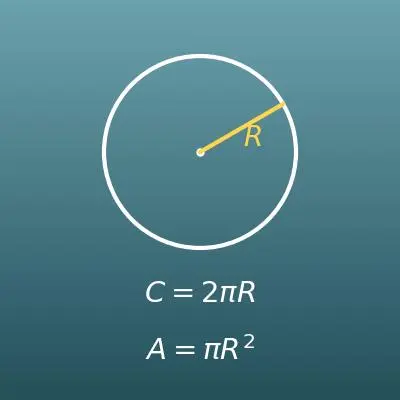
| \(\pi\) | pi | The number that tells how many times the circumference of a circle is its diameter, about 3.14159. It appears in every calculation for circles and cylinders. |
| \(r^2\) | r squared | The number \(r\) multiplied by itself (\(r \times r\)). The small 2 at the upper right is an exponent that says "use it as a factor twice". |
| \(\mathrm{in^3}\) | cubic inch | A unit of volume. A cube 1 in on each side has a volume of 1 in³. Exactly 231 in³ make 1 US gallon, and 1728 in³ make 1 ft³. |
Terms
| pipe | A cylinder with a hole through it (also called a tube). Water pipes, gas pipes and scaffold tubes carry water or gas or serve as frames. In math terms, it is a hollow cylinder. |
| cylinder | A solid with a circular base that runs straight with the same thickness all the way, like a soda can or the tube inside a roll of paper towels. |
| volume | The amount of space a solid takes up, given as a number. It is measured by how many unit cubes (such as 1 in³ cubes) would fill it. |
| base area | The area of the face at the bottom of a solid. For a cylinder it is the area of the base circle (π × radius squared), and the volume is base area × height. |
| pi | The number that tells how many times the circumference (the distance around a circle) is the diameter. It is about 3.14159 and is written with the symbol \(\pi\). |
| hollow | Empty inside. A pipe is a hollow cylinder, so it is lighter and uses less material than a solid rod of the same thickness. |
Good to know before you start
Here is what helps you use the calculation on this page with real understanding, not just by pressing the button.
| Radius and diameter (Grade 7) |
|
| Area of a circle (Grade 7) |
|
| Volume of a cylinder (Grade 8) |
|
| Exponents (Grade 6) |
|
| Multiplying and dividing decimals (Grades 5–6) |
|
How to calculate it in Excel
| Outside diameter d1 (in) | 10 |
| Inside diameter d2 (in) | 8 |
| Length l (in) | 100 |
| Pipe volume (in³) | =PI()*(B1^2-B2^2)/4*B3 |
| Outer radius r1 (in) | 5 |
| Inner radius r2 (in) | 4 |
| Length l (in) | 100 |
| Outer cylinder volume V1 (in³) | =PI()*B1^2*B3 |
| Hollow volume V2 (in³) | =PI()*B2^2*B3 |
| Pipe volume V (in³) | =B4-B5 |
| Base radius r (in) | 5 |
| Height h (in) | 100 |
| Cylinder volume (in³) | =PI()*B1^2*B2 |
| Diameter d (in) | 10 |
| Radius r (in) | =B1/2 |
"PI()" is the Excel function that returns π (about 3.14159), "^" raises to a power (how many times to multiply), "*" is multiplication and "/" is division.
In the first table, for example, B4 shows about 2827.43 (in in³, because the inputs are in inches). In the second table, V1 is about 7853.98, V2 is about 5026.55 and V is about 2827.43, the same answer as the first table. Just replace the input numbers with the size of your own pipe.
How to calculate it in Google Sheets
| Outside diameter d1 (in) | 10 |
| Inside diameter d2 (in) | 8 |
| Length l (in) | 100 |
| Pipe volume (in³) | =PI()*(B1^2-B2^2)/4*B3 |
| Outer radius r1 (in) | 5 |
| Inner radius r2 (in) | 4 |
| Length l (in) | 100 |
| Outer cylinder volume V1 (in³) | =PI()*B1^2*B3 |
| Hollow volume V2 (in³) | =PI()*B2^2*B3 |
| Pipe volume V (in³) | =B4-B5 |
| Base radius r (in) | 5 |
| Height h (in) | 100 |
| Cylinder volume (in³) | =PI()*B1^2*B2 |
| Diameter d (in) | 10 |
| Radius r (in) | =B1/2 |
How to calculate it in Python
import math

outer_diameter = 10   # outside diameter (inches in this example)
inner_diameter = 8    # inside diameter (same unit as the outside diameter)
length = 100          # length

outer_radius = outer_diameter / 2                     # outer radius
inner_radius = inner_diameter / 2                     # inner radius
outer_volume = math.pi * outer_radius ** 2 * length   # volume of the outer cylinder
inner_volume = math.pi * inner_radius ** 2 * length   # volume of the hollow (inner cylinder)
pipe_volume = outer_volume - inner_volume             # volume of the pipe (the wall)

print(f"Outer cylinder volume: {outer_volume} in3")
print(f"Hollow volume: {inner_volume} in3")
print(f"Pipe volume: {pipe_volume} in3")
How to write it in LaTeX and other math languages (copy and paste)
V = V₁ − V₂
V = V_{1} - V_{2}
<math xmlns="http://www.w3.org/1998/Math/MathML" display="block">
<mrow>
<mi>V</mi>
<mo>=</mo>
<msub><mi>V</mi><mn>1</mn></msub>
<mo>−</mo>
<msub><mi>V</mi><mn>2</mn></msub>
</mrow>
</math>
V = V_1 - V_2
v1 - v2
V := V1 - V2;
V = V1 - V2;
V = V_1 - V_2
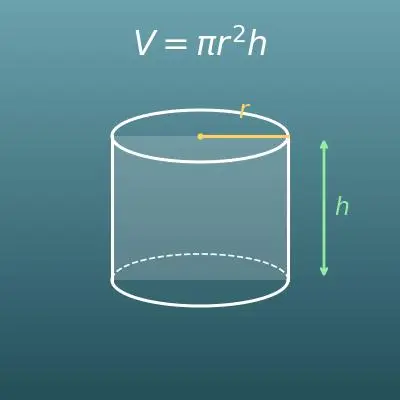
V = π × r² × h
V = \pi r^{2} h
<math xmlns="http://www.w3.org/1998/Math/MathML" display="block">
<mrow>
<mi>V</mi>
<mo>=</mo>
<mi>π</mi>
<msup><mi>r</mi><mn>2</mn></msup>
<mi>h</mi>
</mrow>
</math>
V = pi r^2 h
Pi*r^2*h
V := Pi*r^2*h;
V = pi*r^2*h;
V = πr^2h
V = π × (r₁² − r₂²) × l
V = \pi (r_1^{2} - r_2^{2}) l
<math xmlns="http://www.w3.org/1998/Math/MathML" display="block">
<mrow>
<mi>V</mi>
<mo>=</mo>
<mi>π</mi>
<mo>(</mo>
<msup><msub><mi>r</mi><mn>1</mn></msub><mn>2</mn></msup>
<mo>−</mo>
<msup><msub><mi>r</mi><mn>2</mn></msub><mn>2</mn></msup>
<mo>)</mo>
<mi>l</mi>
</mrow>
</math>
V = pi (r_1^2 - r_2^2) l
Pi*(r1^2 - r2^2)*l
V := Pi*(r1^2 - r2^2)*l;
V = pi*(r1^2 - r2^2)*l;
V = π(r_1^2 - r_2^2)l
r = d ÷ 2
r = \frac{d}{2}
<math xmlns="http://www.w3.org/1998/Math/MathML" display="block">
  <mrow>
    <mi>r</mi>
    <mo>=</mo>
    <mfrac><mi>d</mi><mn>2</mn></mfrac>
  </mrow>
</math>
r = d / 2
d/2
r := d/2;
r = d/2;
r = d/2
How to have ChatGPT do the calculation
You are a math calculation assistant. Do the following calculation by actually running Python code, and base your answer only on the numbers from the execution result (do not answer by mental math or guessing).

A pipe (a hollow cylinder) has an outside diameter of 10 in, an inside diameter of 8 in and a length of 100 in.
Find each of the following:
1. The volume of the outer cylinder in in³
2. The volume of the hollow (inner cylinder) in in³
3. The volume of the pipe (the wall) in in³

Show the formulas you used and the numbers from the execution result.
How to Use
-
1Enter your numbersType the numbers you want to calculate with into the input fields
-
2CalculatePress the "Calculate" button
-
3Check the resultThe result appears on the spot. The same page also explains the idea behind the calculation and the formula
DataChef Features

No technical knowledge required.
Intuitive and user-friendly operation.

Can be used without registering personal information.

Automatic file deletion by clicking "download".

and rapid file conversion.

No attribution required.

No need to contact us for commercial use permission.
Related Features
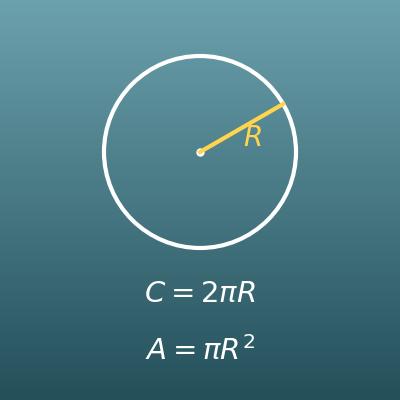
Circle Calculator (Radius, Diameter, Circumference and Area)
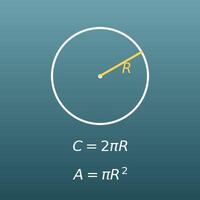
Calculates the area, circumference and more of a circle, the cross section of a pipe, from the radius or the diameter
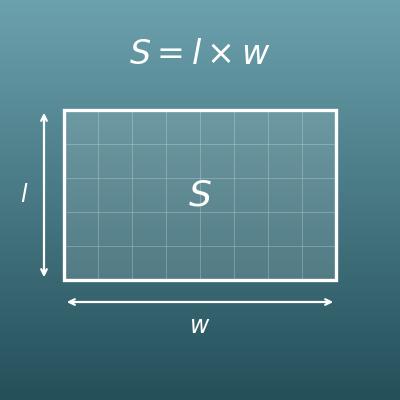
Area of a Rectangle Calculator (Length × Width)
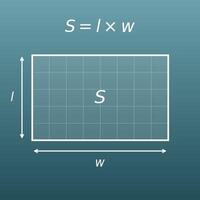
Calculates the area of a rectangle and converts units. The starting point for understanding area
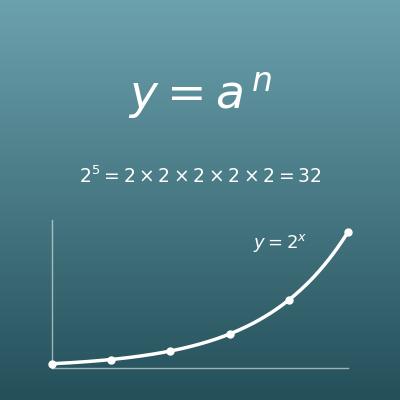
Exponent Calculator (Powers, a to the nth Power)
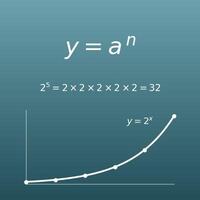
Calculates powers (a to the nth power), such as the radius squared