Enter the distance and your time (hh:mm:ss). You get your pace per km, your speed and split times for common race distances.
Table of Contents
-
What you can do on this page
-
What is this calculation used for?
-
How to Use
-
Formulas and graphs
-
Symbols and terms
-
Good to know before you start
-
How to calculate it in Excel
-
How to calculate it in Google Sheets
-
How to calculate it in Python
-
How to write it in LaTeX and other math languages (copy and paste)
-
How to have ChatGPT do the calculation
-
DataChef Features
-
Related Features
-
NumberChef Calculators List
What you can do on this page
- Enter the distance and your time (hh:mm:ss) to see your pace per mile (min/mi) on the spot
- Your speed in mph and in feet per minute and per second is shown at the same time. Switch "Units" to Metric to get pace per km (min/km), km/h, m/min and m/s instead
- You can enter the distance in miles, kilometers, meters or yards
- A table and a graph show your split times for 1 mile, a 5K, a 10K, a half marathon and a marathon if you keep the same pace
- A plain-language explanation of the formulas and copy-and-paste formulas for Excel, Google Sheets and Python are all on this page
What is this calculation used for?
To finish a marathon (26.2 miles) in 4 hours, the pace you need is 4 hours (14,400 seconds) ÷ 26.2 miles ≈ 549 seconds per mile, or about 9:09 per mile.
From there you can set your splits in advance: about 28:26 at 5K and about 2 hours at the halfway point (13.1 miles). On race day you can compare them with your watch and fix "too fast" or "too slow" early. This is the basis of an even pacing plan that helps you avoid slowing down badly late in the race ("hitting the wall" around mile 20).
In endurance training, the basic idea is to separate "slow, long run days" from "fast days" by pace. Instead of going by feel alone, setting numbers such as "easy run at 11:00 per mile today" or "intervals at 7:30 per mile" lets you repeat workouts at the effort you are aiming for.
From everyday runners to elite athletes, training logs are built around this record of pace.
Pace is not only for running. If you know your walking pace in minutes per mile, you can estimate travel time from the distance on a map. A typical adult walking pace is about 15 to 20 minutes per mile (3 to 4 mph), so 2 miles takes about 30 to 40 minutes.
It helps with everyday time estimates, such as "How long is the walk to the station?" or "How far can I go on my lunch break?"
The idea of pace, time per unit of distance, is widely used in other endurance sports too. Cyclists track minutes per mile or mph, and swimmers track their pace in minutes and seconds per 100 yards or 100 meters.
The same formula works when you change the unit of distance, so you can compare how hard you are working across different sports with one common measure.
5K and 10K races, many race results and runners outside the US use kilometers, and pace is often given in minutes per km. Since 1 mile = 1,609.344 m, you can divide a pace in minutes per mile by 1.609 to get minutes per km, or multiply minutes per km by 1.609 to get minutes per mile.
Being able to convert units lets you read results and training plans written in kilometers in the familiar "minutes per mile".
Formulas and graphs
Symbols and terms
Symbols
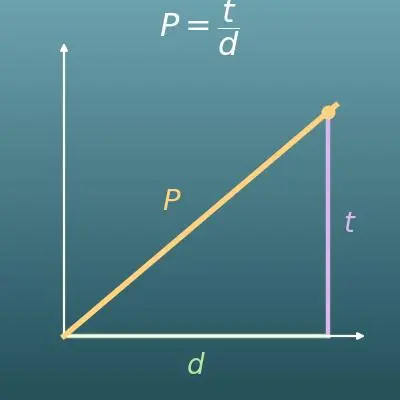
| \(P\) | pee | The symbol for pace, from the first letter of "pace". It is the time it takes to run 1 mile (or 1 km). (Example - if you run a mile in 10 minutes, \(P = 10\) min/mi) |
| \(t\) | tee | The symbol for time, from the first letter of "time". It is the time your run took, or your split time at a point. |
| \(d\) | dee | The symbol for distance, from the first letter of "distance". (Example - for 5 miles, \(d = 5\)) |
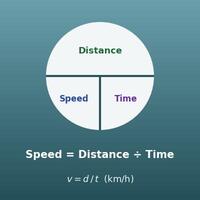
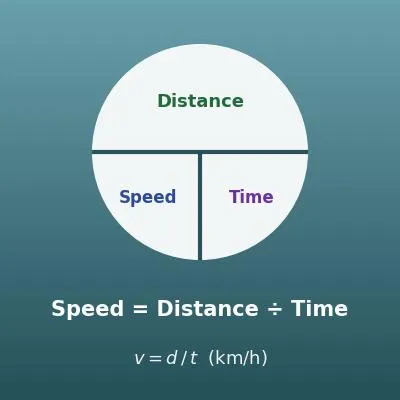
| \(v\) | vee | The symbol for speed, from the first letter of "velocity". (Example - at 6 mph, \(v = 6\)) |
| \(\mathrm{min/mi}\) | minutes per mile | A unit of pace - how many minutes each mile takes. The slash (/) stands for "per". It is the most common way to state pace in US running, usually written like 9:30 per mile. Outside the US, minutes per km (min/km) is more common. |
| \(\mathrm{mph}\) | miles per hour | A unit of speed - how many miles are covered in 1 hour. "6 miles per hour" and "6 mph" are the same thing. US treadmills usually show speed in mph. |
Terms
| pace | The time it takes to run 1 mile (or 1 km). Speed is "distance per hour", while pace is "time per unit of distance". In US running it is usually given in minutes per mile, such as "a 9-minute mile". |
| split time (split) | Your total time from the start when you pass a point in a race or a workout, such as mile 3. Together with lap times for each section, it is used to check how you are spreading your effort. |
| average speed | The speed found from "total distance ÷ total time", which evens out the changes in speed along the way. A real run keeps speeding up and slowing down, so the speed you calculate from distance and time is this average. |
| average pace | The pace found from "total time ÷ total distance", which evens out the changes in pace along the way. A real run keeps speeding up and slowing down, so the pace you calculate from distance and time is this average. |
| unit rate | A way of comparing amounts by "how much per 1". Speed (distance per hour) and pace (time per mile) are both unit rates. Unit rates are taught in middle school math in the US (Grade 6). |
| 5K and 10K | Race distances named in kilometers; the K stands for km. A 5K is 5 km (about 3.1 miles) and a 10K is 10 km (about 6.2 miles). 1 mile = 1,609.344 m, so 1 km is about 0.62 miles. |
Good to know before you start
Here is what helps you use the calculation on this page with real understanding, not just by pressing the button.
| Speed and unit rates (Grade 6) |
|
| How division and multiplication are related (Grades 3–4) |
|
| Converting hours, minutes and seconds (Grades 3–4) |
|
| Working with decimals (Grades 5–6) |
|
| Converting units of length (Grades 4–5 and middle school) |
|
How to calculate it in Excel
| Time (s) | 3025 |
| Distance (mi) | 5 |
| Pace (s/mi) | =B1/B2 |
| Minutes part of the pace | =INT(B3/60) |
| Seconds part of the pace | =MOD(B3,60) |
| Distance (mi) | 5 |
| Time (s) | 3025 |
| Speed (mph) | =B1/(B2/3600) |
| Pace (s/mi) | 605 |
| Distance (mi) | 10 |
| Split time (s) | =B1*B2 |
| Minutes part of the split time | =INT(B3/60) |
| Seconds part of the split time | =MOD(B3,60) |
"/" is division and "*" is multiplication. "INT" drops the decimal part to give a whole number, and "MOD(B3,60)" gives the remainder when B3 is divided by 60.
In the first table, B3 shows 605 (s/mi), B4 shows 10 and B5 shows 5, so the pace is 10:05 per mile. In the third table, the split time is 100 minutes 50 seconds (1 hour 40 minutes 50 seconds). Just replace the time and distance with your own numbers.
How to calculate it in Google Sheets
| Time (s) | 3025 |
| Distance (mi) | 5 |
| Pace (s/mi) | =B1/B2 |
| Minutes part of the pace | =INT(B3/60) |
| Seconds part of the pace | =MOD(B3,60) |
| Distance (mi) | 5 |
| Time (s) | 3025 |
| Speed (mph) | =B1/(B2/3600) |
| Pace (s/mi) | 605 |
| Distance (mi) | 10 |
| Split time (s) | =B1*B2 |
| Minutes part of the split time | =INT(B3/60) |
| Seconds part of the split time | =MOD(B3,60) |
How to calculate it in Python
distance_mi = 5      # distance (miles)
time_seconds = 3025  # time (seconds). 50 min 25 s = 50*60+25 = 3025

pace_sec_per_mi = time_seconds / distance_mi              # pace (seconds per mile)
pace_min = int(pace_sec_per_mi // 60)                     # minutes part of the pace
pace_sec = pace_sec_per_mi - pace_min * 60                # seconds part of the pace
speed_mph = distance_mi / (time_seconds / 3600)           # speed (mph)
speed_ft_per_min = distance_mi * 5280 / (time_seconds / 60)  # feet per minute
speed_ft_per_sec = distance_mi * 5280 / time_seconds         # feet per second

print(f"Pace: {pace_min} min {pace_sec:.2f} s per mile")
print(f"Speed: {speed_mph:.2f} mph / {speed_ft_per_min:.2f} ft/min / {speed_ft_per_sec:.2f} ft/s")
How to write it in LaTeX and other math languages (copy and paste)
P = t ÷ d
P = \dfrac{t}{d}
<math xmlns="http://www.w3.org/1998/Math/MathML" display="block">
  <mrow>
    <mi>P</mi>
    <mo>=</mo>
    <mfrac><mi>t</mi><mi>d</mi></mfrac>
  </mrow>
</math>
P = t / d
t / d
P := t / d;
P = t / d;
P = t / d
v = d ÷ t
v = \dfrac{d}{t}
<math xmlns="http://www.w3.org/1998/Math/MathML" display="block">
  <mrow>
    <mi>v</mi>
    <mo>=</mo>
    <mfrac><mi>d</mi><mi>t</mi></mfrac>
  </mrow>
</math>
v = d / t
d / t
v := d / t;
v = d / t;
v = d / t
t = P × d
t = P d
<math xmlns="http://www.w3.org/1998/Math/MathML" display="block">
<mrow>
<mi>t</mi>
<mo>=</mo>
<mi>P</mi>
<mo>⁢</mo>
<mi>d</mi>
</mrow>
</math>
t = P * d
P * d
t := P * d;
t = P * d;
t = P d
v = 60 ÷ P
v = \dfrac{60}{P}
<math xmlns="http://www.w3.org/1998/Math/MathML" display="block">
  <mrow>
    <mi>v</mi>
    <mo>=</mo>
    <mfrac><mn>60</mn><mi>P</mi></mfrac>
  </mrow>
</math>
v = 60 / P
60 / P
v := 60 / P;
v = 60 / P;
v = 60 / P
How to have ChatGPT do the calculation
You are a running pace calculation assistant. Do the following calculation by actually running Python code, and base your answer only on the numbers from the execution result (do not answer by mental math or guessing).

I ran 5 miles in 50 minutes 25 seconds.
Find each of the following:
1. My pace per mile (in the form "X min Y s per mile")
2. My speed in mph
3. My split times for a half marathon (13.1094 miles) and a marathon (26.2188 miles) if I keep the same pace (in the form "X h Y min Z s")

Show the formulas you used and the numbers from the execution result.
How to Use
-
1Enter your numbersType the numbers you want to calculate with into the input fields
-
2CalculatePress the "Calculate" button
-
3Check the resultThe result appears on the spot. The same page also explains the idea behind the calculation and the formula
DataChef Features

No technical knowledge required.
Intuitive and user-friendly operation.

Can be used without registering personal information.

Automatic file deletion by clicking "download".

and rapid file conversion.
No attribution required.

No need to contact us for commercial use permission.
Related Features
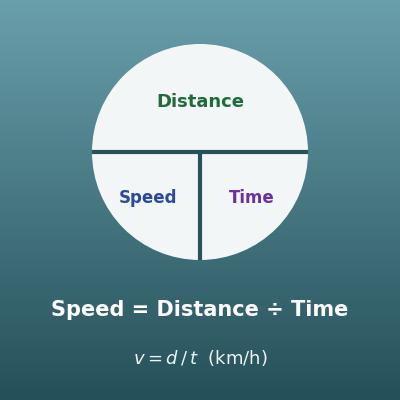
Speed, Distance and Time Calculator
Find speed, distance or time from the other two. It is the "speed = distance ÷ time" calculation behind pace
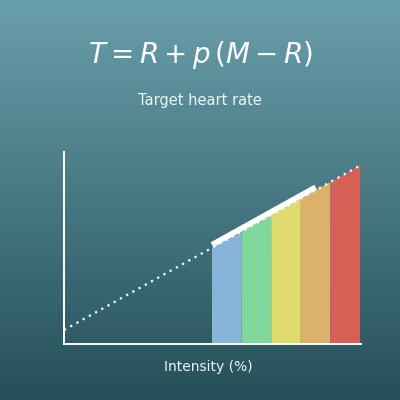
Target Heart Rate Calculator (Heart Rate Zones, Karvonen Formula)
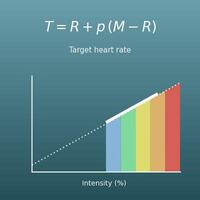
Find your target heart rate for each training zone from your age and more. Use it with pace to manage how hard you train
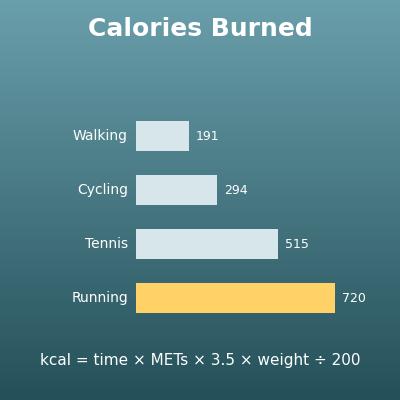
Calories Burned Calculator (Walking, Running, Chores and More with METs)
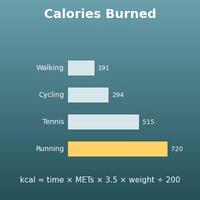
Find the calories burned by running, walking and other activities from your weight and time