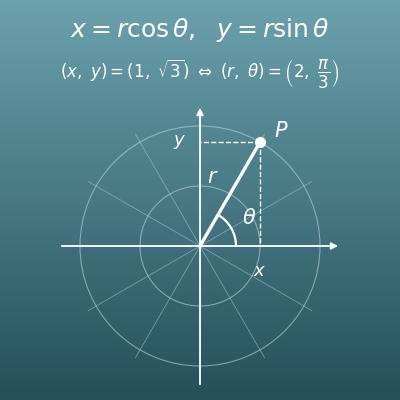












Choose "degrees to radians" or "radians to degrees" and enter your value. The result comes with a unit circle diagram.
Table of Contents
-
What you can do on this page
-
What is this calculation used for?
-
How to Use
-
Formulas and figures
-
Symbols and terms
-
Good to know before you start
-
How to calculate it in Excel
-
How to calculate it in Google Sheets
-
How to calculate it in Python
-
How to write it in LaTeX and other math languages (copy and paste)
-
How to have ChatGPT do the calculation
-
DataChef Features
-
Related Features
-
NumberChef Calculators List
What you can do on this page
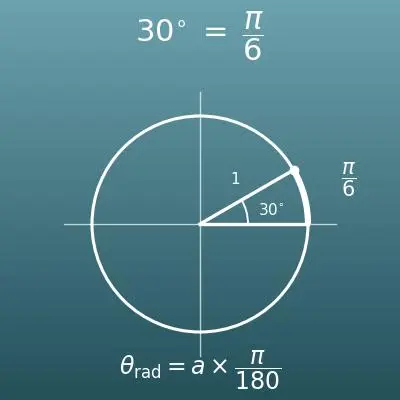
- Converts degrees to radians. The answer is shown both as an exact value in terms of \(\pi\), as in \(30^\circ \to \dfrac{\pi}{6}\), and as a decimal (12 significant digits)
- Also converts radians to degrees. You can enter values with \(\pi\) such as "π/6", "2π/3" or "1.5π" (typing pi also works) as well as decimals such as "1.5"
- Negative angles (such as −45°) and angles over \(360^\circ\) (\(2\pi\)) work too
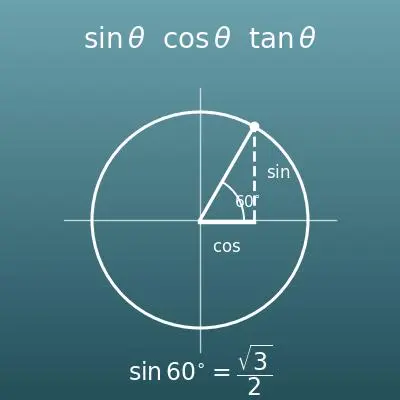
- The result comes with a unit circle diagram, so you can see that the arc length on a circle of radius \(1\) is the value in radians
- A table of special angles (\(0^\circ\) to \(360^\circ\)), a plain-language explanation of the formulas and copy-and-paste formulas for Excel, Google Sheets and Python are all on this page
What is this calculation used for?
The neat rule "the derivative of \(\sin x\) is \(\cos x\)" is true only when the angle \(x\) is measured in radians. If you differentiate with degrees, an extra factor of \(\dfrac{\pi}{180}\) (about 0.01745) appears every time, and the formulas keep getting messier.
Calculus, college physics and engineering write every angle in radians because this is the measure that makes the formulas simplest. Converting between degrees and radians is the way into that world.
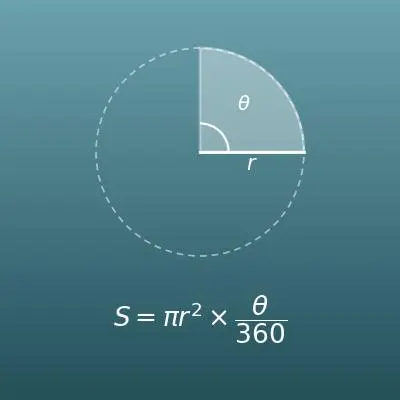
With the central angle in radians, the arc length is just radius × angle (\(s = r\theta\)), and the area of a sector is \(A = \dfrac{1}{2}r^2\theta\). For example, a curve with a radius of 6 feet and a central angle of \(\dfrac{\pi}{3}\) (\(60^\circ\)) is \(6 \times \dfrac{\pi}{3} = 2\pi \approx 6.28\) feet long.
In degrees, the formula gets longer, like \(2\pi r \times \dfrac{a}{360}\). So when designing road curves or curved parts, the standard practice is to convert to radians first.
In engineering, the speed of a rotating machine is given as the angle it turns per second, the angular velocity \(\omega\) (in rad/s). For example, a motor running at 3,600 rpm (revolutions per minute) turns \(3600 \times 2\pi \div 60 = 120\pi \approx 377\) rad/s, since one turn is \(2\pi\) radians.
With the angular velocity in radians, the speed at the tip is simply radius × angular velocity (\(v = r\omega\)), so every rotation calculation is just multiplication. The \(\omega\) in motor spec sheets and physics textbooks is in this unit.
In almost every programming environment, including Python, JavaScript and Excel, sin and cos take radians. A classic beginner mistake is to write sin(30) expecting \(\sin 30^\circ = 0.5\) and get −0.988 instead. The correct way is to convert degrees to radians first: sin(30 × π/180).
When a game moves a character by a given angle, or when you draw a graph, this "people think in degrees, programs take radians" conversion happens all the time.
The link between an angle at the center of the Earth and the arc on its surface is also arc length = radius × angle in radians. The Earth's radius is about 3,959 miles, so one degree of latitude north to south is about \(3959 \times \dfrac{\pi}{180} \approx 69\) miles.
The geography fact "one degree of latitude is about 69 miles (111 km)" comes straight from a degrees-to-radians conversion, and GPS distance calculations and map apps use the same idea.
Formulas and figures
Symbols and terms
Symbols
| \(^\circ\) (degrees) | degrees | The unit of angle in degree measure. One full turn is \(360^\circ\). It is the most familiar way to express angles, also used in everyday life. |
| rad (radians) | radians | The unit of angle in radian measure. The word "radian" was made from "radius", and it measures an angle by the arc length on a circle of radius \(1\). In math, the unit is usually left out and only the number is written, as in \(\dfrac{\pi}{6}\). |
| \(\pi\) | pi | Pi (\(\approx 3.14159\)), the value of circumference ÷ diameter. The letter is said to come from the first letter of the Greek word for "perimeter". Since \(180^\circ = \pi\) radians, fractions of \(\pi\) appear often in radian values. |
| \(\theta\) | theta | A Greek letter often used for angles. On this page, it is the size of an angle measured in radians. |
| \(a\) | a | On this page, the angle in degrees (the number without °). It is the \(a\) in \(a^\circ\). |
| \(\approx\) | approximately equal to | The symbol for "about" (an approximation). An exact value with \(\pi\) never ends when written as a decimal, so this symbol is used for the decimals. |
Terms
| degree measure | Measuring angles with one full turn set to 360°. The number 360 has many factors (a half, a third, a quarter … of it are all whole numbers), and it has been used since ancient times. This is the measure you learn first, in elementary school. |
| radian measure | Measuring an angle by the arc length on a circle of radius 1. The unit is the radian. 180° = π radians, and angles are written as fractions of π, such as 60° = π/3. Radians are used from Precalculus on and are the main unit in calculus. |
| arc | A part of the circumference of a circle. Radian measure gives the size of an angle as the length of the arc it cuts off. |
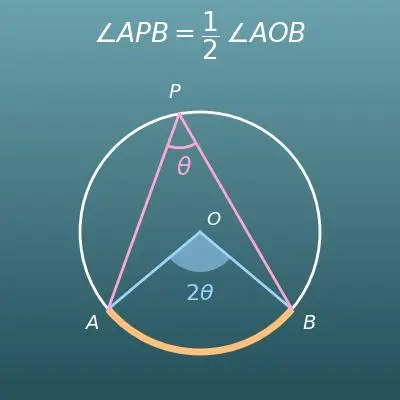
| central angle | The angle formed by two radii at the center of a circle. The arc length is proportional to the central angle (double the angle, double the arc). This proportion is the basis of radian measure. |
| unit circle | The circle of radius 1 centered at the origin. Because the radius is 1, the arc length is exactly the central angle in radians. It is also used to define the trig functions, which makes it an important tool in high school math. |
| terminal side | The ray from the origin turned by angle \(\theta\) from the positive \(x\)-axis (the angle is in standard position). It shows the size of the angle on the diagram. For a negative angle, it turns clockwise. |
| special angle | An angle such as 30°, 45°, 60°, 90° or 120° whose trig values can be written as exact values. In radians, they are π/6, π/4, π/3, π/2, 2π/3 …, fractions of π with denominators 6, 4, 3 and 2. |
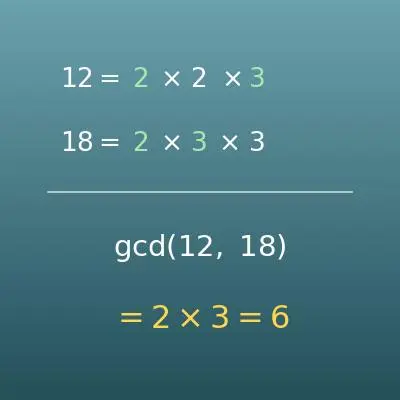
| simplify | To divide the top and bottom of a fraction by the same number to make it simpler (also called reducing). For degrees to radians, simplify the fraction degrees/180 by the greatest common factor, then attach π (30/180 → 1/6 → π/6). |
| simplest form | A fraction that cannot be simplified any further (also called lowest terms). The results on this page show the coefficient of π in simplest form. |
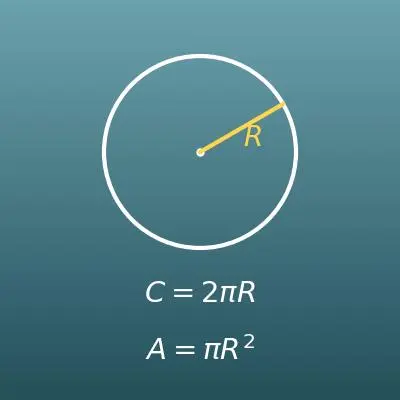
| pi | The value of circumference ÷ diameter (π ≈ 3.14159). It is the same for a circle of any size. A circle of radius 1 has circumference 2π because its diameter is 2, and 2 × π = 2π. |
Good to know before you start
Here is what helps you use the calculation on this page with real understanding, not just by pressing the button.
If you get stuck, going back to these topics is the fastest way forward.
| Angles (Grade 4) |
|
| Circles and pi (Grade 7) |
|
| Multiplying and simplifying fractions (Grades 5–6) |
|
| Proportional relationships (Grade 7) |
|
| Expressions with variables (Grades 6–8) |
|
How to calculate it in Excel
| Angle (degrees) | 30 |
| Radians | =RADIANS(B1) |
| Radians | =PI()/6 |
| Angle (degrees) | =DEGREES(B1) |
| Angle (whole degrees) | 30 |
| Numerator of the π coefficient | =B1/GCD(B1,180) |
| Denominator of the π coefficient | =180/GCD(B1,180) |
The second table puts "=PI()/6" (π ÷ 6) in the radians cell, and the answer is 30. For a decimal value in radians such as 1.5, just type 1.5 in B1 (the answer is 85.94366927).
The third table finds the exact form as a fraction of π. The GCD function (greatest common factor) simplifies degrees/180. The numerator is 1 and the denominator is 6, so you can read it as "30° = π/6" (this table works only for whole numbers of degrees).
How to calculate it in Google Sheets
| Angle (degrees) | 30 |
| Radians | =RADIANS(B1) |
| Radians | =PI()/6 |
| Angle (degrees) | =DEGREES(B1) |
| Angle (whole degrees) | 30 |
| Numerator of the π coefficient | =B1/GCD(B1,180) |
| Denominator of the π coefficient | =180/GCD(B1,180) |
How to calculate it in Python
import math
from fractions import Fraction

# Degrees to radians (decimal)
angle_degree = 30
angle_radian = math.radians(angle_degree)
print(f"{angle_degree}° = {angle_radian} radians")

# Degrees to radians (exact form as a fraction of π)
pi_coefficient = Fraction(angle_degree, 180)   # simplifies degrees/180 automatically
print(f"{angle_degree}° = π × {pi_coefficient}")

# Radians to degrees
radian_value = 1.5
print(f"{radian_value} radians = {math.degrees(radian_value)}°")
How to write it in LaTeX and other math languages (copy and paste)
180° = π rad
180^\circ = \pi\ \mathrm{rad}
<math xmlns="http://www.w3.org/1998/Math/MathML" display="block">
<mrow>
<mn>180</mn><mo>°</mo>
<mo>=</mo>
<mi>π</mi><mspace width="0.2em"/><mi>rad</mi>
</mrow>
</math>
180^@ = pi " rad"
180 Degree == Pi
convert(180*degrees, radians);
deg2rad(180)
180° = π rad
θ = a × π/180
\theta = a \times \dfrac{\pi}{180}
<math xmlns="http://www.w3.org/1998/Math/MathML" display="block">
<mrow>
<mi>θ</mi>
<mo>=</mo>
<mi>a</mi>
<mo>×</mo>
<mfrac><mi>π</mi><mn>180</mn></mfrac>
</mrow>
</math>
theta = a xx pi/180
N[30 Degree]
convert(30*degrees, radians);
deg2rad(30)
θ = a × π/180
a = θ × 180/π
a = \theta \times \dfrac{180}{\pi}
<math xmlns="http://www.w3.org/1998/Math/MathML" display="block">
<mrow>
<mi>a</mi>
<mo>=</mo>
<mi>θ</mi>
<mo>×</mo>
<mfrac><mn>180</mn><mi>π</mi></mfrac>
</mrow>
</math>
a = theta xx 180/pi
(2 Pi/3)/Degree
convert(2*Pi/3, degrees);
rad2deg(2*pi/3)
a = θ × 180/π
How to have ChatGPT do the calculation
You are a math calculation assistant for radian measure. Do the following conversions by actually running Python code, and base your answer only on the numbers from the execution result (do not answer by mental math or guessing).

1. Convert 45° and 17.5° to radians. Give each both as an exact fraction of π (simplified with the fractions module) and as a decimal.
2. Convert 2π/3 radians and 1.5 radians to degrees.

In Python, use the math module (radians, degrees) and the fractions module. Show the formulas you used and the numbers from the execution result.
How to Use
-
1Enter your numbersType the numbers you want to calculate with into the input fields
-
2CalculatePress the "Calculate" button
-
3Check the resultThe result appears on the spot. The same page also explains the idea behind the calculation and the formula
DataChef Features

No technical knowledge required.
Intuitive and user-friendly operation.

Can be used without registering personal information.

Automatic file deletion by clicking "download".

and rapid file conversion.

No attribution required.

No need to contact us for commercial use permission.
Related Features
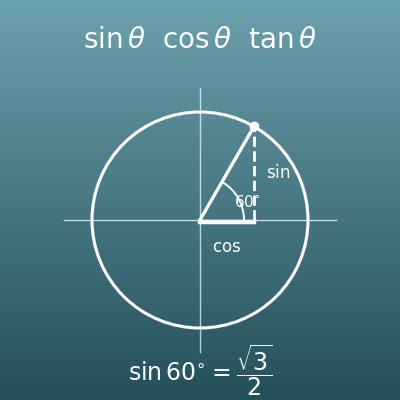
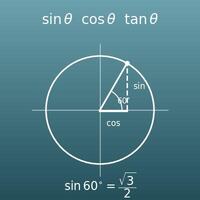
Sin Cos Tan Calculator (Trig Ratios and Angles with a Unit Circle)
Finds sin, cos and tan of an angle θ as exact values and decimals, and the angle from a value. Shows degrees and radians side by side
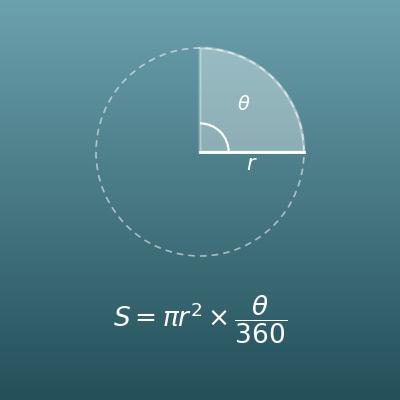
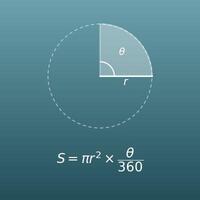
Area of a Sector Calculator (from Radius and Central Angle)
Finds the area and arc length of a sector from the radius and central angle. The angle can be in degrees or radians
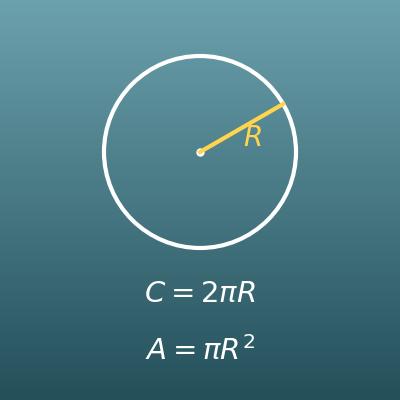
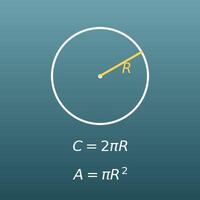
Circle Calculator (Radius, Diameter, Circumference and Area)
Enter any one of the radius, diameter, circumference or area of a circle and get all the others, with steps
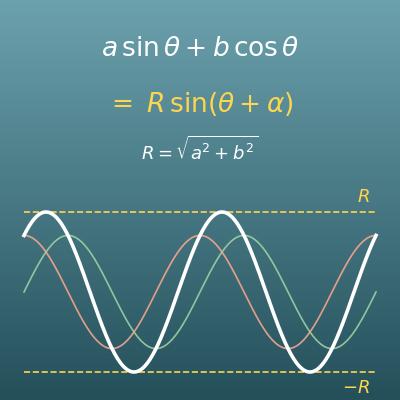
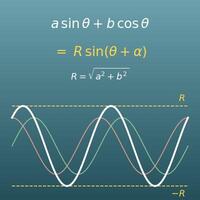
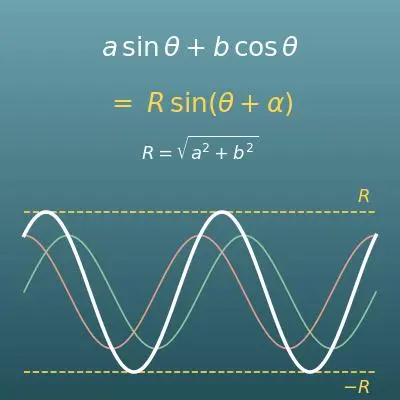
Harmonic Addition Calculator (a sin θ + b cos θ as R sin(θ + α), with Max and Min)
Combines a sin θ + b cos θ into a single sine wave R sin(θ + α), with the exact amplitude R = √(a² + b²), α as a fraction of π, and the maximum and minimum
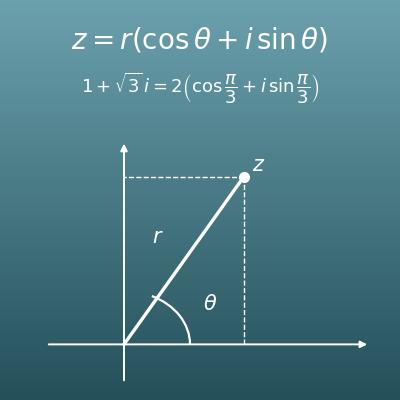
Complex Number to Polar Form Calculator (Modulus, Argument and Quadrant Steps with a Complex Plane Graph)
Converts a + bi to polar form r(cos θ + i sin θ), with the exact modulus and the argument as a fraction of π. Also converts polar form back to rectangular form