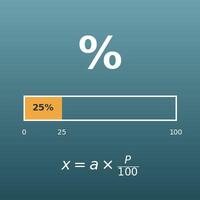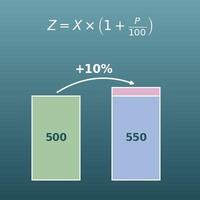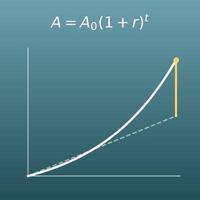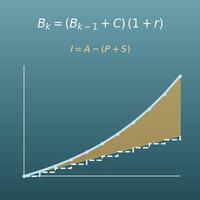
Out of the four fields (total amount, principal, rate and time), leave blank only the one you want to find and enter numbers in the other three. The blank field is solved for.
Table of Contents
-
What you can do on this page
-
What is this calculation used for?
-
How to Use
-
Formulas and graphs
-
Symbols and terms
-
Good to know before you start
-
How to calculate it in Excel
-
How to calculate it in Google Sheets
-
How to calculate it in Python
-
How to write it in LaTeX and other math languages (copy and paste)
-
How to have ChatGPT do the calculation
-
DataChef Features
-
Related Features
-
NumberChef Calculators List
What you can do on this page
- Enter the principal, rate and time, and you get the total simple interest, \(I = P \times r \times t\), and the total amount right away
- Fill in any three of the four fields (total amount, principal, rate and time), and the fourth is solved for you (for example, the years it takes to reach a goal, or the actual rate on money you lent)
- Enter the rate per year or per month, and the time in years or months (they are converted to an annual rate and years inside the calculation)
- When the time is a whole number of years up to 20, a table shows the interest so far and the balance for each year
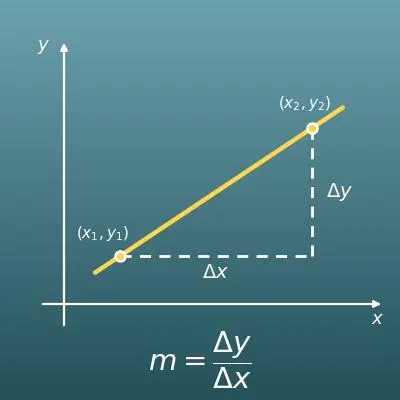
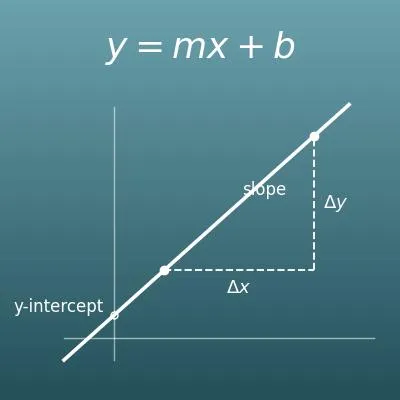
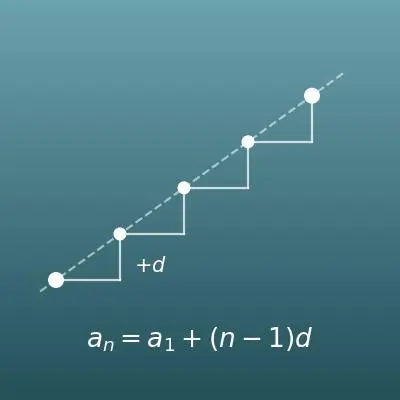
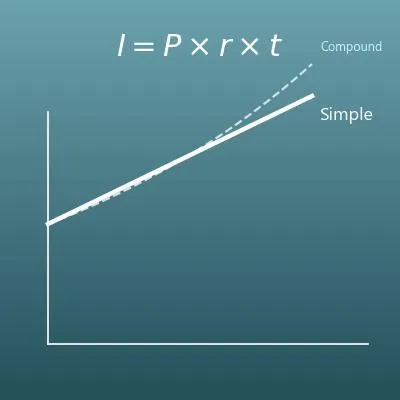
- A graph shows how simple interest grows in a straight line. A plain-language explanation of the formulas and copy-and-paste formulas for Excel, Google Sheets and Python are also on this page
What is this calculation used for?
When you lend money to a friend or relative with interest, a plain agreement such as "3% a year simple interest" is natural, rather than compound interest. For example, if you lend $3,000 at 3% simple interest to be repaid in 2 years, the interest is \(3000 \times 0.03 \times 2 = 180\) dollars, so $3,180 is paid back.
Most states have usury laws that cap the interest rate on loans, and large family loans with very low interest can have tax consequences with the IRS. For a large amount, it is safest to write a promissory note and put the terms on paper.
A bond, such as a US Treasury note or a corporate bond, pays interest of "face value × coupon rate" each year, usually in two payments six months apart. The interest is not added to the principal, so it is a classic case of simple interest. For example, a $10,000 note with a 4% coupon pays $400 a year ($200 every six months), for a total of \(10000 \times 0.04 \times 10 = 4000\) dollars over 10 years (before taxes).
Some bonds have rates that change over time, such as floating-rate notes, so this formula is an estimate that assumes a fixed rate.
When a payment is late, the interest charged is commonly calculated as daily simple interest, "amount due × annual rate × days late ÷ 365". Many business invoices charge 1.5% a month (18% a year) on overdue balances.
For example, if a $5,000 invoice is paid 60 days late at 18% a year, the interest is \(5000 \times 0.18 \times 60 \div 365 \approx 147.95\) dollars. The rate that can be charged depends on the contract and on state law, which often sets a maximum.
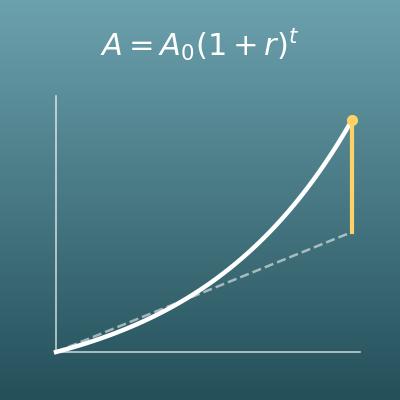
Even at the same "3% a year", simple and compound interest end up far apart over a long time. Over 20 years, $10,000 grows to \(10000 \times (1 + 0.03 \times 20) = 16000\) dollars with simple interest, but to \(10000 \times 1.03^{20} \approx 18061\) dollars compounded once a year, a difference of about $2,061.
Comparing this page with the compound interest calculator shows in numbers how much the difference between simple and compound interest matters for growth (real returns are reduced by taxes and fees).
Formulas and graphs
Symbols and terms
Symbols
| \(P\) | P | The principal, the amount you deposit, lend or borrow at the start. P stands for "principal". (Example - $20,000) |
| \(r\) | r | The interest rate. In the formulas on this page, it is the rate per year (the annual rate) written as a decimal. (Example - for 3%, \(r = 0.03\)) |
| \(t\) | t | The time in years, how long the money is saved, lent or borrowed. t stands for "time". |
| \(I\) | I | The total interest, all the interest earned over the whole time, found with \(I = P \times r \times t\). I stands for "interest". |
| \(B\) | B | The total amount, the principal plus the total interest, with \(B = P + I\). B stands for "balance". |
| \(1 + rt\) | one plus r t | The factor that shows how many times larger the principal gets: the principal part \(1\) plus the interest share \(rt\). (Example - at 3% a year for 10 years, \(1 + 0.03 \times 10 = 1.3\)) |
Terms
| simple interest | Interest paid only on the original principal. The interest is the same every year, so the money grows in a straight line. |
| compound interest | Interest that is added to the principal, so the next interest is paid on the total. Because interest earns interest, it grows much more than simple interest over a long time. Most real savings accounts and loans work this way (see the Compound Interest Calculator page). |
| principal | The money you deposit, lend or borrow at the start. Interest is calculated from it. On a loan, it also means the part of the balance that is not interest. |
| total amount | The principal plus the interest, also called the maturity value or future value. It is the final amount the formulas on this page find. |
| interest | Money paid in return for depositing or lending money. A borrower pays interest, and a saver or lender earns it. |
| annual rate | The interest rate per year. In the US, savings accounts, loans and bonds are almost always quoted with an annual rate (such as an APR or APY). |
| monthly rate | The interest rate per month. With simple interest, annual rate = monthly rate × 12. (Example - 1% a month is 12% a year) |
| late payment interest | Money charged when a payment is made after the due date. It is commonly calculated with simple interest by the day, "amount due × annual rate × days late ÷ 365". The allowed rate depends on the contract and on state law. |
Good to know before you start
Here is what helps you use the calculation on this page with real understanding, not just by pressing the button.
| Percents (Grade 6) |
|
| Proportional relationships (Grade 7) |
|
| Expressions with variables (Grades 6–7) |
|
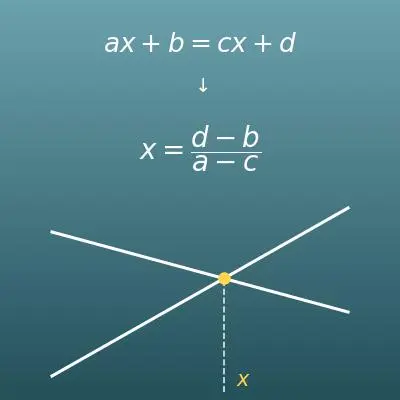
| Rearranging formulas (Grade 8 and Algebra 1) |
|
How to calculate it in Excel
| Principal ($) | 20000 |
| Annual rate (decimal; 3% is 0.03) | 0.03 |
| Time (years) | 10 |
| Total interest | =B1*B2*B3 |
| Principal ($) | 20000 |
| Annual rate (decimal; 3% is 0.03) | 0.03 |
| Time (years) | 10 |
| Total amount | =B1*(1+B2*B3) |
| Total amount ($) | 26000 |
| Annual rate (decimal; 3% is 0.03) | 0.03 |
| Time (years) | 10 |
| Principal | =B1/(1+B2*B3) |
| Total amount ($) | 26000 |
| Principal ($) | 20000 |
| Time (years) | 10 |
| Annual rate (decimal) | =(B1/B2-1)/B3 |
| Total amount ($) | 26000 |
| Principal ($) | 20000 |
| Annual rate (decimal; 3% is 0.03) | 0.03 |
| Time (years) | =(B1/B2-1)/B3 |
"*" is multiplication and "/" is division.
The first table shows 6,000 (dollars), the second 26,000 (dollars), the third 20,000 (dollars), the fourth 0.03 (= 3% a year) and the fifth 10 (years).
Note that rates are entered as decimals, the percentage divided by 100 (3% is 0.03), not as the percentage itself. If you only know a monthly rate, multiply it by 12 to get the annual rate. If the time is in months, divide it by 12 to get years before entering it.
How to calculate it in Google Sheets
| Principal ($) | 20000 |
| Annual rate (decimal; 3% is 0.03) | 0.03 |
| Time (years) | 10 |
| Total interest | =B1*B2*B3 |
| Principal ($) | 20000 |
| Annual rate (decimal; 3% is 0.03) | 0.03 |
| Time (years) | 10 |
| Total amount | =B1*(1+B2*B3) |
| Total amount ($) | 26000 |
| Annual rate (decimal; 3% is 0.03) | 0.03 |
| Time (years) | 10 |
| Principal | =B1/(1+B2*B3) |
| Total amount ($) | 26000 |
| Principal ($) | 20000 |
| Time (years) | 10 |
| Annual rate (decimal) | =(B1/B2-1)/B3 |
| Total amount ($) | 26000 |
| Principal ($) | 20000 |
| Annual rate (decimal; 3% is 0.03) | 0.03 |
| Time (years) | =(B1/B2-1)/B3 |
How to calculate it in Python
principal = 20000        # principal (dollars)
annual_rate = 0.03       # annual rate (0.03 for 3%; if you only have a monthly rate, use monthly rate x 12)
years = 10               # time (years; for months, use months / 12)

interest = principal * annual_rate * years    # total interest I = P x r x t
balance = principal + interest                # total amount B = P + I

print(f"Total interest: ${interest:,.2f}")
print(f"Total amount: ${balance:,.2f}")
How to write it in LaTeX and other math languages (copy and paste)
I = P × r × t
I = Prt
<math xmlns="http://www.w3.org/1998/Math/MathML" display="block">
<mrow>
<mi>I</mi>
<mo>=</mo>
<mi>P</mi>
<mo>⁢</mo>
<mi>r</mi>
<mo>⁢</mo>
<mi>t</mi>
</mrow>
</math>
I = P r t
p r t
interest := P*r*t;
I = P*r*t;
I = Prt
B = P × (1 + r × t)
B = P(1 + rt)
<math xmlns="http://www.w3.org/1998/Math/MathML" display="block">
<mrow>
<mi>B</mi>
<mo>=</mo>
<mi>P</mi>
<mrow>
<mo>(</mo>
<mn>1</mn>
<mo>+</mo>
<mi>r</mi>
<mo>⁢</mo>
<mi>t</mi>
<mo>)</mo>
</mrow>
</mrow>
</math>
B = P(1 + r t)
p (1 + r t)
B := P*(1 + r*t);
B = P*(1 + r*t);
B = P(1 + rt)
P = B ÷ (1 + rt), r = (B/P − 1) ÷ t, t = (B/P − 1) ÷ r
P = \dfrac{B}{1 + rt}, \quad r = \dfrac{B/P - 1}{t}, \quad t = \dfrac{B/P - 1}{r}
<math xmlns="http://www.w3.org/1998/Math/MathML" display="block">
<mrow>
<mi>P</mi>
<mo>=</mo>
<mfrac>
<mi>B</mi>
<mrow><mn>1</mn><mo>+</mo><mi>r</mi><mo>⁢</mo><mi>t</mi></mrow>
</mfrac>
<mo>,</mo>
<mi>r</mi>
<mo>=</mo>
<mfrac>
<mrow><mi>B</mi><mo>/</mo><mi>P</mi><mo>−</mo><mn>1</mn></mrow>
<mi>t</mi>
</mfrac>
<mo>,</mo>
<mi>t</mi>
<mo>=</mo>
<mfrac>
<mrow><mi>B</mi><mo>/</mo><mi>P</mi><mo>−</mo><mn>1</mn></mrow>
<mi>r</mi>
</mfrac>
</mrow>
</math>
P = B / (1 + r t), r = (B/P - 1)/t, t = (B/P - 1)/r
{b/(1 + r t), (b/p - 1)/t, (b/p - 1)/r}
P := B/(1 + r*t); r_solved := (B/P - 1)/t; t_solved := (B/P - 1)/r;
P = B/(1 + r*t); r = (B/P - 1)/t; t = (B/P - 1)/r;
P = B/(1 + rt), r = (B/P − 1)/t, t = (B/P − 1)/r
How to have ChatGPT do the calculation
You are an interest calculation assistant. Do the following calculation by actually running Python code, and base your answer only on the numbers from the execution result (do not answer by mental math or guessing).

1. Find the total interest and the total amount when a principal of $20,000 earns 3% a year simple interest for 10 years.
2. Find the total interest when a principal of $1,000 earns 1% a month simple interest for 2 years (first multiply the monthly rate by 12 to get the annual rate).
3. A principal of $20,000 grew to a total of $26,000 in 10 years with simple interest. Find the annual rate in percent.

Show the formulas you used and the numbers from the execution result.
How to Use
-
1Enter your numbersType the numbers you want to calculate with into the input fields
-
2CalculatePress the "Calculate" button
-
3Check the resultThe result appears on the spot. The same page also explains the idea behind the calculation and the formula
DataChef Features

No technical knowledge required.
Intuitive and user-friendly operation.

Can be used without registering personal information.

Automatic file deletion by clicking "download".

and rapid file conversion.

No attribution required.

No need to contact us for commercial use permission.
Related Features
Compound Interest Calculator (Final Amount and Rate Conversion)
Most real savings accounts and loans work this way. Compound interest, where interest also earns interest
Percentage Calculator (Percent, Part and Whole)
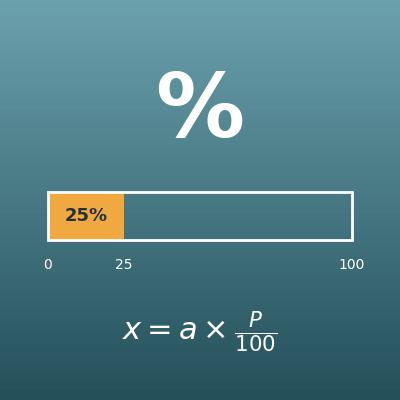
Percent calculations such as "What is 3% of the principal?", the basis of interest
Percentage Change Calculator (Increase and Decrease)
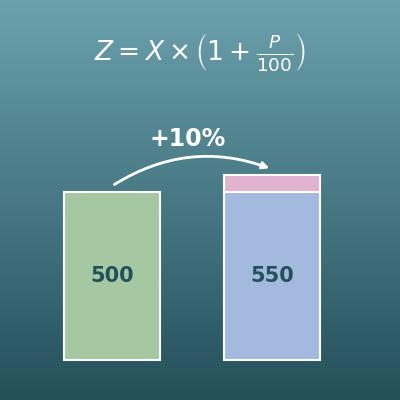
"Up 3%" means "× 1.03". This percentage change is one period of interest
Interest Calculator (Savings Growth with Regular Contributions)
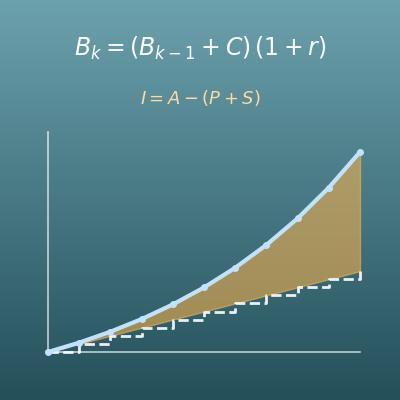
Calculates a balance that combines monthly or yearly deposits with compound interest, with options for tax on interest and inflation